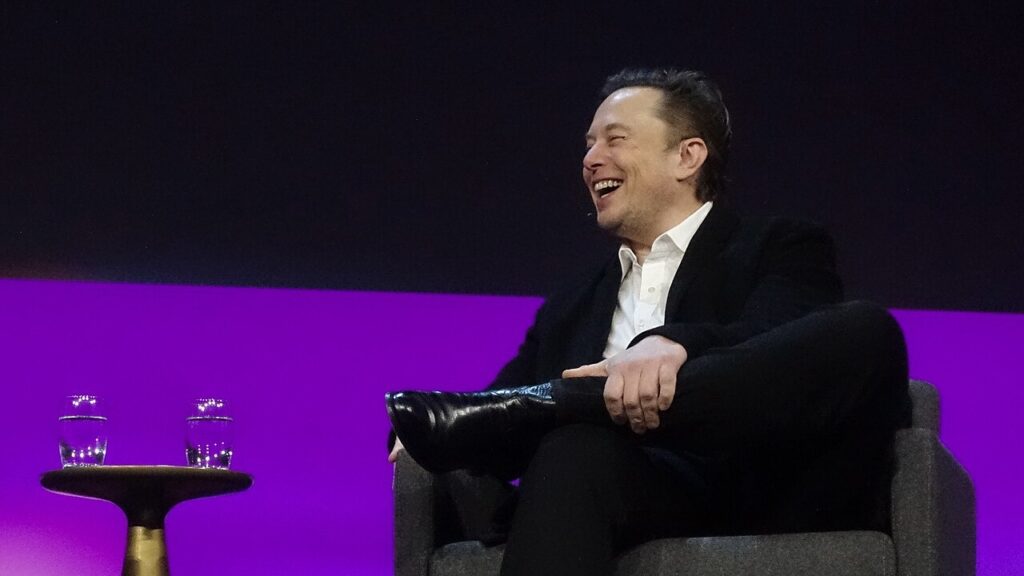
It was Elon Musk himself who gave the order. The Wall Street Journal reported on Tuesday that the SpaceX chief personally ordered the slowdown of the military-grade version of Starlink that Ukraine depends on — capping the speed at which Ukrainian hardware could stay connected to the satellite network, according to U.S. officials and people familiar with the matter.
The decision sent panic through Kyiv and confusion through the Trump administration, the Journal reports. Drones flying faster than about 161 kilometers an hour (100 mph) could no longer hold a connection, rendering some of Ukraine’s offensive drones and interceptor drones virtually useless.
For Ukraine, the timing could hardly have been worse. Russia has been launching drone attacks on Ukrainian power plants in violation of a fragile energy ceasefire brokered on Oct. 11. President Volodymyr Zelenskyy said last week that the speed reduction stopped Ukraine from intercepting some of Russia’s jet-powered Shahed drones — the Iranian-designed attack drones Moscow fires at Ukrainian cities. “Starlink wasn’t turned off – its speed was reduced,” he wrote on Oct. 16. “And when the speed was reduced, we were unable to intercept a certain number of jet-powered ‘shaheds.’ We couldn’t use a tool that helps protect people.”
Zelenskyy had already called the 161 km/h cap a “planned operation” days before anyone would say who planned it.
That question is what makes the Journal’s report explosive. Hours after the slowdown surfaced last week, Musk posted on X that “any limits on speed or usage are decided by the US military and ultimately POTUS” — the president. Trump told reporters on Monday that he didn’t know who was responsible for the Starlink slowdown, “but I would like to find out.” Two days earlier he had said, “I don’t think it was Elon.”
Both men have been openly furious at Ukraine for striking Russian diesel refineries in recent weeks — a campaign Trump blames for pushing up energy prices. That anger, the Journal reports, sat behind the decision.
The Journal also reports that Musk and Trump discussed the Starlink decision by phone after the slowdown became public, while the president was campaigning. One source claimed the two had discussed the matter before the throttle was imposed, too. Zelenskyy’s public warnings — that Ukrainians could die if full service wasn’t restored — triggered an informal investigation inside the White House into who had actually given the order. During the uproar, SpaceX representatives called their White House counterparts seeking what the Journal describes as “a unified understanding and subsequent message” that the company and the administration had coordinated ahead of Musk’s directive.
The administration’s own accounts, meanwhile, don’t quite line up. Defense Secretary Pete Hegseth said on Tuesday the Pentagon had issued no such directive: “We haven’t pulled anything back. Nothing’s changed from our view.” Secretary of State Marco Rubio insisted that “nobody ordered that Starlink’s speed be slowed down” and claimed Ukraine doesn’t even have access to Starshield — the military-grade system — only to commercial Starlink. Kyiv tells a different story: Zelenskyy discussed “the situation with Starlink/Starshield, which needs to be restored” directly with Rubio in Oslo on Monday.
The dispute arrives at the lowest point yet in the U.S.-Ukraine relationship. Trump has struck a diesel deal with Moscow, waived new sanctions on Russia, pressed Kyiv to stop hitting refineries, and declared an “energy ceasefire” that Russia almost immediately violated. Washington only restored Ukraine’s missile early-warning intelligence after three days of blindness last week.
What matters beyond Ukraine is the precedent. Starshield — a military-grade satellite network run by a private company — is part of the battlefield communications backbone of a country at war. For years, Musk has presented it as ultimately controlled by the U.S. government. The Journal’s report suggests that when it mattered most, the decision rested with one man. And it raises the question European officials and U.S. lawmakers are already asking: if a single private citizen can throttle a nation’s warfighting capability over a disagreement about refinery strikes, who really controls the satellite networks the West is building its defenses on?