It took about eight seconds of a midterm rally speech to put California on alert. On Monday evening, standing in Grand Island, Nebraska, President Donald Trump named two American cities as the price of the Iran war — and on Tuesday, the governor of California ordered the state’s threat assessment apparatus to watch for the possibility that an enemy takes him literally.
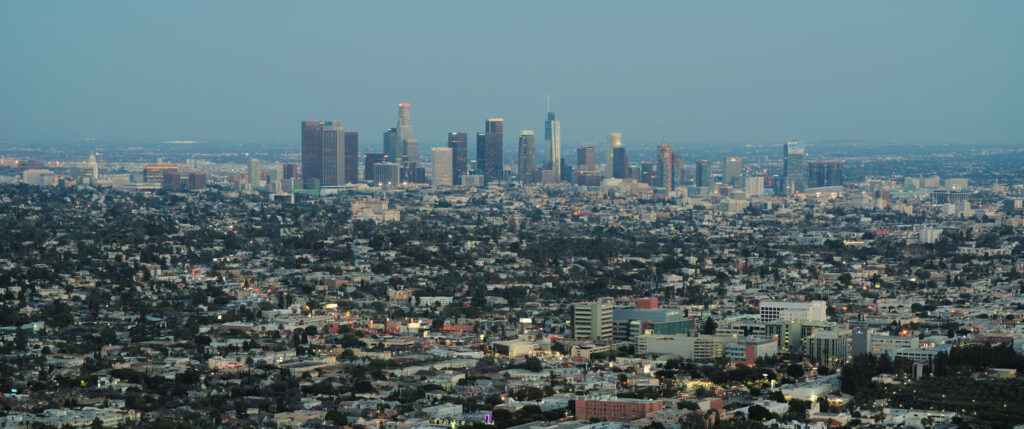
Trump was defending the economic pain of the war — the gas prices, the shipping chaos — when he went further than he has before. “It’s a small price to pay for keeping the world safe, keeping our country safe,” he told the crowd. “They can take out a city. Let them take out Los Angeles, let them take out San Diego. This is a very small price to pay, and it’s going to be over with very soon.”
The crowd appeared to cheer.
Within hours, the clip was everywhere, and California’s political leadership responded with something close to disbelief. Governor Gavin Newsom wrote on X that Trump, having sent federal troops into the state earlier this year, was “now saying our foreign enemies should ‘take out’ Los Angeles and San Diego.” His verdict: “He is deranged and dangerous.”
Then Newsom did something no American governor does on a normal Tuesday. He announced he was directing California’s State Threat Assessment Center — the fusion center that tracks terrorism and security threats — to actively monitor the situation, “in the event that foreign actors interpret the president’s remarks as an invitation to target California.” Calling the remarks “dangerous — if not treasonous,” he added that Trump was “putting a target on two of our biggest cities and one of America’s largest naval hubs.” San Diego is home to the Navy’s largest Pacific base complex.
The White House says it was all about deterrence
The White House moved quickly to contain the fallout. Communications director Steven Cheung posted early Tuesday that the “media freakout” over the remarks was “not rooted in reality.” Trump, Cheung said, “was clearly stating U.S. cities would have been threatened if a nuclear Iran hadn’t been stopped. America is safer because of the President. Iran has no nuclear, no navy, no air force, and no money.”
The administration’s Rapid Response account took direct aim at a Los Angeles Times headline, posting: “No, he didn’t, you buffoons. He was saying the US is fighting to STOP Iran from having the ability to take out LA and San Diego with a nuclear weapon — which they would if they had the chance.”
Democrats were unmoved. House Minority Leader Hakeem Jeffries wrote that “the nuclear annihilation of an American city is no laughing matter.” And criticism crossed party lines: Jim Desmond, a Republican congressional candidate in San Diego and a Navy veteran, said he “vehemently” disagreed with the president’s comments. “As a navy veteran, I served to protect Americans, not write off American cities as an acceptable price of war,” Desmond said. “No American city is expendable and no American family should ever be treated as collateral damage.”
Why this matters
Say what you will about the intent, the fact pattern is stark: a sitting American president, mid-war, publicly named two American cities as things Iran could take out — and a sitting governor responded by putting his state’s counterterrorism machinery on alert. There is no modern precedent for that exchange. Presidents have warned of nuclear threats for decades; they have never attached American zip codes to them as an acceptable cost of their own war policy.
The context sharpens the edge. This is the same California the administration has been fighting for months — the state where federal troops were deployed this year, where Newsom has positioned himself as the loudest Democratic counterweight to Trump and, by wide expectation, a 2028 presidential contender. The president’s defenders will call the remarks a clumsy way of saying deterrence works. But in a shooting war, adversary capitals don’t grade American speeches on a curve. They note what was said. And now a state fusion center will be watching what, if anything, Tehran notes.