The real story of Google’s orbital experiment is not the hardware — it’s the math that forced it. AI’s hunger for electricity has become the tech industry’s most awkward fact: training and running large models devours power and water, and data center construction is now running into open public revolt, from Virginia to Dublin. In Wisconsin this week, a utility asked regulators to let Oracle shoulder fuel costs its other customers had been carrying — a small, telling sign of how the politics of power-hungry computing are shifting. Ground-based data centers are colliding with grid limits, water limits, and voter patience. Space dodges all three at once.
What actually happened
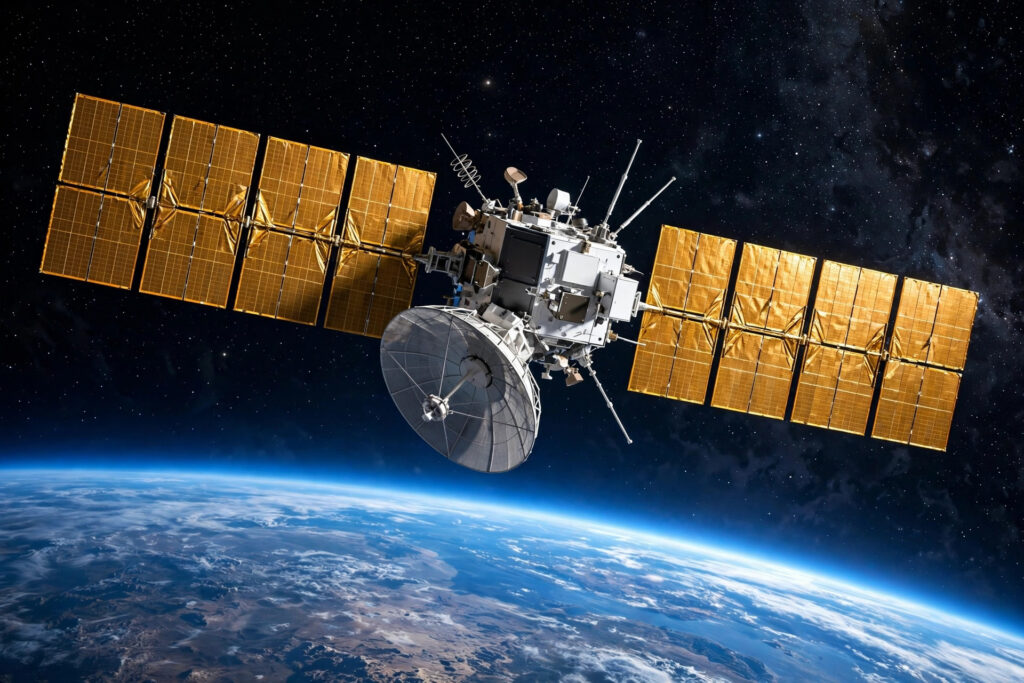
On October 2, a SpaceX rocket carried an unusual passenger into low Earth orbit: a Planet Labs satellite fitted with Google’s AI chips — the Tensor Processing Units, or TPUs, that normally hum inside the company’s earthbound data centers. It’s the first in-orbit test of what Google’s parent company Alphabet is calling Project Suncatcher: the idea that the data centers of the future might not be on Earth at all.
The engineering case is disarmingly simple. Above the atmosphere, sunlight is constant and intense — delivering up to eight times more usable power than on the ground. An orbital data center would never compete with a town for electricity or drain a local reservoir for cooling. It sounds like science fiction. The logic behind it is pure engineering.
Keep expectations modest — for now
This test is designed to answer one basic question: can computing hardware run reliably on solar power beyond Earth? Scientific American, which first detailed the effort, describes it as a moonshot experiment rather than an operational deployment. Nobody is moving Gmail to orbit next year.
But watch the direction of the money. The same week as the launch, reports surfaced of Amazon shifting $8 billion of Nvidia chips into off-balance-sheet vehicles and Broadcom assembling $60 billion in financing for AI chip infrastructure. The industry is spending at a pace that says it expects compute demand to keep climbing for a decade. If that demand can’t be cleanly met on the ground — physically or politically — the sky starts looking like a reasonable place to put it.
Why it matters
Project Suncatcher is a confession disguised as an experiment. Google is betting, in hardware now circling overhead, that AI’s energy problem will outgrow Earth’s willingness to absorb it. The launch doesn’t prove orbital data centers work. It proves the biggest player in AI thinks they might have to.