Informopedia Explains: On a busy Monday morning, the Amiet market in the disputed territory of Abyei was doing what it does every market day — stalls crowded with traders, shoppers haggling over grain, cattle brokers moving between the herds. Then a drone struck, and the market turned into a fireball.
At least 28 people were killed, according to the United Nations. Local officials put the toll far higher — up to 150 to 220 or more. Nobody has been held accountable, and nobody has even agreed on whose drone it was. That confusion is not an accident of war. It is the product of a century-old argument over what this land is, and who it belongs to.
Abyei is a strip of grazing land and villages claimed by both Sudan and South Sudan. It was promised a referendum on its future that never happened, patrolled by United Nations peacekeepers whose mission was supposed to be temporary and has now lasted 15 years, and it sits on oil that both countries remember losing. To understand why a market full of civilians could be bombed with no answers, start in 1905.
The land and its people
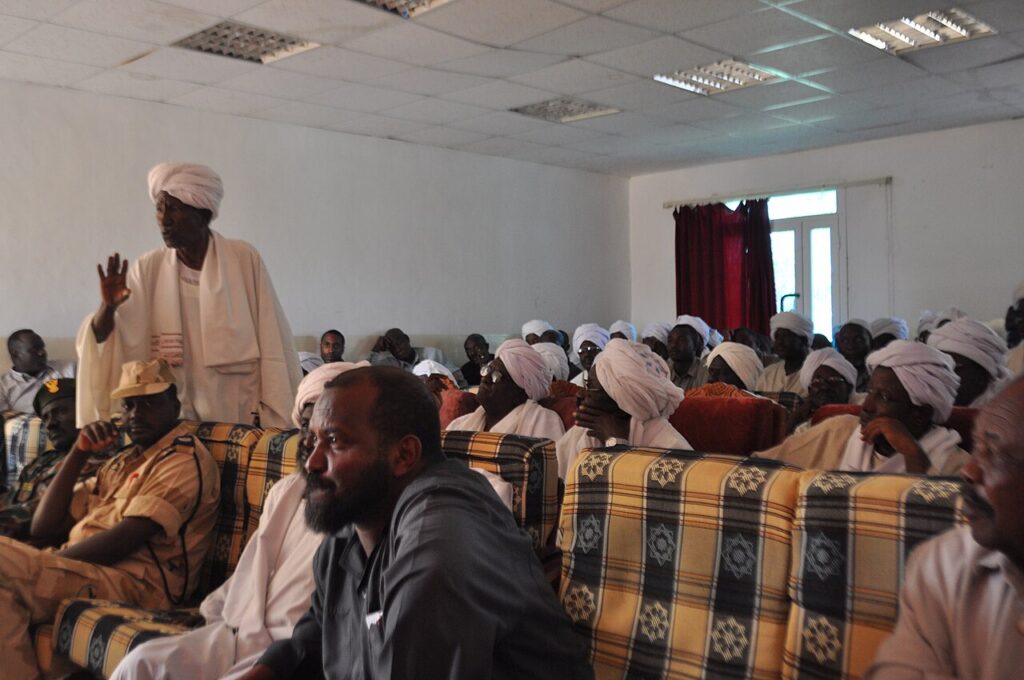
Abyei’s permanent residents are the Ngok Dinka, an agro-pastoralist community — they farm and they herd — who are culturally and politically aligned with the south. During Sudan’s second north-south civil war (1983–2005), the Ngok Dinka largely backed the southern rebels.
But for roughly six months of every year, Abyei fills with another people entirely: about 150,000 nomadic Misseriya pastoralists from the north, who migrate through the area with some 1.6 million head of cattle. Many Misseriya fought in pro-Khartoum militias during the same war. Both communities claim Abyei as theirs — one by permanent settlement, the other by generations of seasonal grazing.
Amiet market, the market that was struck on Monday, is where those two worlds meet commerce. Ngok Dinka traders, South Sudanese returnees who fled earlier fighting, and Sudanese refugees from the current war all do business there. It is not a military target on any map either side has published.
The colonial line
In 1905, the British colonial administration of Sudan did something that would echo for over a century: it transferred the area of the nine Ngok Dinka chiefdoms from Bahr al-Ghazal province — then considered part of the “south” — to Kordofan province, then considered part of the “north”.
It was an administrative convenience at the time. But when Sudan’s borders later hardened into a north-south divide, that colonial pen-stroke turned Abyei’s identity into an open question. Was it southern land that had been administratively misplaced, or northern land by a century of legal habit? Everything since has been an argument about that line.
The referendum that never happened
The 2005 Comprehensive Peace Agreement (CPA) — the deal that ended Sudan’s second civil war — tried to settle the question. Its Abyei Protocol gave the area “special administrative status” and promised its people a referendum on their future: join Sudan, or join South Sudan. It was supposed to be held alongside South Sudan’s own independence referendum in January 2011.
The referendum never happened, for a reason as simple as it is intractable: the two sides could not agree on who gets to vote. The Ngok Dinka said only permanent residents should decide. The Misseriya demanded a vote too, fearing that a South Sudan-aligned Abyei would fence them out of their grazing routes. Neither side would budge. In 2013, the Ngok Dinka held a unilateral referendum anyway — boycotted by the Misseriya and recognized by no one, purely symbolic.
So the legal limbo simply continued. South Sudan voted for independence and became a country. Abyei did not get to vote at all.
The oil
Oil was discovered in Abyei’s region in 1979, and at its peak the area was one of Sudan’s most productive. That made the border question a money question too — until 2009, when the Permanent Court of Arbitration in The Hague redrew Abyei’s boundaries smaller, placing the big Heglig and Bamboo oil fields outside the area and leaving only the minor Deffra field inside. Intensive production in the 1990s has since left reserves in decline.
But small does not mean irrelevant. When South Sudan seceded in 2011, Sudan lost roughly 75% of its oil — so even a minor field in disputed hands is strategic. And Abyei sits astride the corridors of cattle, trade, and oil-linked movement between the two countries. When violence flares there, the routes both economies quietly depend on seize up.
The war that walked in
In May 2011, the Sudanese Armed Forces (SAF) seized Abyei town. In June 2011, the UN Security Council created UNISFA — the United Nations Interim Security Force for Abyei — to demilitarize the area and protect civilians. Its mandate has been extended ever since, most recently to November 2026. Note the word “Interim”: it has been interim for 15 years.
Today the picture is even murkier. South Sudan holds de facto control of much of the area (as of 2024); parts of the district are controlled by a faction of SPLM-N — the Sudan People’s Liberation Movement-North, a splinter of the movement that won the south’s independence. In May 2026, UNISFA warned about a presence in the region of the RSF — the Rapid Support Forces, the paramilitary that has been fighting Sudan’s army since April 2023 — a claim wrapped in denials and counter-claims from both sides.
Both armies in Sudan’s war use drones extensively. That is why Monday’s strike on Amiet market has produced heat but no accountability: the weapon is available to everyone, the airspace belongs to no one, and the territory’s ownership is still, officially, undecided.
Why this matters
This is not a local border quarrel. It is a test of whether the international system can keep its promises to people caught between two countries. Abyei was promised a vote in a peace agreement signed by the world’s powers; the vote never came, and the peacekeepers sent to hold the line are still there a decade and a half later, now warning that the mission is being outflanked by a war neither side will claim.
There is also a humanitarian dimension the world keeps under-counting: the people under the bombs are often the displaced twice over — South Sudanese who returned home after the 2005 and 2011 agreements, and Sudanese who fled the war that began in April 2023. And there is a strategic one: as long as Abyei smolders, the corridor between Africa’s newest country and its northern neighbor remains hostage to whoever flies the next drone.
What happens next
The honest answer is that nobody knows, and the mechanisms that were supposed to resolve it are rusting. The referendum is still “on paper” — the promise exists, the voter rolls do not. Geneva talks on Sudan’s war have not produced a ceasefire, let alone a settlement for Abyei. UNISFA’s mandate runs to November 2026, and every renewal now comes with harder questions about whether 15 years of peacekeeping without a political process is protection or just a pause button.
Accountability for Amiet market looks even thinner. Drone strikes in contested airspace, over disputed land, in a war where both sides deny everything, are close to uninvestigable — which is precisely why they keep happening. Until that changes, the people of Abyei, Dinka farmers and Misseriya herders alike, will keep living in a place whose name means home to both, and whose status satisfies neither.