Tehran, Oct 21 — Iran’s top leaders gave Pakistan’s army chief a blunt message on Tuesday: there will be no talks with Washington until Tehran’s demands are met.
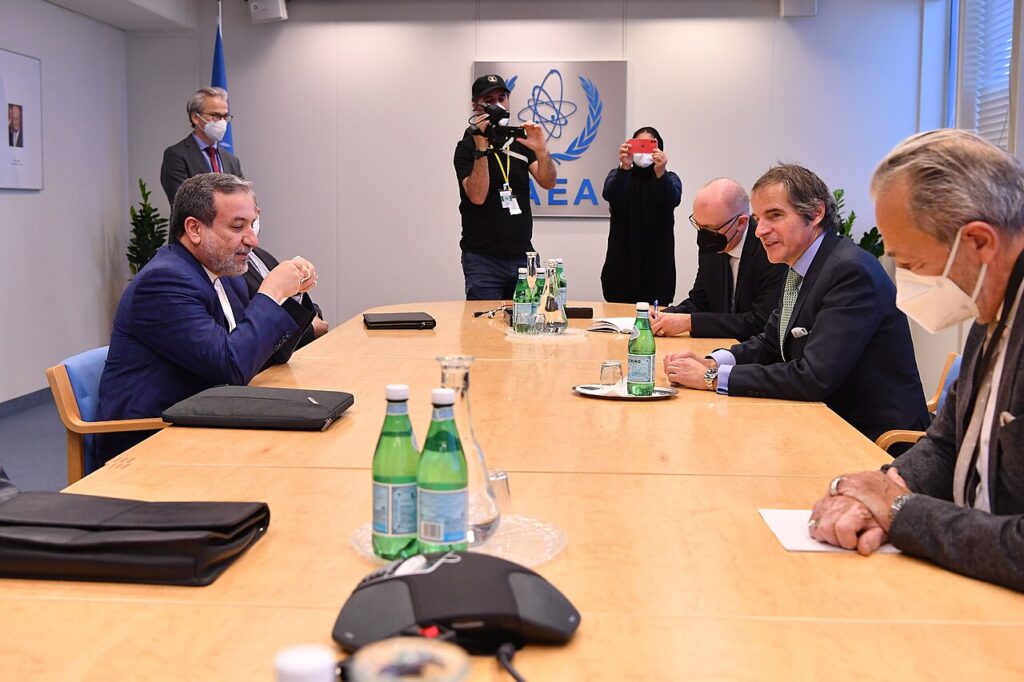
Field Marshal Asim Munir, Pakistan’s army chief and arguably the country’s most powerful man, traveled to Tehran as part of Islamabad’s renewed push to mediate between the United States and Iran — and was met by a wall. President Masoud Pezeshkian discussed “mediation efforts and regional developments” with Munir, Iran’s Nournews reported, but every other Iranian official at the table delivered the same verdict: no negotiations without concessions first.
The sharpest words came from parliament speaker Mohammad Baqer Qalibaf — Iran’s chief negotiator during its April talks with the US — who told Munir that Washington cannot regain Tehran’s trust until it fulfills seven conditions Iran set last month for reopening the Strait of Hormuz.
The demands include ending a US blockade on Iran’s ports, lifting sanctions on its oil exports, and ending hostilities on all regional fronts, Iranian readouts said. A ceasefire across the Middle East and the unfreezing of Iran’s assets abroad are also on the list.
Supreme National Security Council secretary Mohsen Rezaei was even more categorical. “Not even a tiny bit of enriched nuclear material will leave Iran,” he told Munir, according to Iranian state TV, calling the stockpile “a major asset and national wealth for the Iranian people, intended for use within the country.” He added: “There will be no negotiations until America takes steps to build trust — a process that must begin with the fulfillment of Iran’s conditions.”
That position reaffirms Iran’s supreme leader, Ayatollah Mojtaba Khamenei, who has insisted near-weapons-grade uranium must not be shipped abroad. It also directly contradicts what Washington is demanding: US Vice President JD Vance said earlier this month that Iran must make a “meaningful” reduction in its uranium enrichment capacity to end the eight-month-old war.
The gap between the two sides is the reason Pakistan’s mediation has gone nowhere. Islamabad brokered an interim peace agreement in June — the Islamabad Memorandum — that ended a conflict which began on February 28 and ran until an April 8 ceasefire. But fighting resumed within weeks, the deal collapsed, and indirect talks on the sidelines of the UN General Assembly last month failed to produce a breakthrough. Russia’s foreign minister landed in Tehran two days earlier with Moscow’s own mediation offer — and got no further.
Iran’s Foreign Minister Abbas Araqchi, meanwhile, has floated a conditional opening: he said earlier that if Washington accepts Tehran’s conditions, the strait could reopen within six days, with talks resuming on the seventh day. So far, there has been no such acceptance — and, per Tuesday’s meetings, no appetite in Tehran to soften the terms.
The war began in late February, when the United States and Israel launched a wave of surprise attacks on Iran while Washington and Tehran were negotiating over Iran’s nuclear program. Israel, the US and other Western states have long accused Iran of seeking nuclear weapons, pointing to its enrichment of uranium to 60 percent — far above civilian levels and close to the 90 percent needed for a weapon. Iran denies seeking nuclear weapons.
Why this matters
The significance of Tuesday’s rebuff goes well beyond Pakistan’s diplomatic bruising. The Strait of Hormuz carries roughly a fifth of the world’s oil supply, and as long as Iran keeps its conditions unmet and its uranium inside the country, the region’s most important shipping chokepoint stays under a shadow — and the risk of renewed strikes stays on the table. Islamabad’s failure also closes one of the few back channels that had actually produced a result: the June memorandum was the only agreement either side honored long enough to matter. With the mediator sent home empty-handed and Washington showing no sign of conceding sanctions relief, the war’s next phase is more likely to be decided by pressure than by negotiation.