Donald Trump says the Starlink mystery is solved. Elon Musk “put it back,” the US president told reporters on Thursday. There is just one problem: in Kyiv, nobody agrees.
The Wall Street Journal reported on Thursday that Trump personally telephoned Musk on October 21 and asked him to lift the restrictions throttling Ukraine’s military satellite service. Trump would not confirm the call. “I don’t want to comment on it, whether I called, or whether somebody else called, it doesn’t make a difference,” he said. “The bottom line — he put it back.”
Kyiv’s answer was blunt. A Ukrainian official told the Kyiv Independent on October 22 that the restoration claims were “all false.” “Overall, nothing has changed anywhere,” the official said. The 161 km/h speed cap on Starshield — the military-grade tier of the Starlink system — is still in place.
President Volodymyr Zelensky said as much himself on Thursday. Speaking to reporters, he said the speed “has not been restored to 400 [km/h] yet” and that he was waiting on US Secretary of State Marco Rubio, who had promised him information within about 48 hours. Some Ukrainian units reported higher speeds, but a source told CNN the level was “clearly not enough to intercept jet powered drones.” Ukraine, the source said, is still waiting for clarification from the American side — and there has been no response yet.
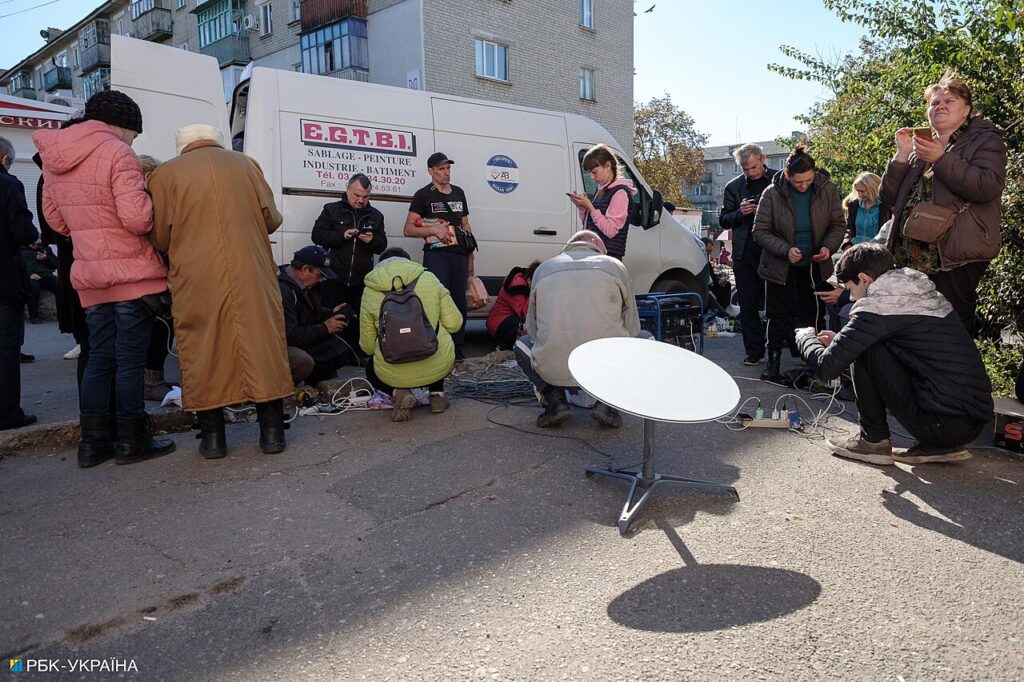
The numbers explain the frustration. Ukraine’s military has been living with the cap since October 14, when the throttling began without warning — the Musk personally ordered the slowdown that the Journal later exposed. At 161 kilometres per hour — roughly the pace of a car on a highway — Ukraine’s interceptor drones cannot fly fast enough to knock down Russia’s jet-powered attack drones. Before the cap, terminals ran at about 400 km/h. Starlink, built by Musk’s SpaceX, is the backbone of Ukraine’s battlefield communications: it coordinates artillery, flies reconnaissance drones and keeps command links alive where ordinary networks have been destroyed.
The dispute played out against a rare moment of conciliation from Zelensky. In an interview with CNN’s Christiane Amanpour, aired on Thursday, the Ukrainian president addressed his bitter rift with Trump directly. “It’s not something personal between me and President Trump,” he said — while warning that easing pressure on Vladimir Putin would “make him stronger.”
Zelensky went further, alluding to the possibility of freezing the current front lines — “ceasefire, stop the killing, sit and speak.” But he ruled out surrendering an inch of ground: “Our land is very important because it’s about people. It’s not about kilometers,” he said. “Nobody will recognize these territories, which are temporarily occupied, as Russian territories.”
The interview landed in the middle of a new diplomatic sprint. Trump’s special envoy Steve Witkoff spent three hours with Putin in St. Petersburg on Wednesday — a day after meeting Zelensky in Norway — and Putin agreed to talks in November. Overnight, Russia answered with hundreds of drones and ballistic missiles. Trump had said on Wednesday that his administration was “the closest we’ve been” to settling the war.
There were small signs of support for Kyiv. Zelensky announced on Thursday that Finland would provide a €300 million ($336 million) package, including closer cooperation on satellites. The European Commission demanded SpaceX restore the service days earlier and floated its own satellite network. But the Ukrainian president told CNN his shopping list was short: “Not to lift sanctions from Putin … (and) to give us better missiles.”
That last point is why the Starlink saga matters beyond one billionaire’s satellite network. Washington has restored Ukraine’s missile early-warning feed, so Kyiv can now see incoming Russian ballistic missiles. But Zelensky told CNN that Ukraine’s European allies have sent only some air-defence missiles, and “it’s not enough to defend ourselves.” Knowing a missile is coming and being able to shoot it down are two different things — and while the cap holds at 161 km/h, one of Ukraine’s few home-grown answers to the drone threat stays grounded.