Saudi Arabia’s state oil giant Aramco has ordered staff to evacuate its sprawling headquarters in Dhahran and work remotely, six people with knowledge of the matter told Reuters on Thursday — the first time the world’s largest oil company has cleared its nerve centre since the Iran war began nearly eight months ago.
The evacuation, which AFP separately confirmed through two of its own sources, extends a remote-work order that had already applied to non-essential staff since a Houthi strike damaged the complex last week. “There was an evacuation order issued for these staff, no specific reason was given,” one source told AFP. Residential areas inside the vast Dhahran compound were not evacuated.
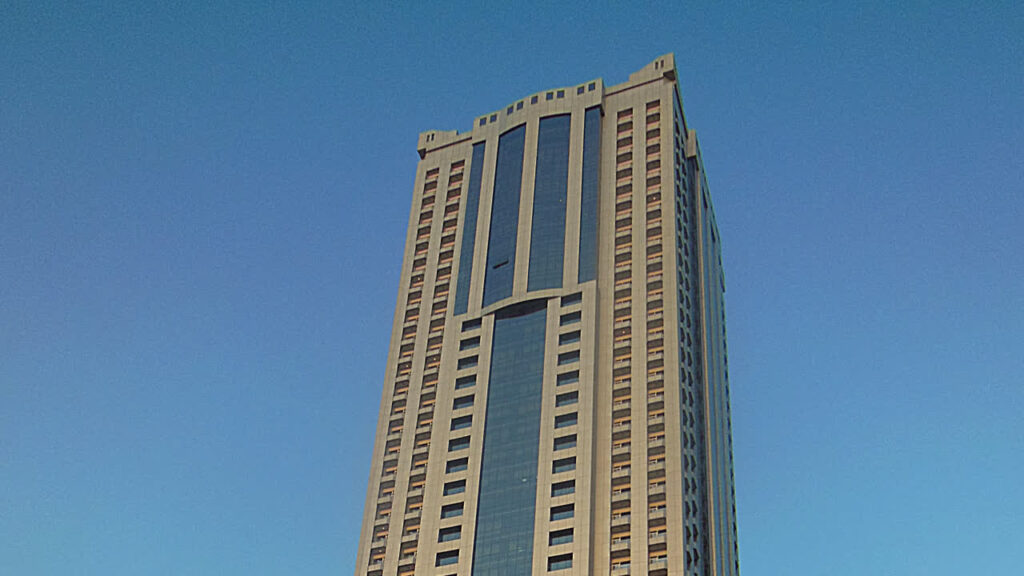
The Houthis — Yemen’s Iran-aligned rebels, who have been striking Saudi targets for weeks — caused extensive damage to the headquarters earlier this month when they struck the building, with fire spreading across several floors, according to Reuters. Two company employees told AFP last week that a tower in the complex had been hit: “The top three floors were gone,” one said. Saudi officials have confirmed that a building in the area housing Aramco’s operations centre was struck. (Our report on that strike is here.)
The headquarters is not just office space. It houses an operations centre that helps Aramco oversee its onshore and offshore oil rigs, refineries, export terminals and thousands of kilometres of pipelines. Aramco is the world’s largest oil exporter, and Dhahran, in Saudi Arabia’s oil-rich east, is the heart of the kingdom’s petroleum industry. Moving its staff out is a decision the company does not take lightly.
The evacuation order came hours after the deadliest day of the Houthi campaign in weeks. On Wednesday night, a strike on King Fahd International Airport in Dammam — minutes from Dhahran — killed two people, a Saudi citizen and an Indian national, and wounded eight. Separately, two people were killed when Saudi air defences intercepted a drone attempting to hit a facility at Aramco’s Shaybah oilfield. (Full account of the Dammam attack here.) The Houthis also claimed strikes on Aramco facilities in the Red Sea port of Yanbu and the Saudi defence ministry in Riyadh, though Saudi authorities did not confirm those attacks.
Markets reacted immediately. The Saudi benchmark TASI index dropped 2.5 percent on Thursday after the Aramco news, and Brent crude futures surged to $112.01 a barrel — their highest since May. “Reports of Middle East crude oil exports exceeding pre-conflict levels are more than countered by attacks on ships in the Strait of Hormuz and the Houthi strikes on Saudi Arabia and on its oil infrastructure,” PVM Oil analyst Tamas Varga said.
Riyadh has answered with a wave of strikes on Houthi missile-launcher sites, saying it has intercepted many of the ballistic missiles fired by the group. The Saudi-led coalition said on Thursday it had intercepted drones over Riyadh and the holy city of Medina. Twenty-two people have been killed in attacks on Saudi airports this month alone, according to an AFP tally. (Britain has begun flying RAF Typhoons over Saudi Arabia to help defend its skies.)
Why this matters
The evacuation is a signal about where this war is going. For most of the conflict, Aramco kept running even as fighting raged in Yemen and ships burned in the Strait of Hormuz — the narrow waterway through which a fifth of the world’s oil flows. The company has built its reputation on operational resilience: its chief executive has said its incident-response capability is now six times the industry average, with Saudi output recovering to about 8 million barrels a day in September.
Now the people who run that machine are working from home. The move tells markets, Washington and Tehran the same thing: the Houthis can reach the nerve centre of the world’s most important oil company at will, and no air defence is catching every drone. The United States has already begun withdrawing non-emergency diplomatic staff and families from Saudi Arabia, and oil prices are pricing in a war that is still escalating.
For a global economy already paying more than $110 a barrel, the question is no longer whether the Houthi war is disrupting Saudi oil. It is how long the rest of the world can afford to pretend it isn’t.