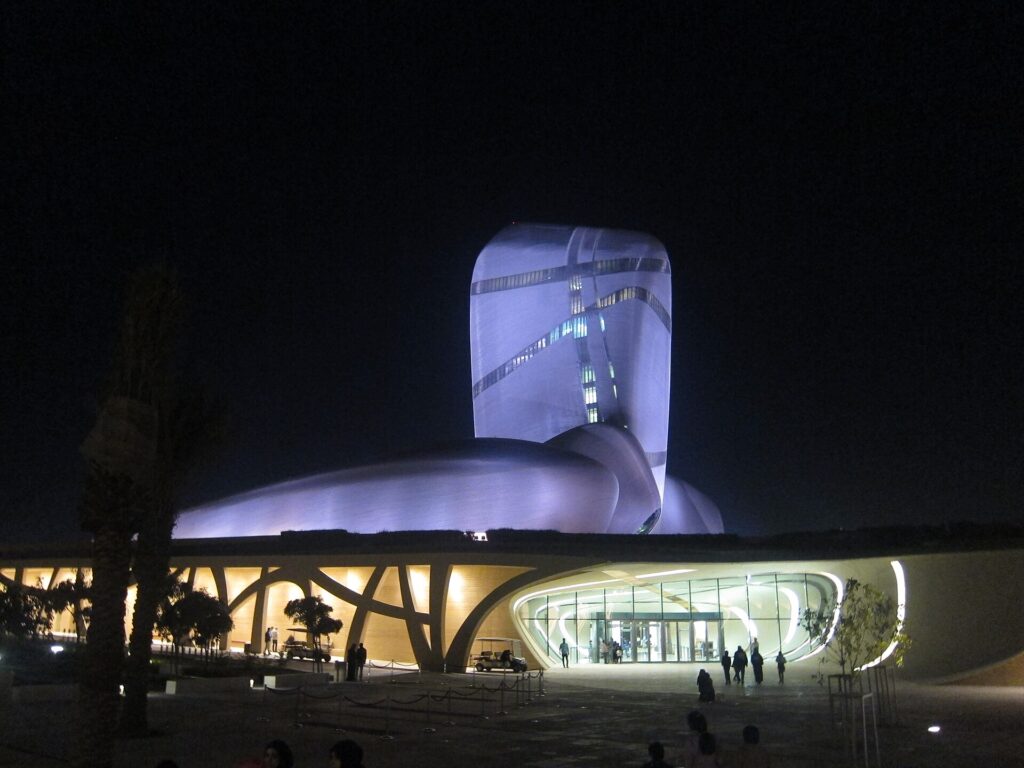
For the first time in the Saudi-Houthi war, Yemen’s Houthis have struck the corporate headquarters of Saudi Aramco — the world’s largest crude oil producer — hitting an administrative building at the company’s vast complex in the eastern city of Dhahran and setting part of it on fire.
Saudi Arabia’s energy ministry confirmed the attack on Wednesday, saying in a statement that “an administrative building belonging to Saudi Aramco in the city of Dhahran, Eastern Province, was targeted, causing a limited fire.” There were no injuries or deaths, the ministry said, and emergency crews responded late on Tuesday night.
A company source told Reuters that a ballistic missile struck an office tower inside the headquarters complex, damaging its top three floors, and that the building caught fire. The fire was later extinguished.
The Saudi-led coalition’s account was slightly different. Its spokesman, Major General Turki al-Maliki, announced on X that air defenses had intercepted a ballistic missile fired by the Houthis toward Dhahran, and that fragments from the interception fell on a residential area. The two accounts do not fully reconcile: the ministry described a building that was “targeted,” while the coalition’s wording leaves open whether the tower took a direct hit or was damaged by debris.
The Houthis claimed the strike outright. Their military spokesman Yahya Saree said the group had carried out “a high-quality military operation targeting Aramco in Dhahran,” with ballistic and cruise missiles and drones — alongside strikes on Riyadh’s airport and a refinery in the capital. “Operations toward Saudi depths will continue in the coming days, targeting Saudi enemy airports and oil facilities,” he said.
The attack was part of a wider night of fire. Saudi civil defense said four people — two women, a man and a child — were wounded in Riyadh by debris from two intercepted Houthi cruise missiles, and 15 homes were damaged. Residents received phone alerts warning of a “hostile aerial threat”; one witness told AFP he watched a projectile cut across the sky above a shopping mall, leaving a yellowish trail of light and smoke before the explosion.
A threat carried out, almost word for word
The Dhahran strike landed barely a day after the Houthis declared Aramco’s facilities “legitimate targets” and told workers to evacuate. It followed a day of escalation on both sides: earlier Tuesday, the Saudi-led coalition bombed a fuel depot in Houthi-held Sanaa, and the Saudi cabinet warned the Houthis would bear the “consequences” of their attacks.
For a week, the Houthis have been firing missiles and drones at key Saudi sites. Riyadh’s King Khalid International Airport has been struck four times; a Saturday strike killed at least 12 people — the deadliest attack on Saudi soil in a decade — and flights to the capital remain suspended through October 17.
Washington is now weighing a role. President Donald Trump said the Houthis were behaving “very badly,” and has said the United States “may” join Saudi strikes on the group. The Houthis have warned they would target American interests if Washington intervenes.
Why this matters
To grasp the shock of Tuesday night, consider what Aramco is: not just a big company, but the largest crude oil producer on earth, the backbone of the Saudi economy, and the revenue engine behind everything from the kingdom’s budget to Crown Prince Mohammed bin Salman’s Vision 2030 diversification plan. The Dhahran complex — a sprawling gated campus that has been Aramco’s corporate seat since 1952 — houses the operations center overseeing its fields, pipelines, refineries and export terminals.
Houthi missiles have hit Saudi oil infrastructure before, most famously the 2019 attacks on Abqaiq and Khurais. But this is the first time the company’s headquarters itself has been struck in this war — not a remote desert facility, but the administrative heart of the world’s most important oil company.
The timing deepens the economic risk. The war reignited last month after Houthi forces seized key areas along the Bab el-Mandeb strait — the narrow waterway between Yemen and East Africa that funnels shipping between the Red Sea and the Gulf of Aden. With the Strait of Hormuz already restricted and the International Energy Agency warning global diesel supplies will stay tight into 2027, a widening conflict around the Gulf’s energy infrastructure is what oil markets feared most.
For readers new to this conflict: the Houthis are an Iran-aligned armed movement controlling much of Yemen, including the capital Sanaa. Saudi Arabia has led a coalition backing Yemen’s government since 2015; a UN-brokered truce held from 2022 until fighting erupted again this year. Each side now seems to be answering energy infrastructure with energy infrastructure — and neither is signaling restraint.


One Comment