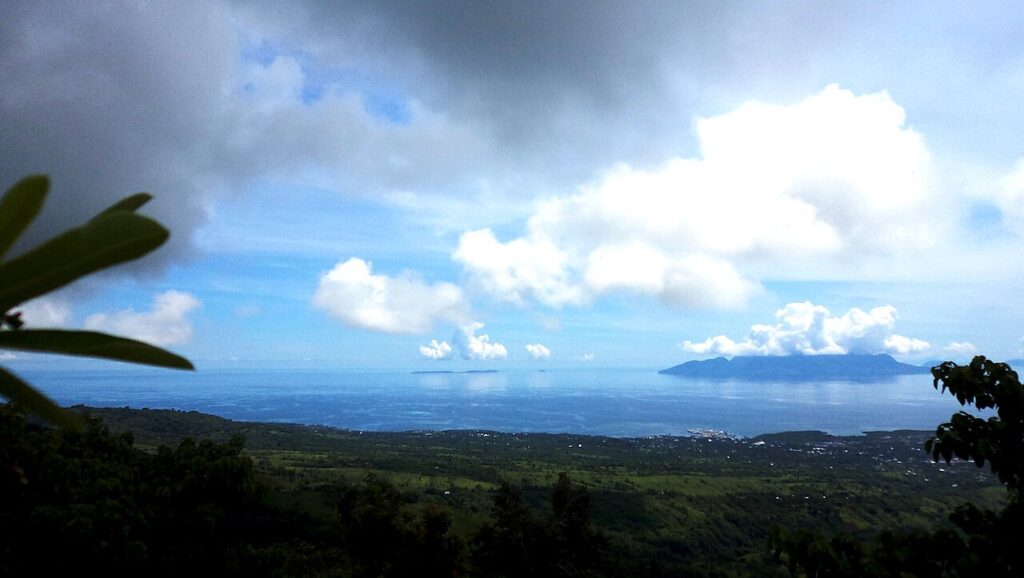
A magnitude-7.7 earthquake struck the Indonesian island of Flores before dawn on Saturday, and the death toll is climbing as rescue teams finally reach districts that were cut off for hours. At least 51 people are dead, more than 100 are injured, and officials warn the count will rise.
The quake hit at about 5:58 a.m. local time, the U.S. Geological Survey said, with its epicenter roughly 68 kilometers north-northwest of the town of Ende at a depth of just 10 kilometers. Shallow quakes that close to the surface tend to do far more damage than deep ones, and this one arrived while most people were still asleep.
It has since been followed by 341 aftershocks, the largest measuring magnitude 6.2, Indonesia’s meteorological agency (BMKG) reported. In Sikka’s port town of Maumere, residents spent the night sleeping outdoors under tarps, afraid to go back inside. “The tides were rising, so we ran,” Abdul Mutas, a Maumere resident, told reporters. Anastasia Imad, a farmer in Labuan Bajo — the town most tourists know as the gateway to Komodo National Park — described shaking strong enough to nearly collapse her home.
The toll is spread across six districts. Manggarai recorded 24 deaths and East Manggarai 17, with the rest in Sikka, Ngada and Ende. Thirty-six people were seriously injured and 77 had minor injuries, Deputy Health Minister Benjamin Paulus Octavianus said in a televised briefing. In Maumere alone, rescuers found 20 dead, six injured and two people still trapped under rubble, said Fathur Rahman, head of the city’s rescue agency.
East Nusa Tenggara governor Emanuel Melkiades Laka Lena said most of the victims died in their sleep as rubble fell onto them. Suharyanto, the head of Indonesia’s National Disaster Management Agency (BNPB), said earlier that residents remained trapped in several buildings and that landslides had blocked roads across the affected area.
The damage is enormous. More than 900 homes were destroyed and another 450 damaged, with over 1,300 homes and 167 public facilities including schools and health centers damaged in total. Roughly 5,000 people have been forced into temporary shelters. Twenty petrol stations are shut because of blackouts, and power and communications outages are still hampering the response.
Nagekeo, the district closest to the epicenter, was unreachable for hours. Landslides blocked the roads, mobile networks went down, and one rescue team had to attempt the journey by ferry. About 2,000 residents of Nagekeo evacuated as a precaution.
A tsunami warning went out within minutes of the main tremor, then was lifted about three hours later. Indonesia’s meteorological agency recorded waves of less than a meter in several places — but also a 1.61-meter wave that hit the coastal village of Riung in Ngada district, blanketing it in mud and debris, stranding fishing boats and damaging homes. Smaller waves were observed in Maurole, Bulukumba and Sape.
The response has been swift. More than 3,500 military and police personnel have been deployed for rescue and relief operations. Teams have cleared the worst landslides and reopened roads to isolated villages, though outages continue to hamper efforts, officials said. Authorities are considering declaring a provincial emergency to unlock additional funding, and relief agencies have begun distributing food, water, blankets and medicine.
Why this matters
Indonesia is the most earthquake-prone country on Earth — a nation of 290 million people spread across 17,000 islands on the Pacific “Ring of Fire,” where tectonic plates grind against each other. This is the deadliest earthquake to hit the country since the 2022 West Java quake, and Flores has seen this before: a 1992 quake and tsunami killed about 2,500 people on this same island, many of them in Maumere.
What happens in the next 48 hours will be a stress test watched well beyond Indonesia. Archipelago nations — from Japan to the Philippines to Pacific island states — all face the same nightmare scenario: a big shallow quake before dawn, a small tsunami, and whole districts physically unreachable by road. How fast Indonesia’s teams clear the landslides, restore communications and get aid into places like Nagekeo will become the reference point for disaster planners everywhere. It echoes the race against time we saw earlier this month with another magnitude-7.7 earthquake that rocked Panama — and a reminder of why scientists still can’t predict earthquakes.
For now, the numbers are still moving, and that is the grim part of this story. Every official figure released on Saturday — 38 dead, then 47, then 51 — was higher than the last. With people still trapped and whole villages only just reached, that pattern is unlikely to stop.



One Comment