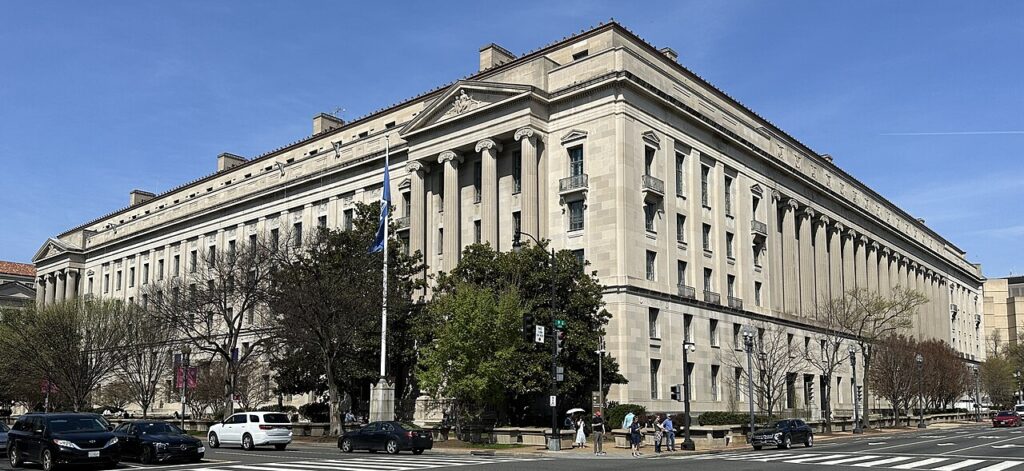
Before dawn on Monday, federal agents knocked on doors across California. By the time the sun was up, 11 people were in custody — and the US Department of Justice had charged 28 people with illegally registering and voting in American elections.
All 28 are lawful permanent residents — “green card” holders. That means they are allowed to live and work in the United States, but they are not US citizens, and noncitizens are barred from voting in federal elections.
The Justice Department is calling it “Operation Protect the Vote”: a coordinated sweep by all four of California’s US attorneys’ offices. Thirteen of the cases were filed in the Central District around Los Angeles, six in the Eastern District, five in the Northern District and four in the Southern District.
The charges vary. Some defendants are accused of fraudulent voter registration. Others face counts of falsely claiming US citizenship in order to register or vote. Several are charged with making false statements on their naturalization applications. The felonies carry up to five years in federal prison; the misdemeanor voting charge carries up to a year.
One of those arrested was Omar Alexander Muñoz, 72, a Belizean national. Homeland Security agents arrived at his home in Commerce, southeast of Los Angeles, at around 6 a.m. Investigators allege he registered to vote in September 2019 after falsely claiming to be a US citizen — then voted in the 2020 election, twice in 2022, and again in 2024. He is also accused of lying under oath on his naturalization application, where he stated he had never claimed to be a citizen. Another defendant, José Probitsado Amaro, 51, a Filipino national living in National City in San Diego County, is accused of fraudulently registering after claiming citizenship he did not hold.
“In particular, they’re charged with some combination of unlawful voting by an alien, a false claim of U.S. citizenship in order to vote or register to vote, and knowingly depriving the residents of California of a fair and impartial election process,” said Trent McCotter, the Justice Department’s acting deputy attorney general.
Bill Essayli, the top federal prosecutor in Los Angeles, was blunter: “This is not a conspiracy theory,” he said. “This is not made-up stuff.” FBI Director Kash Patel announced on X that more arrests had been made, writing that “protecting American elections from criminal interference remains a top priority” for the bureau.
The arrests did not come out of nowhere. Last week, the Justice Department sent California’s election officials a list of about 20,000 people it describes as “likely aliens” registered to vote, and asked the state to check their citizenship. Days earlier, the department sued California, seeking a court order to stop the state from counting mail-in ballots cast by people on that list until their citizenship could be confirmed. California refused to cooperate. Asked about the timing of the arrests — just weeks before the election — McCotter blamed the state: “It’s an emergency of their own creation.”
California’s election officials have consistently defended the state’s system, saying voter fraud is rare and that sweeping voter-roll purges in the middle of active mail-in voting would violate federal law and risk disenfranchising legitimate voters. And the scale of what the Justice Department actually found is, by its own numbers, small: a review of the department’s case descriptions suggests roughly 25 to 27 allegedly illegal ballots were cast across California’s 2020, 2022 and 2024 general elections — out of more than 45 million ballots cast in those elections, about 0.00006 percent.
Every defendant is presumed innocent unless proven guilty. Prosecutors say the operation is not over: Craig Missakian, the top federal prosecutor in Northern California, said “Operation Protect the Vote” would continue through the election and beyond. The department says it has now charged 113 people nationwide with illegal voting and registration offenses.
The timing matters. Early voting is already underway in California ahead of the November 3 midterms — the elections in which Americans choose all 435 members of the House of Representatives and a third of the Senate, and which will decide control of Congress for the rest of President Trump’s term. It is the same election season in which the FBI is already investigating suspicious letters mailed to election offices across the country.
Why this matters beyond the United States: the midterms will shape American foreign policy for the next two years — including aid to Ukraine, tariffs on China and Europe, and the trade deals Washington is negotiating around the world. A federal crackdown on voting in America’s largest state, carried out against the resistance of that state’s own government and with the numbers this small, has turned a law-enforcement operation into a test case for a much bigger fight: who gets to run American elections, and who gets to say they were fair. That verdict will be rendered not only in courtrooms, but at the ballot box on November 3.