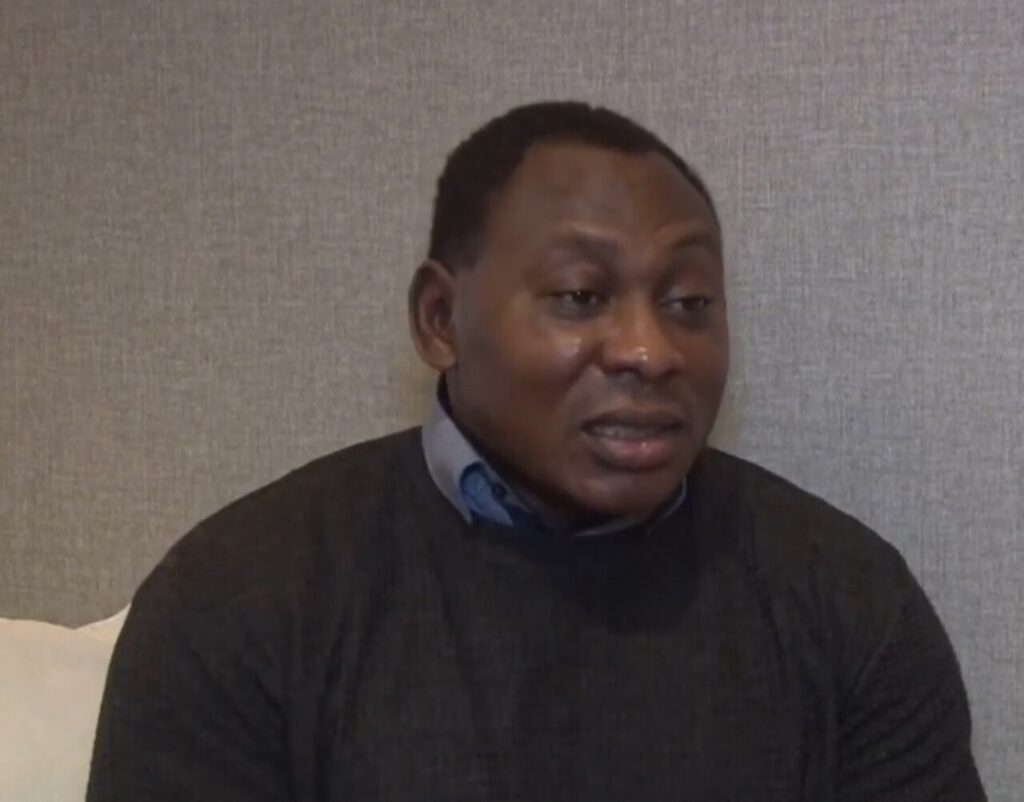
VERDICT: FALSE — Daniel Amokachi never endorsed a prostatitis cure. The viral clip is AI-generated, and the footballer himself has said so.
The claim
A video circulating on social media shows former Nigerian football star Daniel Amokachi looking into the camera and describing how he suffered from prostatitis — inflammation of the prostate gland — before a “drink” restored his health. In the clip, he attacks pharmaceutical companies as “killers in white coats” and urges viewers to buy the product. It is framed as a personal testimonial: a beloved sports hero sharing his own recovery story.
It worked. On 16 October 2026, Amokachi posted a response on his verified Instagram account saying he had been receiving calls from people who had bought the product — convinced by what they believed was his endorsement.
The facts
Amokachi’s response is unambiguous. Speaking directly to camera, the 53-year-old — Daniel Owefin Amokachi, the former Nigeria international (44 caps, 1994 Africa Cup of Nations winner, 1996 Olympic gold medallist) and ex-Everton striker nicknamed “The Bull” — said the endorsement video was “AI constructed.” He never lived the testimonial’s story, never attacked drug companies (“I have no issue with pharmaceutical companies”), and never endorsed any drink. He said he intends to take legal action against whoever made it, and warned that artificial intelligence “should be used for good” but is being misused “for the wrong reasons.”
He is not an isolated target. This is a well-documented scam playbook. AFP has reported on deepfake videos using the likenesses of public figures — including Anthony Fauci and former US cabinet member Ben Carson — to sell bogus cures, and on hundreds of ads using impersonations of celebrities such as Arnold Schwarzenegger and Mike Tyson to push supplements. In Nigeria, regulators have been sounding the alarm for over a year: the country’s Securities and Exchange Commission warned in 2025 about AI-fabricated celebrity endorsements spreading through Facebook, Instagram and Telegram.
The Amokachi clip fits the template precisely — right down to the details. A Nigerian analysis published just days ago described the current wave of scam ads: former footballers reciting near-identical miracle-cure testimonials, prostatitis listed among the most-targeted conditions, and the tell-tale “white coats” villain framing. The viral Amokachi video has all three. Consumer investigators at Which? documented the same tactic this week.
There is no credible evidence behind the product’s claims, and no legitimate health product is sold through a synthetic celebrity testimonial. Real endorsements come with names, companies and regulatory paper trails. This one came with an algorithm. The episode is one more reason hundreds of scientists have called for powerful AI systems to be cut off from the open internet — though even AI’s own pioneers can’t agree on how dangerous the technology is.
Verdict
FALSE. Daniel Amokachi did not endorse a prostatitis cure, did not call pharmaceutical companies “killers in white coats,” and did not share a personal recovery story. The video is an AI-generated fabrication, as Amokachi himself confirmed on 16 October. Anyone who bought the product on the strength of that clip was deceived by a machine-made impersonation.
Why it matters
Prostatitis is a real, common and treatable condition — and that is exactly why it makes good bait. Men dealing with an embarrassing health problem are prime targets for “miracle” pitches that promise a cure without a doctor’s visit. Every bottle sold on a fake testimonial steals twice: once from the buyer’s wallet, and again from the treatment that might actually have helped. Amokachi was already receiving calls from buyers. Somewhere, a man is drinking a useless product instead of seeing a urologist. That is the cost of one convincing deepfake.




2 Comments