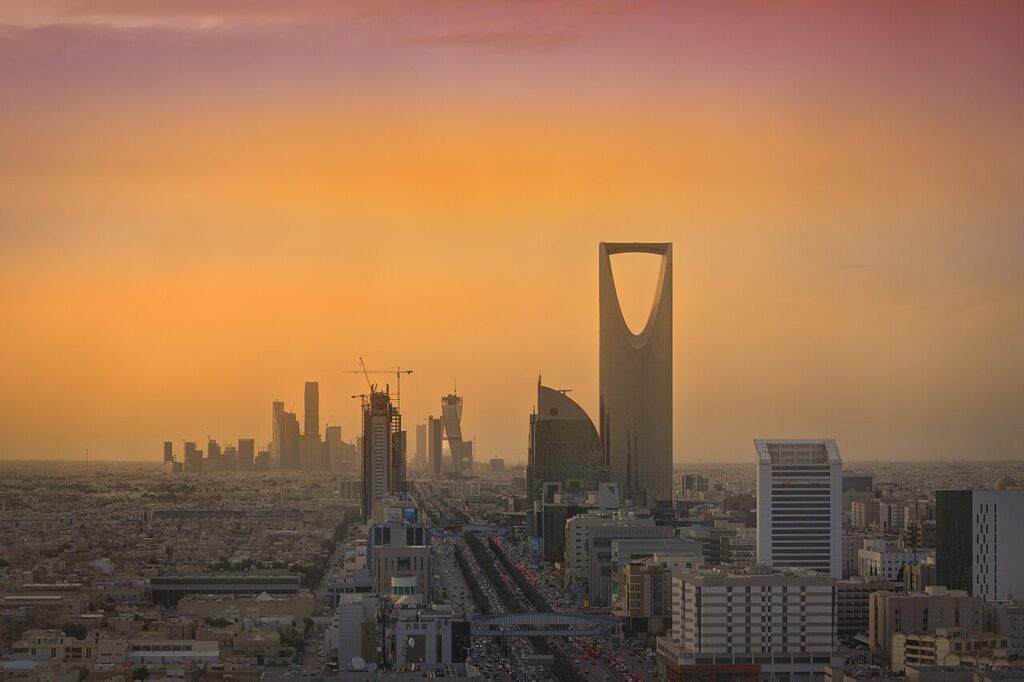
One week before the biggest names in global finance were supposed to land in Riyadh, Saudi Arabia has called the whole thing off.
The Future Investment Initiative — the desert-kingdom answer to Davos, and the crown jewel of Crown Prince Mohammed bin Salman’s economic agenda — will not take place next week after all. Organizers announced on Monday that the October 26–29 gathering is postponed until 2027, the latest and most symbolic casualty of the kingdom’s escalating war with Yemen’s Houthi rebels.
The announcement came from FII Institute CEO Princess Maha bint Mishari Al Saud, who framed the decision as quality control rather than surrender. “This decision has been taken to ensure that our milestone tenth edition delivers the full scale, quality and impact that our partners, members, speakers and delegates expect,” she said in a statement. Organizers said new dates for 2027 “will be communicated very soon” and that all registrations and partnerships remain valid.
The statement never mentioned the missiles. It didn’t have to.
The conference nobody wanted to fly to
The tenth-edition guest list was a Wall Street who’s-who: JPMorgan Chase CEO Jamie Dimon, Citigroup CEO Jane Fraser, Goldman Sachs CEO David Solomon and BlackRock boss Larry Fink were all expected in Riyadh. Each runs a bank whose board would have had to sign off on flying its chief executive into a capital that has been under near-daily missile and drone attack.
According to the Wall Street Journal, that sign-off was already in doubt. Bankers at JPMorgan and Citigroup were canceling meetings, and teams around Dimon and Fraser were openly debating whether their bosses should travel at all. Attendees were consulting security firms about the risks, including fears that hotels and landmarks around the conference could become targets. Around the time organizers were making the call, Saudi civil-defense authorities briefly broadcast a warning of a possible threat to Riyadh — then sounded the all-clear.
Some delegates had reportedly prepared an elaborate workaround: landing in Bahrain and driving roughly five hours across the desert to Riyadh, according to CNBC, because flying directly into the Saudi capital no longer felt routine.
A reversal nine days in the making
As recently as October 10, the organizers had insisted everything would go ahead as planned, promising “comprehensive security measures” at airports, venues and official hotels. The World Petroleum Congress made the same pledge the same week.
What changed is visible in the wreckage. On October 10, a Houthi missile struck Riyadh’s King Khalid International Airport, killing 12 people and injuring more than 300 — the deadliest attack on Saudi soil in over a decade, and one that forced the suspension of operations at the country’s main international gateway. Days later, missiles and drones hit Aramco’s headquarters in Dhahran, the symbolic heart of the kingdom’s oil empire. A strike on the southern city of Najran wounded six more.
The Houthis, an Iran-aligned rebel movement that controls much of Yemen, have exchanged near-daily strikes with Saudi Arabia in recent weeks. The kingdom, which intervened in Yemen’s civil war in 2015, is now fighting a war that has moved onto its own tarmac.
Why this matters
The FII was never just a conference. Since its launch in 2017, it has been the flagship showcase of Mohammed bin Salman’s Vision 2030 — the sweeping plan to remake an oil-dependent economy into a hub for tourism, technology and sport, and to lure the billions in foreign capital needed to pay for it. The tenth-anniversary edition was meant to celebrate that transformation. Instead, it has become the clearest measure yet of how the war is straining the kingdom’s finances and ambitions: war costs are mounting, the conference that was supposed to sell investors on Saudi Arabia has been postponed because those investors no longer feel safe visiting.
The calendar is emptying around it. Earlier this month, the European Union postponed a planned Riyadh summit as the fighting escalated. American embassies across the Middle East have warned US citizens of flight cancellations and unrest. Each cancellation feeds the next: when the world’s biggest bankers won’t fly to Riyadh, it signals to every other investor watching.
Saudi Arabia’s oil exports still reach the world’s refineries; that is the country’s economic anchor. But the bet Mohammed bin Salman placed in 2016 was that the kingdom’s future would be built on capital that chooses to come — tourism resorts, technology parks, sports spectacles, financial districts. On Monday, the Houthis showed that missiles can unmake that bet, one postponed summit at a time.
The desert Davos is off. The question now is what, if anything, the kingdom’s partners decide to schedule instead.