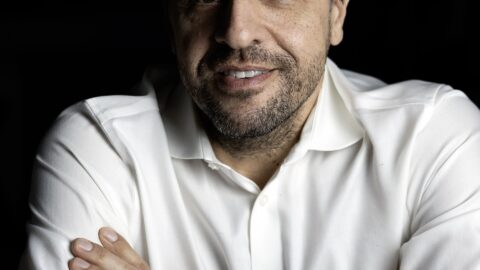
The 2026 Nobel Prize in Physics goes to Francis Halzen, the Belgian-born physicist who spent four decades convincing the world that the finest telescope ever built would be made of ice.
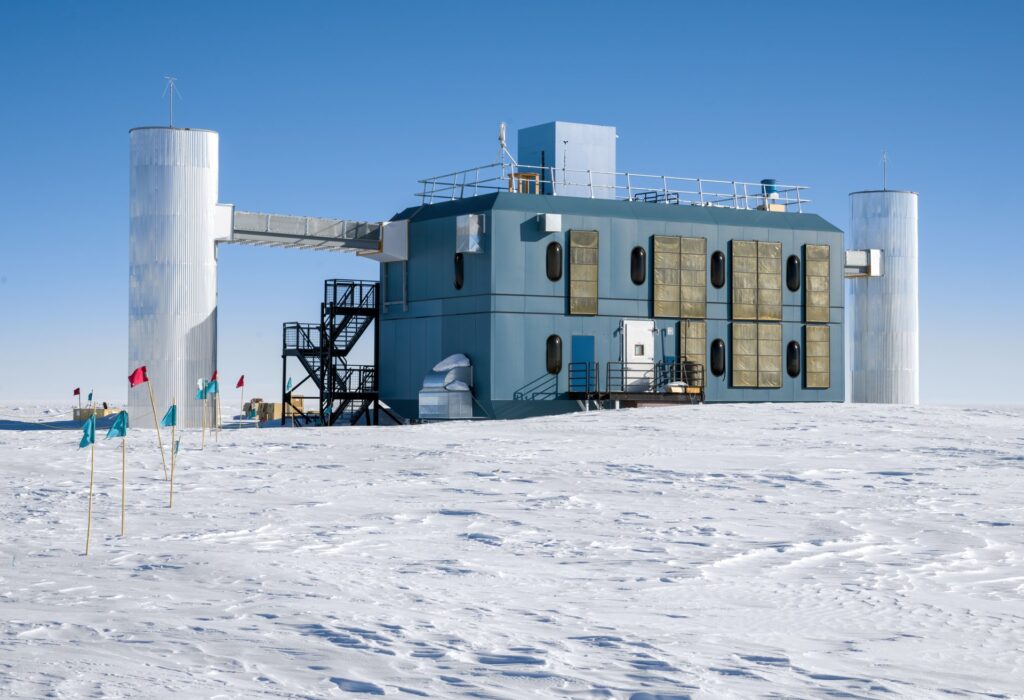
The Royal Swedish Academy of Sciences announced the award on Tuesday, honouring the 82-year-old “for decisive contributions to the IceCube Neutrino Observatory and the discovery of high-energy neutrinos of astrophysical origin.” Halzen is affiliated with the University of Wisconsin–Madison, which leads the IceCube project.
The idea sounds like science fiction. Back in the 1980s, Halzen proposed instrumenting a cubic kilometre of ice at the South Pole with light sensors and waiting for ghost particles — neutrinos — from the most violent events in the distant universe to collide with it. Neutrinos barely interact with anything at all; trillions stream through your body every second without leaving a trace. Catching them demands an absurdly large net, and Halzen’s answer was to turn the clearest ice on Earth into the detector itself.
It took decades of engineering, international collaboration and plain stubbornness. Then IceCube delivered: the observatory reported the first detection of high-energy neutrinos from beyond our galaxy, particles hurled across the cosmos by processes so extreme that astronomers are still debating exactly which ones. The discovery opened an entirely new way of observing the universe — not with light, which gets blocked and scattered on its journey, but with particles that travel in straight lines from the most violent environments in existence.
“Francis Halzen has led an international team of researchers and engineers who have provided us with a fantastic instrument,” said Mark Pearce, chair of the Nobel Committee for Physics. “His tenacity and scientific vision has paved the way for a new kind of astronomy.”
Halzen himself learned the news by phone from Italy. “It was a great surprise and I obviously didn’t expect it,” he told the committee.
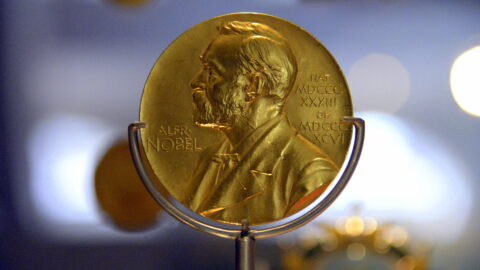
The prize carries 12 million Swedish kronor, roughly $1.2 million. Halzen will receive his medal from King Carl XVI Gustaf at the ceremony in Stockholm on December 10, the anniversary of Alfred Nobel’s death.
It is the second Nobel of the week, following Monday’s medicine prize for the optogenetics research that lets scientists control brain cells with light. Chemistry is announced Wednesday, with literature, peace and economics still to come through October 12.
Why this one matters beyond the ceremony: neutrino astronomy is barely out of its infancy. Successor instruments to IceCube are already being planned, and each new detection narrows down where the universe’s most extreme particles actually come from — the jets of supermassive black holes, the shockwaves of dying stars, or something nobody has thought of yet. Halzen built the instrument. What it finds next belongs to whoever is paying attention.