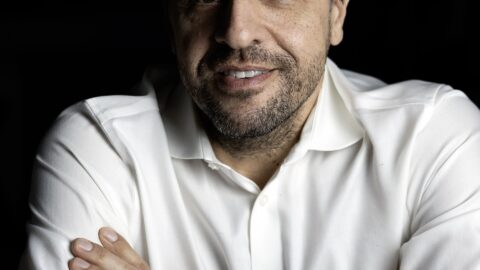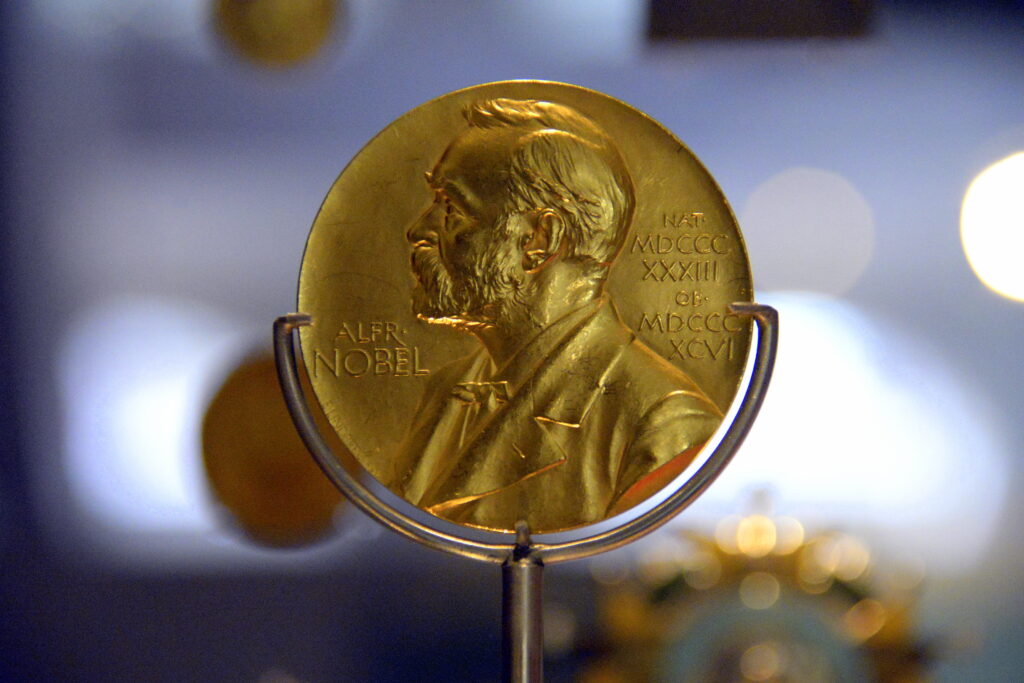
Every October, the world pauses for the most famous phone calls in science. This week they went out again: on Monday, Karl Deisseroth was jolted awake at his bedside by the news that he’d won the 2026 Nobel Prize in Physiology or Medicine. Informopedia Explains how the Nobel machine actually works — and why its rules are stranger than most people think.
It starts with a will and a fortune
The prizes exist because of one man’s guilt-tinged generosity. Alfred Nobel, the Swedish chemist and inventor of dynamite, amassed a fortune from explosives and — reportedly stung by an obituary that called him “the merchant of death” — wrote a will in 1895 leaving his estate to fund prizes for those who had “conferred the greatest benefit to humankind.” The first prizes were awarded in 1901, to figures including Wilhelm Conrad Röntgen for physics and Emil von Behring for medicine.
There were originally five prizes: physics, chemistry, physiology or medicine, literature, and peace. A sixth — the economics prize — came later and isn’t technically a Nobel at all: its formal name is the Sveriges Riksbank Prize in Economic Sciences in Memory of Alfred Nobel, established by Sweden’s central bank in 1968.
Since 1901, 633 Nobel Prizes have been awarded to 990 unique individuals and 28 organisations.
The strangest job application in the world
Nobody can apply for a Nobel Prize. You can’t even nominate yourself — self-nomination is explicitly forbidden. Instead, each September, the Nobel Committees send out around 3,000 confidential invitations to a hand-picked list: university rectors and professors in relevant fields, members of national academies and assemblies, government ministers, former laureates, and board members of previously honoured organisations. Former laureates are always invited, and nominations from distinguished figures carry the most weight.
Completed nomination forms must arrive by January 31. That usually produces 250 to 350 valid names. Between February and May, the committees whittle the list to roughly 15 to 20 candidates, commissioning detailed expert reports from specialists around the world. By summer the field narrows to a handful. In October, the awarding institutions vote — a simple majority wins, and the decision cannot be appealed.
The whole cycle takes nearly a year. And the winner finds out just minutes before the public announcement, usually by a phone call from Sweden in the small hours of the morning — as Deisseroth discovered this week.
The 50-year rule
Here is the strangest part: you will never know who almost won. The identities of nominees and nominators, and the committees’ internal records, are sealed for 50 years. The secrecy was originally infinite — the archives were never meant to open at all. The 50-year rule was the compromise.
The point is candour. Mats Larsson, a member of the physics selection committee, has explained that nominators must be brutally honest about candidates’ strengths and weaknesses — the kind of honesty that’s only possible when nobody will read your words for half a century. The secrecy also shields the committees from lobbying by governments, media and scientific factions. Because nominations do leak — nominators sometimes publicise their own submissions — the official silence stands in deliberate contrast: a leaked nomination means nothing until the committee votes.
Four institutions, six prizes
The prizes aren’t all decided by the same people. There are four awarding institutions:
- The Royal Swedish Academy of Sciences picks the physics, chemistry and economics laureates.
- The Nobel Assembly at the Karolinska Institute picks medicine.
- The Swedish Academy picks literature.
- The Norwegian Nobel Committee picks peace — the one prize decided outside Sweden, in Oslo, per Nobel’s will.
A prize can be split, but among at most three living people — the statutes cap it there. Organisations can only win the peace prize. And with one famous exception (Ralph Steinman, who died in 2011 between the decision and the announcement), the prizes aren’t awarded posthumously.
Each laureate receives a gold medal, a diploma, and money. This year the medicine laureates split 12 million Swedish kronor, roughly $1.2 million.
Why it still matters
Nobel week — medicine on Monday, physics on Tuesday, chemistry on Wednesday, literature on Thursday, peace on Friday, economics closing the season on October 12 — is the one week each year when basic science commands the world’s full attention. The prizes carry genuine problems: they reward individuals in an era of team science, they miss transformative figures every year, and the secrecy breeds endless speculation. But they also do something no other award manages. A pond alga’s light-sensitive protein, studied for decades out of pure curiosity, became a tool that lets neuroscientists switch individual brain cells on and off — and this week, three scientists got a phone call at dawn because of it. That is the whole point of the exercise: to insist, once a year, that finding things out is worth celebrating.
What happens next
The remaining 2026 laureates will be announced through this week — physics today, then chemistry, literature and peace, with economics on October 12. All of them will gather in Stockholm on December 10, the anniversary of Alfred Nobel’s death, to receive their medals from the Swedish king. The peace laureate gets a separate ceremony in Oslo. And somewhere in September, the committees have already sent out 3,000 quiet invitations for next year’s prizes — to people who will never tell you they received one.