In April 2022, with lithium prices at a record $78,000 a tonne, Elon Musk told the world that the cost of the metal had gone “insane” — and floated the idea that Tesla might start mining and refining it itself. Seven months later, lithium carbonate peaked above $86,000 a tonne in China. Then the market collapsed. Prices have since fallen more than 85 percent from that peak. Informopedia Explains why the lightest metal on the periodic table became one of the most fiercely contested commodities on Earth — and why the fight is only getting started.
What lithium actually is
Lithium is the lightest metal known — so soft you can cut it with a knife, so reactive it never appears pure in nature. For most of the 20th century it was a niche industrial material: mood-stabilising drugs, glass, lubricants. Then came the rechargeable battery.
Lithium-ion batteries dominate because lithium ions move easily and pack enormous energy into little weight. A smartphone holds a few grams of lithium; a laptop more; an electric car battery holds kilograms of it — roughly 8 to 10 kilograms of lithium in a typical EV pack. Multiply that by 17 million electric cars sold last year, add phones, laptops and the fast-growing market for grid-scale storage, and you get global battery demand that the International Energy Agency puts at 1 terawatt-hour — with raw-material demand projected to keep growing 17 to 30 percent a year in 2026 alone.
Where it comes from — and why that’s the problem
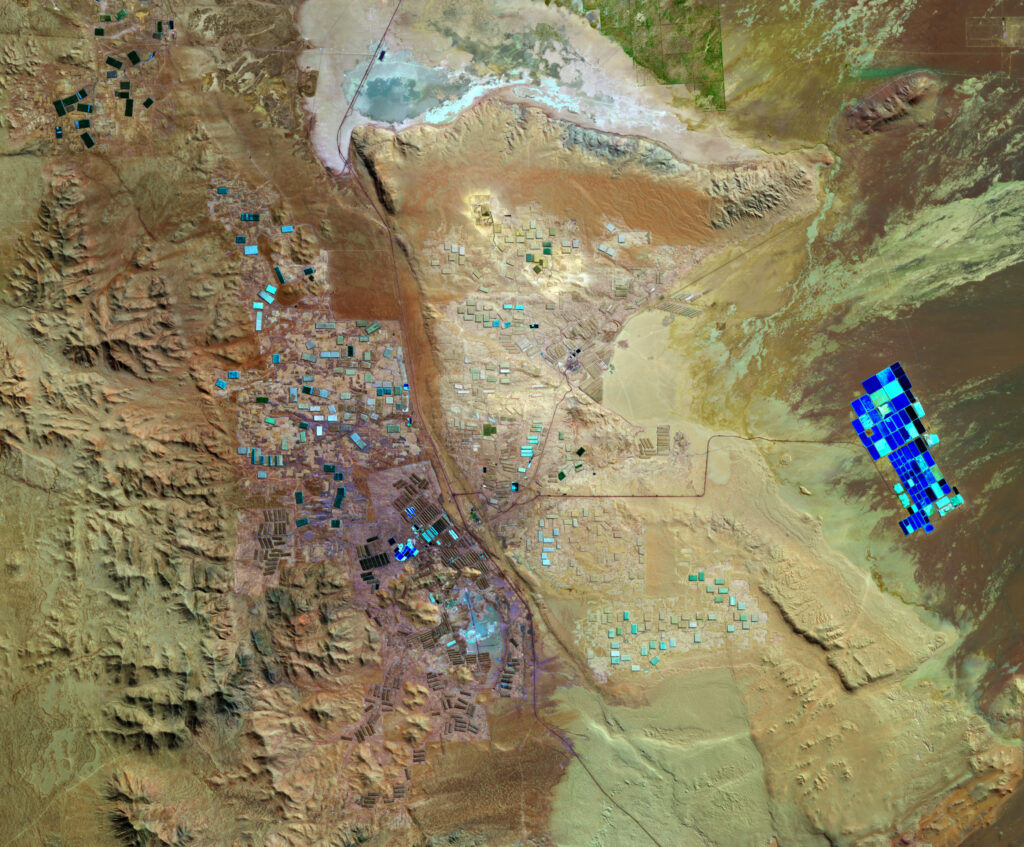
Lithium reaches the market through two very different routes. In the salt flats of South America’s “lithium triangle” — Chile, Argentina and Bolivia — miners pump lithium-rich brine from beneath ancient lake beds into vast evaporation ponds, where the desert sun concentrates it over many months. In Australia, the world’s largest producer, miners blast spodumene — hard rock — out of open pits.
The numbers tell the concentration story. In 2025, the world mined about 290,000 tonnes of lithium, up nearly a third in a single year, according to the US Geological Survey’s 2026 figures. Australia produced the most — 92,000 tonnes — followed by China at 62,000, Chile at 56,000 and Argentina at 23,000. But production is only half the picture: reserves are even more concentrated, with a handful of countries — Chile, Argentina, China, Australia and Bolivia — holding roughly three-quarters of known deposits. And the refining is more concentrated still: Australian rock is shipped to China for conversion into battery-grade chemicals, because China built the processing industry first.
This is the core of the fight. The metal is not rare in the Earth’s crust. But the places that can produce it cheaply today are few, the plants that can refine it are mostly in one country, and demand is growing faster than any of these bottlenecks can comfortably handle.
The boom, the bust, and the lesson
Between 2020 and late 2022, lithium carbonate prices rose more than tenfold — from about $6,000 a tonne to over $80,000. Automakers panicked; miners raced to expand. Then the cycle turned, as commodity cycles always do. Chinese EV subsidy cuts slowed demand, new supply flooded in, and prices crashed — down nearly 40 percent in the first months of 2023 alone, and more than 85 percent from peak by this year. At one point recently, the value of the lithium in an average EV battery had fallen from over $1,900 at the 2022 peak to barely $200.
Commodity analysts call this the classic pattern: high prices cure high prices. The bust bankrupted smaller miners and froze investment — which is exactly what sets up the next shortage. Fitch Solutions expects the lithium market to remain tight through the decade, with deficits growing toward 2030 as EV adoption accelerates.
The geopolitics: everyone’s playing now
Governments have stopped treating lithium as just another commodity. Chile moved to bring its lithium industry under greater state control, requiring state partnerships for new extraction. The United States, with its own large reserves but minimal production, has poured incentives into domestic supply chains. The European Union has classified lithium as a critical raw material. Bolivia sits on some of the planet’s largest untapped deposits and is shopping for partners to develop them — on its own terms. Each move makes commercial sense for the country making it; together, they carve the market into blocs.
Meanwhile the technology keeps shifting under everyone’s feet. Direct lithium extraction — pulling lithium from brine without the giant evaporation ponds — promises faster production with less water, a big deal in the Atacama desert where brine mining competes with fragile ecosystems and indigenous communities for water. Recycling is scaling up, though it remains a small fraction of supply. And battery chemists keep trying to use less lithium per car — or none at all — with sodium-ion batteries waiting in the wings.
Why this matters
Lithium is the test case for the entire clean-energy transition. The world needs roughly ten times more of it than a decade ago, the supply chain runs through a handful of deserts and one country’s refineries, and the price swings between euphoria and collapse every few years. Whether the energy transition stays affordable depends less on any single breakthrough than on whether this market can grow up: more mines in more places, more refineries outside China, water-friendlier extraction, and recycling that actually works at scale.
What happens next
Watch three things. First, whether prices stabilise — a sustained recovery would restart the investment the bust killed. Second, whether direct extraction technology proves itself at scale; if it does, it redraws the map of who can produce lithium. Third, the political calendar: export controls, state partnerships and critical-mineral deals are now a permanent feature of the trade. The metal that floats on water turned out to be heavy enough to move foreign policy.