The men of the MT On Peace were doing one of the most ordinary jobs in global trade when the danger found them.
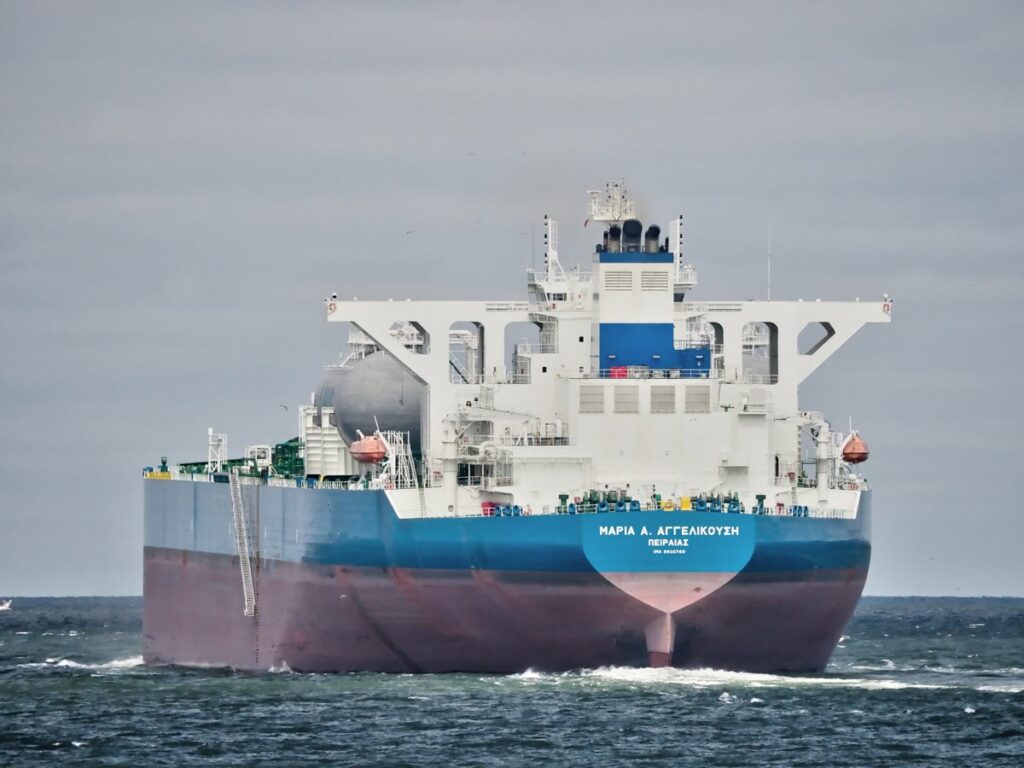
The Panama-flagged oil tanker was transiting the Strait of Hormuz — the narrow waterway through which a fifth of the world’s oil once flowed freely — when an unknown projectile struck it, sparking a fire in the engine room. The United Kingdom Maritime Trade Operations agency reported the attack on Monday without naming the vessel. On Tuesday, India’s Ministry of External Affairs identified the ship and laid out the human cost: 12 of the 19 crew were injured, including 11 Indian nationals.
The tanker is an Aframax-sized vessel, managed by Anglo-Eastern Tanker Management Hong Kong and operated by ONEX DMCC, neither of which had responded to press queries by Tuesday. Shipping data from the analytics firm Kpler showed the vessel had last been seen discharging fuel oil at Fujairah in the United Arab Emirates in late August, its transponder switched off. Somewhere between that quiet offload and Monday’s violence, it sailed back into the most dangerous shipping lane on earth.
The injured were evacuated with the help of Omani authorities and are receiving medical treatment in Khasab, Oman. “We thank the Omani authorities for their valuable support,” the ministry said. Seventeen of the 19 people aboard the On Peace were Indian citizens — seafarers who make up a large share of the crews that keep the world’s tankers moving.
India’s unusually sharp response
New Delhi did not treat this as a routine incident. The foreign ministry issued a formal condemnation — “We condemn the attack earlier today on a Panama-flagged commercial vessel MT On Peace off the coast of Oman, where it was struck by a projectile while transiting the Strait of Hormuz” — and described the continuing attacks on regional shipping as a “cause of deep concern.”
“We reiterate our call for an immediate cessation of such attacks in the interests of peace and stability in the region,” the statement said. “The targeting of commercial shipping, seafarers and civilian infrastructure in the region must end, and navigation and commerce through international waterways must be restored at the earliest.”
The statement also noted that this was not India’s first rescue in the strait this month. Five Indian nationals had been rescued after a Kuwait-flagged tanker — the very large crude carrier Kazimah III — was struck by an unknown projectile on October 1, also with Omani help. And in the same round of statements, New Delhi separately condemned an attack on the merchant vessel Royad Mammadov in the Black Sea, in which two foreign seafarers were killed and several crew — including Indian nationals — were injured. Three Indian sailors from that ship were rescued by Romanian authorities and are safe.
A waterway under siege
The On Peace is the latest casualty in a campaign against commercial shipping that has made the strait a shooting gallery. Maritime intelligence firms count at least seven vessel incidents in recent weeks, and UKMTO has recorded at least one attack a day in the Strait of Hormuz or the Gulf of Aden since October 2. Nobody has claimed responsibility for any of them.
The attacks are unfolding against a much larger crisis. The United States and Israel launched strikes on Iran on February 28, and Iran has effectively kept the strait closed ever since — parliament speaker Mohammad Baqer Qalibaf said Sunday it will not reopen until Tehran’s seven conditions are met. Producers have learned to work around the chokepoint, pushing crude through Saudi Red Sea ports, the UAE’s Fujairah pipeline, and ship-to-ship transfers in the Gulf of Oman. But the workarounds do nothing for the crews sailing the remaining routes.
Why this matters
There is a tendency to read tanker attacks as incidents involving steel and cargo. The On Peace story is really about people: 19 sailors, most of them Indian, caught between a war they did not start and a shipping industry that cannot simply stop. India’s unusually forceful statement reflects that — New Delhi has skin in the game not because it owns tankers, but because its citizens crew them.
The bigger risk is normalization. When a projectile striking a tanker in the world’s most important oil chokepoint becomes a twice-a-week occurrence, the danger is that it fades into background noise — until one attack does not merely injure twelve sailors but sinks a ship, spills a cargo, or closes the strait completely. That is the trajectory the crews of the On Peace, the Kazimah III and the Lipsi were sailing into. They got lucky this time.