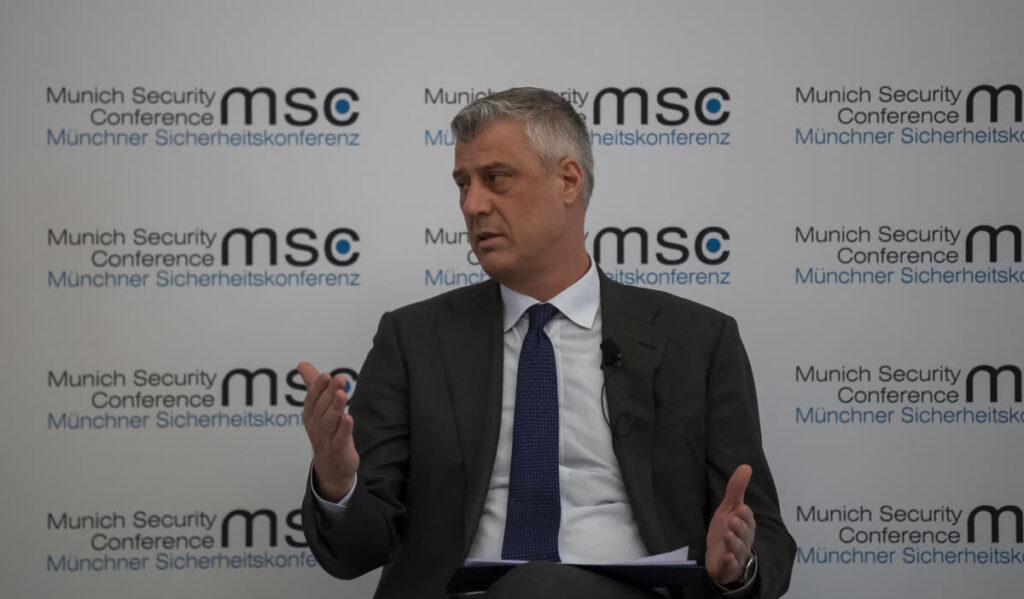
For six years, Kosovo’s most famous politician sat in a Dutch cell awaiting judgment. On September 16, 2026, Presiding Judge Charles Smith read it out: Hashim Thaçi, the former president who led his country to independence, was guilty of war crimes and would serve 25 years in prison. Thaçi, 58, stood in silence, suit and tie still immaculate. Outside the courtroom in The Hague, and 1,200 kilometers away in Pristina, the reaction told its own story about what the Kosovo war still means.
The charges
The indictment covered March 1998 through September 1999, the span of Kosovo’s war for independence from Serbia, at locations across Kosovo and northern Albania. Prosecutors argued that KLA fighters under the four men’s leadership targeted political opponents, perceived collaborators, and civilians from Serb, Roma, and ethnic Albanian communities alike. The panel convicted all four on four war crimes counts: arbitrary detention of 385 people, torture of 303, cruel treatment of 49, and murder of 96. The judges acquitted them of all six crimes-against-humanity counts, ruling the evidence did not prove a widespread or systematic attack on civilians, the legal threshold that count requires.
How we got here
1998-1999: The war. The Kosovo Liberation Army fights Serbian forces in a conflict that will kill around 13,000 people before NATO bombing forces Belgrade’s withdrawal. Thaçi serves as the KLA’s political leader and spokesman. Joe Biden, meeting him in 2009, would later call him the “George Washington of Kosovo” — a nickname that shows how far he would fall.
2008-2020: The ascent. Thaçi becomes Kosovo’s first prime minister after its 2008 declaration of independence, then president from April 2016. Under international pressure, Kosovo had created the Specialist Chambers in The Hague in 2015 to prosecute alleged KLA crimes — a court its own assembly approved but much of the country resented.
June 2020: The indictment. The Specialist Prosecutor’s Office announces charges against Thaçi and former speaker Kadri Veseli. A judge confirms the indictment on October 26, 2020, and Thaçi resigns the presidency in November, saying he did not want to put the office through the proceedings while defending himself.
November 2020: The Hague. Thaçi, Veseli, Rexhep Selimi, and Jakup Krasniqi are transferred to the court’s detention facilities in The Hague on November 4 and 5, 2020. All four plead not guilty.
April 2023 – February 2026: The trial. Prosecutors open on April 3, 2023, and the case runs nearly three years: 273 witnesses, 5,467 exhibits, 29,238 pages of transcript, 156 participating victims. The evidentiary phase closes in December 2025. In closing arguments in February 2026, Thaçi addresses the bench: “Throughout my life, I stood with the people of Kosovo defending freedom, life and dignity. I was always guided by the Western ideals of democracy, equality and justice.”
September 16, 2026: The verdict. Thaçi gets 25 years, Krasniqi 25, Veseli 18, Selimi 13, all with credit for time already served. Prosecutors had asked for 45 years for Thaçi. The four say they will appeal.
Late September 2026: The backlash. Thousands fill Pristina’s central square the weekend before the verdict, carrying red-and-black Albanian flags and portraits of the four men beside a countdown clock. After the sentence, former fighters organize protests in nine cities, accusing the court of political bias and of relying on evidence supplied by Serbia, which does not recognize Kosovo’s independence. “We oppose the court’s verdict against our heroes,” a town mayor tells one crowd.
Why this matters
Judge Smith was explicit that the trial was not about whether the KLA’s cause was legitimate, only about the methods some of its members used. That distinction is the entire fault line in Kosovo: for victims’ families who waited more than two decades, the convictions are proof no rank confers immunity; for Thaçi’s supporters, a liberator is being punished by a court they never asked for, on evidence they do not trust. Amnesty International’s Esther Major put the first view bluntly: the verdicts show “senior officials are not above the law.” What happens next is procedural — appeals, years more of detention — but also political. The verdict lands on a Kosovo still negotiating its statehood and on a Serbia that watches every ruling from The Hague for ammunition. The law has spoken, in the careful, qualified language courts use. Kosovo, it seems, is still deciding what it heard.