Informopedia Explains: this week, the most famous chief executive in technology lost his job — and the stock market shuddered. Jensen Huang built Nvidia from a tiny graphics-card startup into the company whose chips power almost every serious artificial intelligence system on the planet. To understand why one resignation could wipe billions off the market in a morning, you have to understand one piece of hardware: the GPU.
The chip that drew pictures
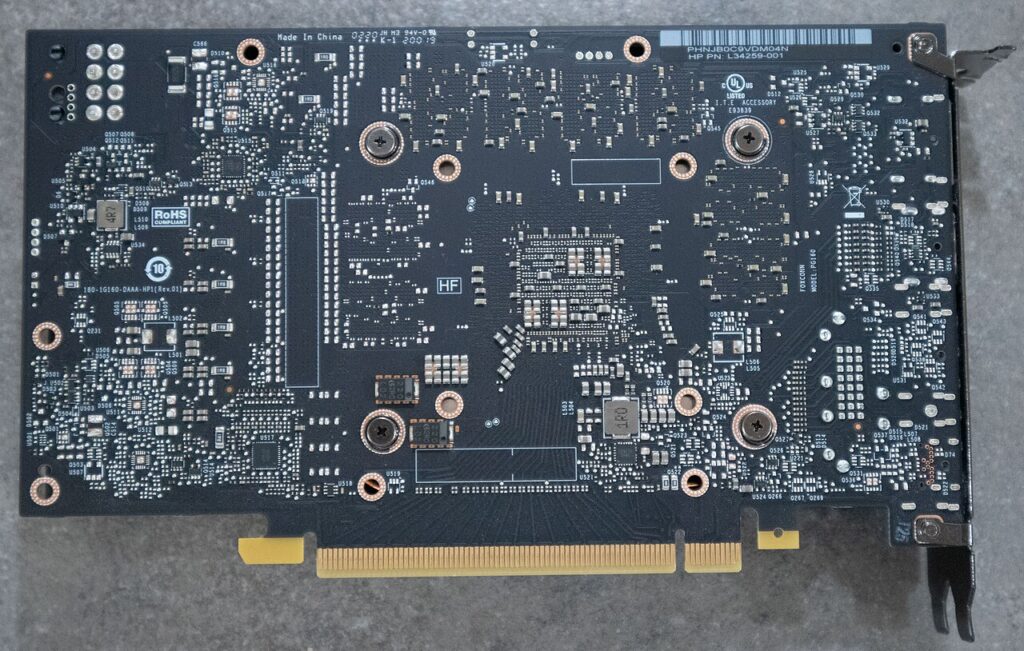
GPU stands for graphics processing unit. It was invented to do one job: draw pictures on a screen, fast. A video game at 60 frames a second has to calculate the colour of millions of pixels, sixty times every second, while tracking light, shadow and movement. That is an enormous amount of arithmetic — but it is arithmetic of a particular kind. Each pixel’s calculation is mostly independent of the next one, so the work can be split into thousands of small pieces and done all at once.
That is the GPU’s trick, and it is the opposite of how an ordinary computer processor works. Your laptop’s CPU — the central processing unit — is like a brilliant chef: a handful of very fast, very flexible workers who can do almost any task, one after another, in sequence. A GPU is like a kitchen with thousands of line cooks: each one can only do simple things, but together they can chop ten thousand onions at the same time.
For two decades, that made GPUs a gaming accessory. Nvidia sold them to teenagers and, later, to cryptocurrency miners. Then, around 2012, researchers discovered something that changed the industry’s history: the mathematics of training a neural network looks almost exactly like the mathematics of drawing a picture.
Why AI runs on graphics chips
Training an AI model is, at its core, an avalanche of matrix multiplications — vast grids of numbers multiplied together, over and over, billions of times. Like pixels, these calculations are largely independent of each other. A CPU grinding through them one by one would take years. A GPU, with thousands of cores working in parallel, can do the same job in weeks.
Nvidia saw it first. In 2007 it released CUDA, a software platform that let programmers use its graphics chips for general computing — not just drawing pictures. Nobody outside a few research labs cared much at the time. But when the deep-learning revolution arrived, CUDA was the only mature tool for the job, and Nvidia’s chips were the only hardware that ran it well. Competitors had to build not just a chip but an entire software ecosystem to catch up, and a decade later most of them still have not.
The result is a near-monopoly. By most estimates, Nvidia supplies roughly nine in ten of the AI accelerator chips sold in the world. Its data-centre chips — the H100, and its successor, the Blackwell B200 — sell for tens of thousands of dollars each, and the biggest AI labs buy them by the tens of thousands. Training a frontier AI model today means renting a warehouse full of GPUs and running them flat out for weeks or months. The electricity bill alone can run into tens of millions of dollars.
Training, inference, and the memory bottleneck
There are two jobs a GPU does in AI, and they are different. Training is the expensive part: feeding a model trillions of words or images until it learns the patterns. Inference is what happens afterwards: the trained model answering your question, which is far cheaper but happens billions of times a day. Both need GPUs, but training is where the money is — and where Nvidia’s lead is widest.
The secret ingredient is not just raw calculation. It is memory. An AI model and its training data have to sit close to the processor, or the chip spends its time waiting for numbers to arrive. Nvidia’s chips use a special kind of stacked memory, called high-bandwidth memory, that feeds data to the cores far faster than ordinary computer memory. That memory is made by only a handful of companies, and it is one of the tightest bottlenecks in the whole AI supply chain. Whoever controls the memory controls the pace of the boom.
That hunger for chips has created a whole new industry — the neoclouds, the new landlords of the AI boom.
Why one resignation shook the market
Which brings us back to this week’s news. Nvidia is not just a chip company; for three decades it has been, to a remarkable degree, one man. Huang bet the company on AI when it was still a research curiosity, built the software moat that keeps rivals out, and sold the vision to Wall Street in his trademark leather jacket. The fear that moved the market on Thursday was not that Nvidia’s chips would stop working. It was that the company might turn out to have been a one-man show all along — and that the succession, whenever it comes, will test whether the moat belongs to the company or to its founder.
The challengers are circling: AMD is finally winning orders, Google and Amazon build their own AI chips, and governments from Washington to Beijing are trying to secure supplies of their own. But none of that changes the basic fact. The modern world runs on a chip designed to draw pictures faster — and for now, almost all of those chips come from one company.
The GPU began as a way to make video games look better. It ended up deciding who gets to build the future. That is why a resignation in Santa Clara moved markets from Tokyo to London in a single morning.