Key takeaways
- Amazon has manufactured its 1,000th Amazon Leo broadband satellite at its Kirkland, Washington factory — but only 396 are actually in orbit.
- Amazon Leo vice president of business Chris Weber confirmed initial commercial service is planned before the end of 2026.
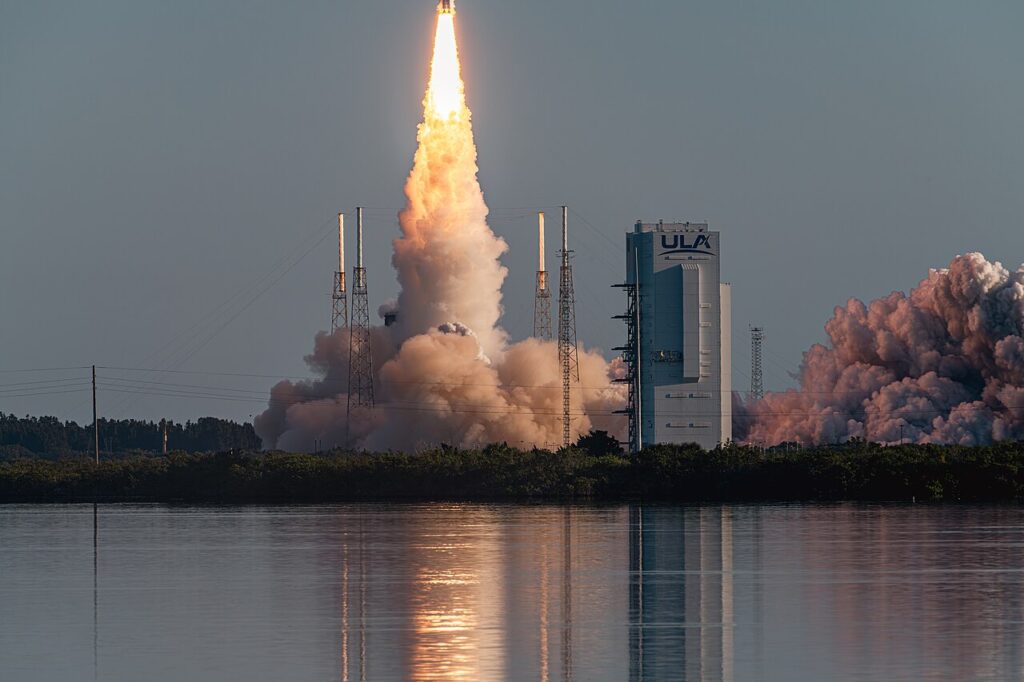
- A ULA Vulcan rocket carrying Leo satellites is expected to fly within weeks, with another Vulcan and Arianespace launches later this year.
- Amazon missed the FCC’s July 2026 deadline to deploy half its constellation, drawing reduced spectrum priority — a waiver extended full deployment to 2029.
- Starlink remains far ahead with over 9,600 satellites and 10.3 million subscribers, but Amazon claims faster per-satellite performance.
Inside a roughly 170,000-square-foot factory in Kirkland, Washington, Amazon has been quietly doing what few companies on Earth have managed: turning out broadband satellites by the hundreds. The company has now manufactured its 1,000th Amazon Leo satellite, the milestone disclosed in interviews published October 8, 2026, first reported by Ars Technica. The project formerly known as Project Kuiper has been eight years in the making. Now Amazon says its long-promised space internet service is close.
Chris Weber, Amazon Leo’s vice president of business, confirmed the plan in the interview: initial commercial service before the end of 2026. The existing orbital fleet, he said, should provide enough coverage for an initial rollout, though some spacecraft still need to reach their final positions and ground infrastructure work remains.
Building the satellites turned out to be the easy half. Amazon’s first 27 satellites took six months to manufacture; the Kirkland line now produces roughly the same number every week, staffed by more than 500 engineers and technicians. Each satellite packs about four million components. But building and launching are different problems. Of the 1,000-plus spacecraft Amazon has produced, only 396 have reached orbit — the count Weber himself put on the record.
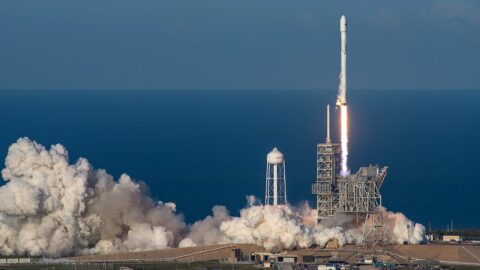
The launch bottleneck is real. Amazon completed seven launches this year, four on ULA Atlas V rockets and three on Ariane 6, before deployment stalled in the summer. The final Atlas V mission in July brought the on-orbit count to 396, and nothing has gone up since. Rajeev Badyal, the vice president of technology who runs the program — he previously led early Starlink development at SpaceX until Elon Musk fired him in 2018 — told Ars Technica a Vulcan launch carrying Leo satellites is expected within weeks. Another Vulcan flight and additional Arianespace missions are planned later this year.
Regulators have noticed the slow pace. The FCC required Amazon to deploy at least half of its 3,232-satellite first-generation constellation by July 2026. Amazon missed that mark, and the agency responded by stripping the later satellites’ spectrum priority. A waiver granted in June extended the full deployment deadline to 2029. Amazon is now working to earn its priority back by showing production hardware and rockets stacked for flight.
What the service will look like
Amazon Leo aims to serve homes, businesses, airlines, and governments from low-Earth orbit, with a pitch centered on underserved regions. Weber laid out the consumer case in three parts: value, ease of use, and bundling with Amazon’s other products. “We’re going to take the Amazonian way and have by far the best value,” he said, pointing to everything from Prime to eero routers and Fire TV as potential pairings. Enterprise customers are already lining up: Delta Air Lines has signed on for in-flight connectivity, AT&T is integrating Leo into its managed network offerings, Verizon is in the beta program, NASA has participated in early testing, and Hitachi Construction Machinery plans portable terminals for European construction sites next year.
The performance targets are aggressive. Amazon’s terminals come in three variants — Nano at up to 100 Mbps, Pro at 400 Mbps, and Ultra targeting 1 Gbps — with executives claiming downlink speeds up to 1 Gbps and uplink as high as 400 Mbps.
The gap with Starlink is still enormous. SpaceX’s June 2026 prospectus reported 9,600 Starlink broadband and mobile satellites, 10.3 million subscribers, and service in 164 countries and markets. Starlink launches hundreds of satellites monthly; Amazon has hardware sitting at Kennedy Space Center waiting for rockets.
That asymmetry is the real story of the 1,000th satellite. Amazon has solved what Badyal called the production problem — its manufacturing operation is now second only to SpaceX in scale — but the year-end service promise hinges on something it doesn’t control: launch cadence. If the Vulcan return-to-flight and the Ariane 6 missions deliver, Amazon enters 2027 as a genuine alternative to Starlink. If rockets keep slipping, the FCC penalty lingers and the hardware keeps stacking up on the ground. The satellites are ready. The countdown is not.