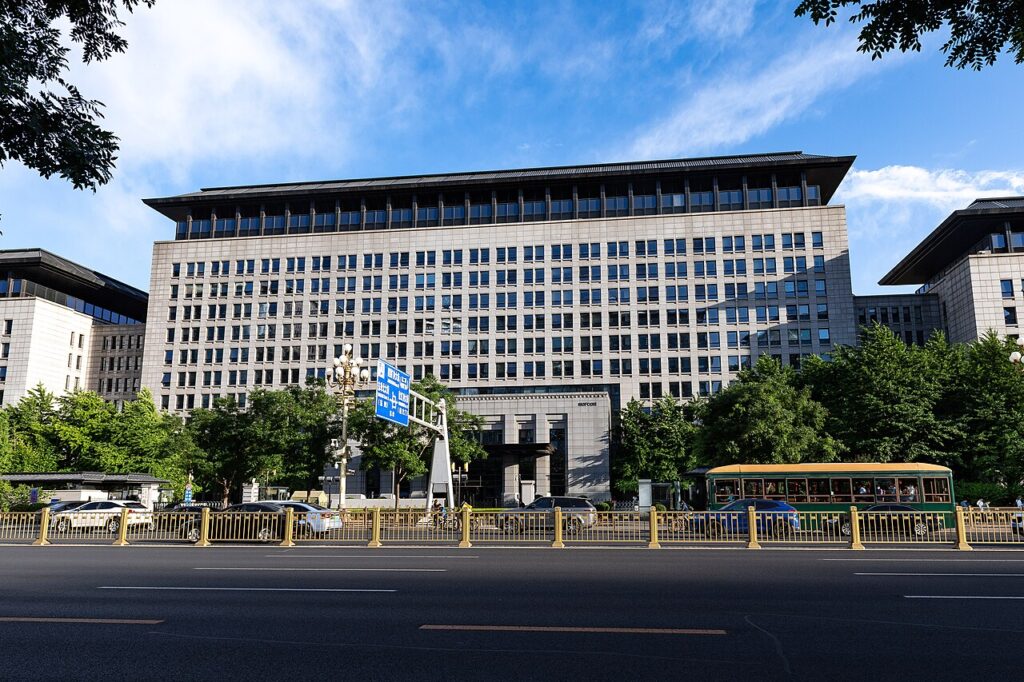
China has proposed placing 40 advanced technologies — spanning artificial intelligence, solar manufacturing, and biomedicine — under export controls. The plan, published on Friday, Oct 16, 2026, by the Ministry of Commerce (MOFCOM) and the Ministry of Science and Technology as Announcement No. 48, is a draft revision of the Catalogue of Technologies Prohibited and Restricted from Export. Fourteen technologies would be banned from export outright; 26 more would require an export licence. Here is what the draft covers, what it pointedly does not, and what happens next.
What did China announce?
The two ministries published a draft revision of the catalogue that governs whether a Chinese technology may leave the country, and on what terms. The 40 proposed additions break down as 23 AI technologies, 12 photovoltaic technologies, and 5 biomedicine technologies. The draft is open for public comment from Oct 16 to Nov 15, 2026 — it is a proposal, not yet law. Separately, an interim pre-export registration requirement took effect immediately on the day of publication and applies to the listed technologies right now.
Which technologies are covered?
AI (23 technologies): large language models, AI agents, computing clusters, information processing, and chip design. Under the draft annex, a model’s core technology — weights, checkpoints, source code, architecture, training and inference optimization — would be restricted if it meets any of three marks: training compute of at least 1026 operations, at least 2 trillion parameters, or a global top-10 ranking on public evaluations. Prohibited outright would be AI systems that generate and mutate malicious code, core large-model technology trained on sensitive national data, and agents built for high-sensitivity settings such as national defence and critical infrastructure.
Photovoltaics (12 technologies): polysilicon, silicon-wafer, and solar-cell manufacturing technologies, including the key equipment that carries them. Perovskite and perovskite-silicon tandem cell manufacturing is proposed for outright prohibition.
Biomedicine (5 technologies): cell and gene therapies, small nucleic acid drugs, and pathogenic microorganisms. For overseas licensing arrangements that do not involve a transfer of ownership, the draft offers automatic licensing and other facilitation measures.
Is this a ban on solar panel exports?
No. The draft targets technology transfers and core manufacturing know-how, not finished goods. A MOFCOM spokesperson said the listing is precise and limited, with clearly defined technical specifications, and that products manufactured using the relevant technologies are not within the scope of the controls. In practice, that means a solar panel or module shipped abroad is unaffected; what needs permission is the factory technology and process knowledge behind it. The announcement also excludes technology already in the public domain through open-source releases or published papers — and serving a covered model abroad through an API, app, website, or software-as-a-service platform does not count as a technology export.
When does it take effect?
The catalogue revision itself remains a draft until the comment period closes and a final version is issued. But the interim registration system is already running: since Oct 16, exporters must register listed-technology transfers in advance through MOFCOM’s Technology Trade Management Information System. The requirement covers transfers of technology ownership, overseas licensing, and changes in ownership or control to foreign entities — including transactions already underway but not completed. For companies with research or technology partnerships in China, that registration duty is the immediate reality.
Why is Beijing doing this?
The ministries describe the move as routine technology-trade management, noting the catalogue has been revised periodically since 2001. On substance, a MOFCOM spokesperson framed the step as necessary for AI safety and controllability: preventing misuse, including attacks on critical infrastructure by non-state actors, and keeping AI under human control. Beijing says the measures are not aimed at any particular country, region, or entity — though the timing, amid intensifying US-China competition over chips, manufacturing expertise, and AI systems, will shape how the rest of the world reads them.
What does this signal for the US-China technology race?
This is Beijing writing its own version of a playbook Washington has used for years. US-led limits already block China from the most advanced AI chips; now China is drawing lines around its own strengths — frontier AI model weights and the solar manufacturing technology in which it dominates global supply chains. The move lands alongside a wider pattern of Beijing tightening its grip on AI at home as well as at the border, why China’s own apps are blocking its AI assistants being one recent example, and follows earlier technology-trade friction such as China’s hybrid-car export deal with the EU. One asymmetry matters: the 2-trillion-parameter threshold reportedly already captures Chinese flagship models such as Moonshot’s Kimi K3 and Alibaba’s Qwen3.8-Max, so the controls are not cost-free for Chinese firms — their overseas licensing and partnerships just got more complicated. As Natixis economist Gary Ng put it, access to technology is fragmenting.
What happens next?
Public comments close on Nov 15, and the comment period will be the real contest: expect industry to push on the thresholds and the fine print of the annex. After that, the ministries finalize the catalogue, while the interim registration requirement keeps running until the final version takes effect. For solar manufacturers, AI labs, and biotech firms working across China’s borders, the next four weeks are the window to be heard — and registration is the rule to follow now.


One Comment