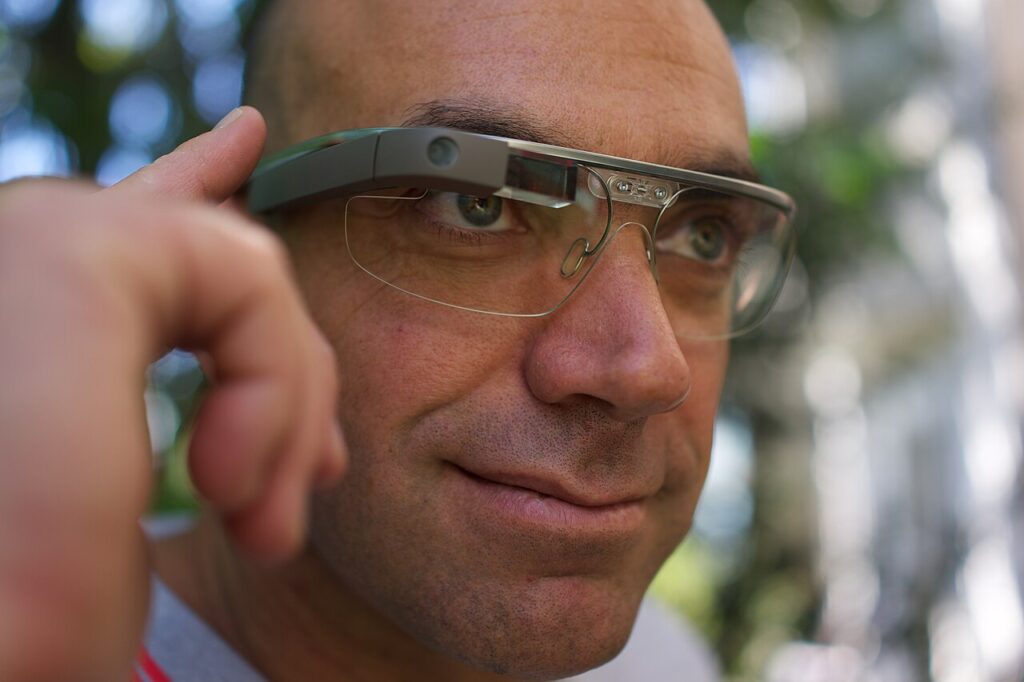
Google and Samsung have opened pre-orders for their first AI smart glasses, priced lower than many expected: Warby Parker frames start at $395, with the premium Gentle Monster collection running from $449 to $489. The glasses, sold under Google’s Intelligent Eyewear name, go on sale on December 10 — in the United States and South Korea only.
The announcement, published on Google’s blog on November 12 by Shahram Izadi, Google’s XR chief, marks Google’s return to a product category it abandoned more than a decade ago. This time Samsung engineered the hardware, Warby Parker and Gentle Monster designed the frames, and Gemini provides the intelligence — 30 designs across the two brands, all sharing the same electronics.
The price, collection by collection
Warby Parker offers three styles — Alden, Reid and Wren — in optical or sun versions from $395, in Pine, Saddle and Jet Black, with prescription and lens options. Gentle Monster offers six designs in bold colours, including dark red, pink, gray and yellow, with tinted, clear, blue or brown lenses, from $449 to $489 depending on the model. Prescription options are available for most frames, at extra cost.
The geography is narrow: both collections go on sale in the United States, and only Gentle Monster is also sold in South Korea. Buyers need a Google account from the United States or South Korea, and must be 18 or older. No date has been given for Europe, Japan or any other market.
What the glasses do
The glasses have no display in the lens. Everything runs through voice, touch and open-ear speakers: say “Hey Gemini” or tap the frame, and the assistant answers from what the camera and microphones pick up — the mural you are passing, a book from the shelf in front of you, or an event poster checked against your calendar. Google Maps gives turn-by-turn directions in your ear, and Google Translate offers real-time speech translation in more than 70 languages.
The hardware is Samsung’s: Qualcomm’s Snapdragon AR1 Gen 1 chip, 2 GB of RAM and 64 GB of storage, running Android XR. A 12-megapixel ultra-wide camera captures photos and video — up to 3K at 30 frames per second, or 2K in HDR — with image stabilisation and spatial audio capture. Four microphones and two open-ear speakers handle calls, messages and music. Battery life is rated at up to nine hours of mixed use; the bundled case refills the frames up to seven times, for up to 72 hours in total. The glasses weigh about 41 grams and are splash-resistant to IPX4.
The most distinctive feature is Guided Vision, which gives conversational audio descriptions for people who are blind or have low vision, or anyone who wants help reading small print or finding everyday objects. Google stresses it is not a mobility aid. Through a partnership with Aira, wearers can also stream the camera feed to a trained human visual interpreter. Samsung’s Bixby is on board too — but only with a Galaxy phone.
They only work with the right phone
The glasses are not standalone. They need a Pixel 7 or newer, a Galaxy S or Z phone on One UI 9.0 or newer, or an iPhone 13 or newer with at least 6 GB of RAM. Processing is split between the frames and the phone, which does the heavier AI work — so without a compatible phone in range, the glasses are ordinary eyewear. Some features are Android-only.
Privacy is the question that sank Google’s first smart glasses, and the company has published a separate post on it. Camera visuals that Gemini processes are not saved in Gemini History, are not used to train AI models, and are not used to target ads, Google says, and bystanders’ faces are redacted before Gemini processes them. An indicator light shows when the wearer is recording, and the glasses stop if the light is covered or disabled. Data is encrypted on the glasses and in transit, and there is an off switch to turn them off entirely.
A direct challenge to Meta
The launch lands on Meta’s territory. The Ray-Ban Meta (Gen 3), on sale since September 23, starts at $449 — the same price as the cheapest Gentle Monster frame — with the same 12-megapixel camera, 3K video and nine-hour battery rating. Meta’s glasses are sold in far more countries; Google’s $395 entry price, Guided Vision and Google app integration are its answer.
The glasses arrive the same week as Gemini 4 Carbon, available since November 10, and Claude Fable 5.2 from Anthropic, launched November 9. They are the most visible piece of that push: AI you wear on your face, priced to sell, in only two countries. Whether the rest of the world gets them depends on how the December launch goes.
Related: Apple HomeView price and our guide to Google Gemini smart glasses vs Ray-Ban Meta