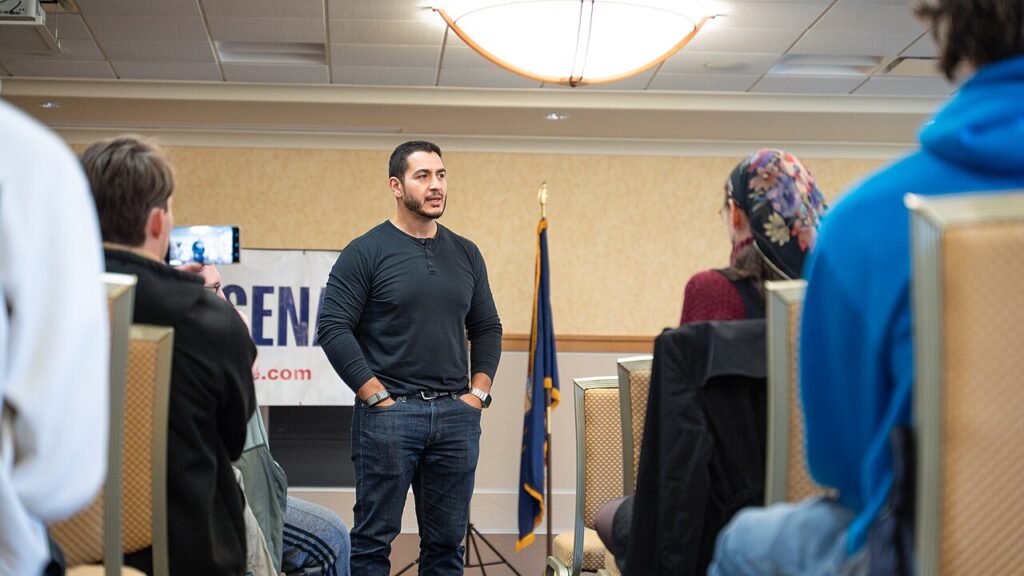
Michigan voters have elected Abdul El-Sayed to the United States Senate, making him the first Muslim ever elected to the chamber. The Associated Press called the race for the Democrat, with its count showing El-Sayed on 2,206,235 votes to 1,952,991 for Republican former congressman Mike Rogers, with 72 percent of precincts reporting.
Decision Desk HQ called the race at 1:33 a.m. Eastern time on Wednesday, and Fox News also projected an El-Sayed win. El-Sayed, 42, of Ann Arbor, declared victory before supporters at about 1:30 a.m., telling them: “You took a chance on the unlikeliest of candidates. This is all yours. Michigan, I cannot wait to serve you.” He added, simply: “Michigan, we did it.”
Rogers had not conceded as of early Wednesday morning, and his camp was still insisting the race was not over. The results remain unofficial until Michigan certifies them. But El-Sayed had led from the first returns and never trailed through the night, holding about 52 percent to Rogers’ 46 percent with 70 percent of votes tallied.
El-Sayed, a physician and the former health director for Detroit and Wayne County, succeeds retiring Democratic Senator Gary Peters, who is stepping down after two six-year terms. The son of Egyptian immigrants, he ran on a progressive platform summed up in a single refrain: “Money out of politics, money in your pocket, Medicare for All.”
The race was one of the most expensive and bitterly fought Senate contests in the country. Outside groups poured more than $300 million into Michigan, according to Open Secrets, and the two campaigns raised more than $100 million between them. El-Sayed weathered an onslaught of attack advertising, including claims linking him to extremist groups that he repeatedly denounced, and a last-minute blow when his former Democratic primary rival, Representative Haley Stevens, endorsed Rogers days before the election.
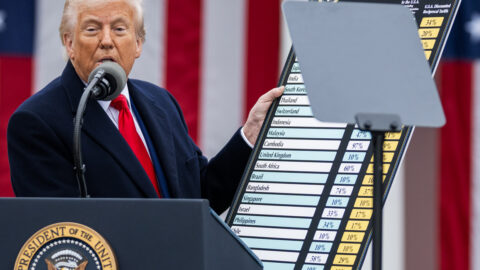
For his part, Rogers, a former FBI agent and former chair of the House Intelligence Committee, was trying to become the first Republican to win a Senate seat in Michigan in 32 years. He had the backing of President Donald Trump, and he argued that El-Sayed was out of step with Michigan voters. He also made a late attempt to distance himself from the president on the war with Iran and on tariffs against Canada, both of which have driven up fuel prices in Michigan, but Democrats dismissed the shift as election-season repositioning.
The result matters beyond Michigan for two reasons. First, the seat was widely seen as Republicans’ best chance of flipping a Democratic-held Senate seat anywhere in the country; holding it widens a Democratic majority that was already secured on election night. Democrats had already flipped Republican-held seats in North Carolina, South Carolina, Texas, Ohio, Kansas, Iowa and Maine, and the party has also taken control of the House for the final two years of Trump’s presidency.
Second, the Senate has never before had a Muslim member. El-Sayed’s victory comes in a state with one of America’s largest Arab-American and Muslim communities, and in a campaign in which his faith was repeatedly made an issue by his opponents, including a slur from the president himself. That he won anyway, and by a clear margin, is a measure of how far the argument travelled beyond identity: his campaign kept returning to the cost of fuel, groceries and health care, and to getting corporate money out of politics.
Democrat Jocelyn Benson was also projected to win Michigan’s governor’s race, according to multiple media projections, completing a strong night for the party in the state. Two Senate races remain uncalled: Alaska, where counting runs to November 18, and Mississippi, where the margin is a handful of votes. Neither can change control of the chamber, which Democrats have already secured. The new Congress takes office on January 3, 2027.
For El-Sayed, the work now is governing. He arrives in Washington as the most watched freshman of his class, carrying both a historic first and a promise made in his victory speech: a Senate seat that belongs, as he put it, to Michigan itself.