VERDICT: FALSE — Kim Jong Un is not dead. The viral claim that he suffered a brain haemorrhage, fell into a coma and died in a Beijing hospital rests on a single unverified social media post, and it is contradicted by South Korea’s intelligence agency and by North Korean state media photographs showing him in public afterwards.
The claim
In mid-October 2026, posts on X, Telegram and other platforms declared that North Korea’s leader had died. The story, traced to a post on 18 October by US-based Chinese dissident Xie Wanjun, who describes himself as chairman of the banned China Democracy Party, said Kim had suffered a severe brain haemorrhage, been rushed to a hospital in Beijing because Pyongyang lacked adequate medical facilities, fallen into a coma and died, with his body secretly returned to North Korea. The claim spread in at least a dozen languages, was picked up by some tabloid outlets, and travelled with dramatic props: a fabricated “1984–2026” memorial graphic, pictures of a man lying unconscious in a hospital bed, and a clip of a North Korean newsreader announcing a leader’s death.
The facts
None of it checks out. Step by step, here is what the verifiable record shows.
First, the source. The entire death narrative traces back to one man’s unverified post. Xie has a track record of unproven claims, including a prediction that Chinese President Xi Jinping would die. No hospital record, no official statement and no second source has ever corroborated the Beijing hospital story — and no evidence has been offered for any part of it, from the haemorrhage to the secret return of a body.
Second, South Korea’s intelligence agency says it is false. On 23 October, South Korea’s National Intelligence Service (NIS) briefed the National Assembly’s Intelligence Committee in a closed session and assessed the death rumours as false, according to lawmakers present, as reported by Yonhap News Agency. The agency had already told the same committee on 30 September that Kim showed no unusual signs of ill health, despite weighing more than 140 kilograms and facing a high risk of cardiovascular disease. It pointed to his physical activity, including running up stairs during an inspection of a destroyer, and to close monitoring by a dedicated medical team. South Korean officials also reported no unusual movements along the border or at North Korean embassies — the kind of signals a sudden leadership death would normally trigger.
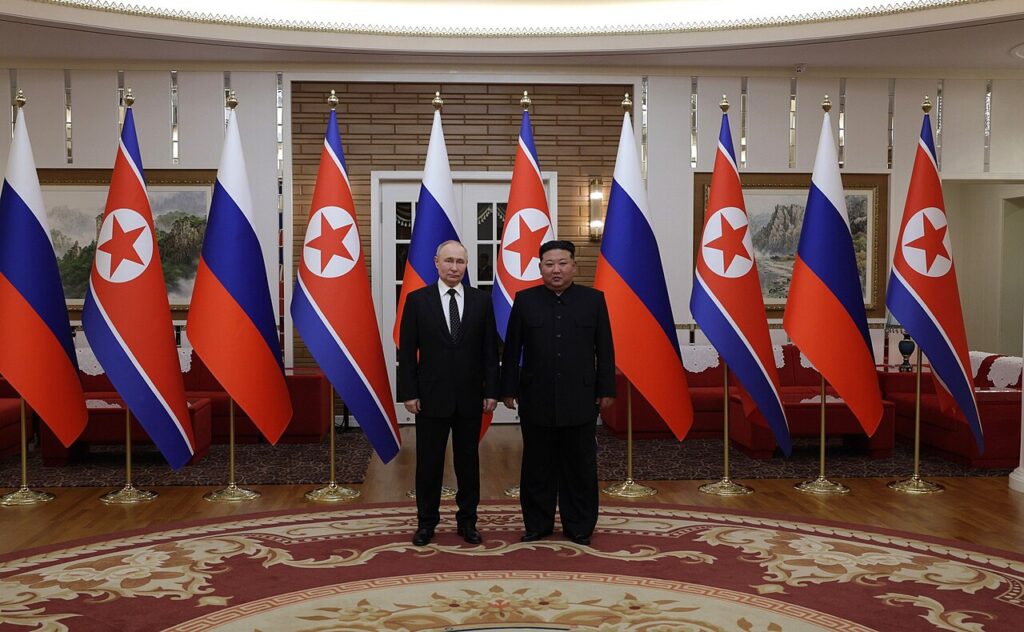
Third, state media showed him in public. North Korea’s Korean Central News Agency reported that Kim visited a garment and footwear exhibition in Pyongyang on 19 October, and released photographs the next day showing him touring the event with his daughter, Kim Ju-ae. The pictures appeared within days of the rumour taking hold. It is fair to note that the date of state-released photographs cannot be independently verified — North Korea is the world’s most closed-off country — but they directly conflict with a story that had him dying in a Beijing hospital at the same time, and no credible evidence has emerged to support the hospital version.
Fourth, the “proof” videos are recycled or fake. The newsreader clip shared as a death announcement is from December 2011, when North Korean television announced the death of Kim’s father and predecessor, Kim Jong Il — an event fact-checkers including Snopes and AFP identified by matching the historic broadcast. The hospital-bed pictures were generated with artificial intelligence. Real footage, wrong person, wrong decade — and in the case of the hospital images, not footage at all.
Verdict
FALSE. Kim Jong Un did not die in October 2026. The claim comes from a single unverified source, no evidence supports it, South Korea’s intelligence agency formally assessed it as false, and state media showed him carrying out public engagements in the same period. The most that can honestly be said about his health is what the NIS itself said: he carries a high cardiovascular risk, but shows no sign of the collapse the rumour described.
Why it matters
Death rumours about the leader of a nuclear-armed state are not harmless gossip. They move markets, fuel speculation about succession and instability on the Korean peninsula, and invite opportunists to dress old footage up as breaking news. North Korea’s secrecy makes it fertile ground for this kind of story — and that is exactly why the burden of proof should be higher, not lower. When a claim about a world leader’s death arrives with no evidence, one source and recycled “proof”, the right response is to wait for verification, not to share first.
Related reading: Seoul Says Kim Jong Un’s Daughter Ju Ae Is Now His Designated Successor and No, Benjamin Netanyahu Was Not Attacked in Tel Aviv — the Video Is From Bulgaria in 2013. For the NIS assessment, see the Korea JoongAng Daily report on the NIS briefing and Aju Press on Kim’s public appearances amid the rumours.