The death toll from Thursday night’s magnitude 7.0 earthquake in Tibet has climbed to at least 16, with 32 people injured, after rescue teams reached villages near the epicenter in the northern city of Nagqu — a sharp jump from the early hours, when authorities had reported no confirmed casualties at all.
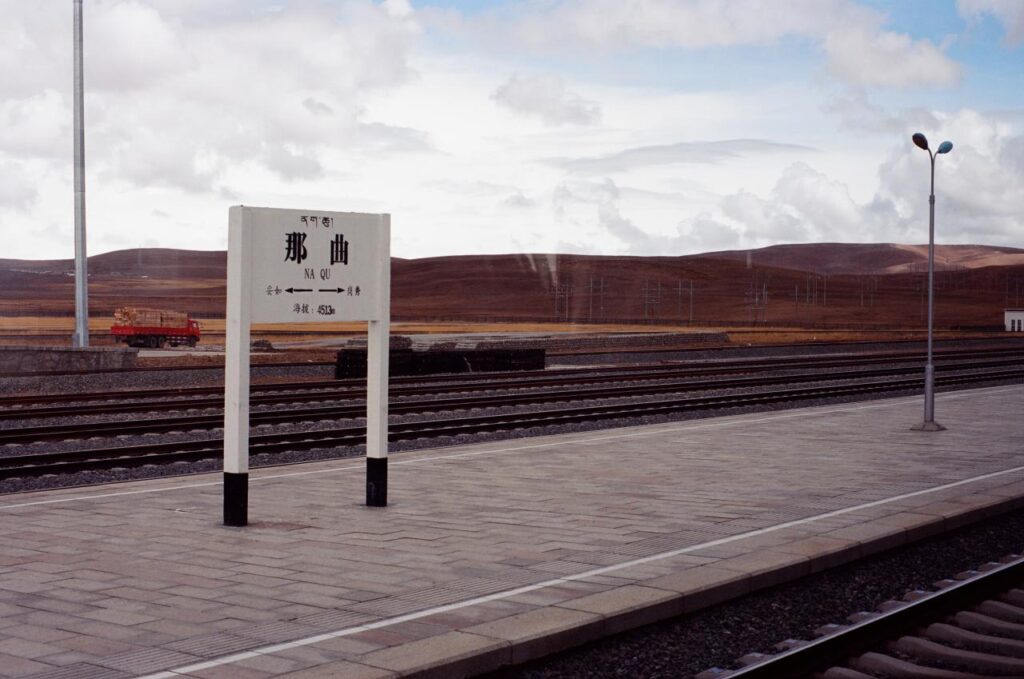
The quake struck at 10:33 p.m. local time on Thursday (2:33 p.m. GMT), centered on Maru township in Baqên County, part of Nagqu City in the Tibet Autonomous Region. The US Geological Survey put the epicenter 191 kilometers east-northeast of Nagqu and roughly 390 kilometers northeast of Lhasa, the regional capital. China’s earthquake networks center measured a shallow depth of 10 kilometers; the USGS put it at 18 kilometers.
The casualty figures were released by the Nagqu media office, citing city government officials: at least 16 dead, 32 injured — 11 of them in serious condition, the other 21 with minor injuries — and at least 339 homes collapsed across Baqên County. Houses fell across the area around the epicenter. Power and telecommunications went down in the county seat. Rockfalls damaged a car and guardrails and blocked a section of National Highway 317, the corridor that links the region to the rest of western China. In Mărú Township, officials reported building collapses, cracks in the ground and walls damaged by the shaking.
Beijing has activated a Level II earthquake emergency response — the second-highest tier in China’s disaster-response system. Police and fire-department rescue teams are converging on the epicenter and putting up tents for displaced families; response workers have been sent in to coordinate, and local officials are checking villages one by one. Railway authorities suspended train services through the affected areas, and a string of aftershocks around magnitude 3 and 4 has been recorded in the surrounding region. State broadcaster CCTV called it the biggest earthquake in the region in five years and the strongest to hit China since a magnitude 7.1 quake struck the far western Xinjiang region in January 2024.
Township deputy head Lhawang Dagpo told the state news agency Xinhua that the quake was clearly felt at the township office in Maru, which sustained cracks in its walls. One resident told state-run media the tremor jolted them awake and they heard their house “squeaking” as it shook. Videos carried by official media showed residents fleeing their homes for shelter outside or in parked cars.
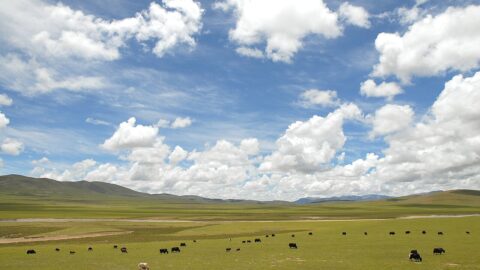
Tibet sits on one of the planet’s most violent geological seams: the collision of the Indian and Eurasian tectonic plates that raised the Himalayas and the vast Tibetan plateau. The epicenter lies at an average elevation of about 4,864 meters — nearly 16,000 feet — in sparsely populated high-altitude terrain where rescue work is physically punishing. This is China’s deadliest earthquake since January 2025, when a magnitude 6.8 tremor in Tingri county, also in Tibet, killed at least 126 people. In 2010, a magnitude 7.1 quake in Yushu, in neighboring Qinghai province, killed at least 2,698.
Two things about this disaster deserve attention. First, the early hours told almost nothing — no casualties, no damage, a quake in the dark at nearly 5,000 meters. The jump from zero confirmed deaths to 16 in a matter of hours is a reminder that the first official reports out of remote Tibet are placeholders, not verdicts; the toll will almost certainly move again as daylight reaches the scattered villages around Baqên. Second, every one of these numbers comes through a single pipeline: China’s state media. No independent newsroom can report freely from the Tibetan plateau, so the world sees this disaster only through Beijing’s lens — the casualty count, the photographs, the narrative. For a region that buried 126 people after the Tingri quake last year and watched floods kill more than a thousand along the Nepal border in August, the question hanging over Nagqu tonight is whether China’s emergency apparatus, now on its second-highest alert, can move fast enough at altitude. Our earlier report on the earthquake covered the first hours after the tremor.
The full extent of building damage across the villages around the epicenter has not yet been surveyed; the picture will change once assessment teams complete their rounds. This is a developing story.