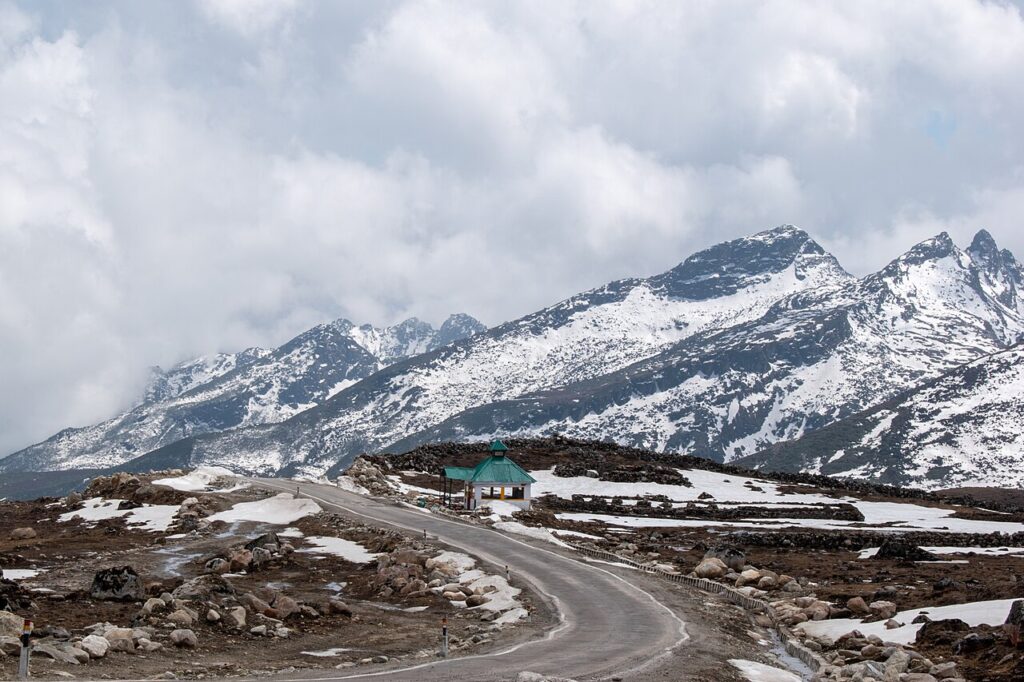
VERDICT: FALSE. Lieutenant General Girish Kalia did not say China has seized control of areas in Arunachal Pradesh, and he did not say Indian troops there have been denied supplies. The clip circulating online takes genuine footage from a 2023 briefing in a different part of India and puts fabricated words into his mouth.
The claim
A short video circulating on X and other platforms in late October 2026 purports to show Lt Gen Girish Kalia, General Officer Commanding of the Indian Army’s Spear Corps, making what sharers describe as a “leaked admission”. In the clip, he is supposedly heard saying that China has taken control of Asaphila, Longju and Taksing Circle in Arunachal Pradesh, a state in India’s far north-east that borders China, and that Indian troops deployed in the sector are being denied essential supplies.
The claim spread widely enough that the Indian Army’s own fact-checking unit publicly intervened on 25 October 2026.
The facts
First, the Army itself has disowned the clip. In a post on 25 October, Indian Army Fact Check (@MythbusterXX) wrote: “A digitally altered video is being circulated with fabricated remarks attributed to Lt Gen Girish Kalia, claiming that China has taken control of Asaphila, Longjou and Taksing Circle in Arunachal Pradesh and that the Indian Army has been denied essential supplies. The misleading video attempts to portray fabricated statements as a leaked admission by a senior Indian Army officer. The video uses #SyntheticGeneratedInformation to falsely attribute remarks to Lt Gen Girish Kalia.” The Army said the footage had been manipulated using synthetic-generated information, including AI lip-syncing and voice cloning, overlaid on real archival footage.
Second, the footage is not from Arunachal Pradesh at all — and it is three years old. The Army traced the original video to a press briefing given on 27 October 2023 in Kupwara, in Jammu and Kashmir, more than 2,000 kilometres from Arunachal Pradesh, when Kalia was then a major general commanding the 28 Infantry Division. That briefing was about counter-infiltration operations along the Line of Control, the de facto border in Kashmir. It had nothing to do with China, Arunachal Pradesh, or supply shortages.
Third, a contemporary report of that 2023 briefing matches the Army’s account, not the viral clip. Reporting from the time records Kalia telling reporters in Kupwara that ten infiltration attempts had been made along the Line of Control in the previous eight months, that 27 terrorists had been killed, and that large quantities of warlike stores and narcotics had been recovered. There is no mention in that reporting of Arunachal Pradesh, of Chinese control over any territory, or of troops going without supplies — because none of it was said.
Fourth, the claim fails the most basic search test. An independent fact-check of the same 32-second clip found that the supposed statement appears in no news agency or newspaper reporting, including from ANI, the agency whose footage the clip uses — Kalia’s name is visible on his uniform in the footage, which is what makes the forgery superficially convincing. The same check found the audio itself bore signs of later addition: speech almost absent above 6 kHz, with none of the background noise expected from an outdoor briefing. That is consistent with a synthetic voice laid over genuine pictures, not with a man speaking to reporters in a field.
One point of precision matters. This fact-check is about the video: whether Kalia said these words. He did not. It does not settle the wider state of the India-China border, where face-offs are separately reported from time to time.
Verdict
FALSE. The video is a deepfake: real footage, fake words. The man in the uniform is Girish Kalia. The voice claiming Chinese control of Asaphila, Longju and Taksing Circle, and claiming troops are being denied supplies, is not his. The original briefing, on 27 October 2023 in Kupwara, was about infiltration attempts in Kashmir, and contemporary reporting of it contains none of the viral clip’s claims.
Why it matters
Military deepfakes are among the most dangerous kinds of misinformation because they borrow the authority of the uniform. A fabricated “admission” from a serving corps commander can inflame public anxiety about national security, feed tension between two nuclear-armed neighbours, and drown out genuine border reporting in a fog of invented confessions. The pattern here — old briefing, new voice, explosive claim — is a repeatable formula, and it will be used again. The defence is simple: check whether the supposed statement appears anywhere besides the viral clip, and check where the footage actually came from. Here, both checks fail the clip completely.
Related: the fabricated video attributed to India’s foreign ministry spokesperson; the AI-generated Eiffel Tower flag video.
Primary evidence: the Indian Army Fact Check post of 25 October 2026, here.

2 Comments