VERDICT: FALSE
Donald Trump never warned India to end its relations with Russia. The viral clip pairs genuine footage from his 3 January 2026 press conference on Venezuela with AI-generated audio.
The claim
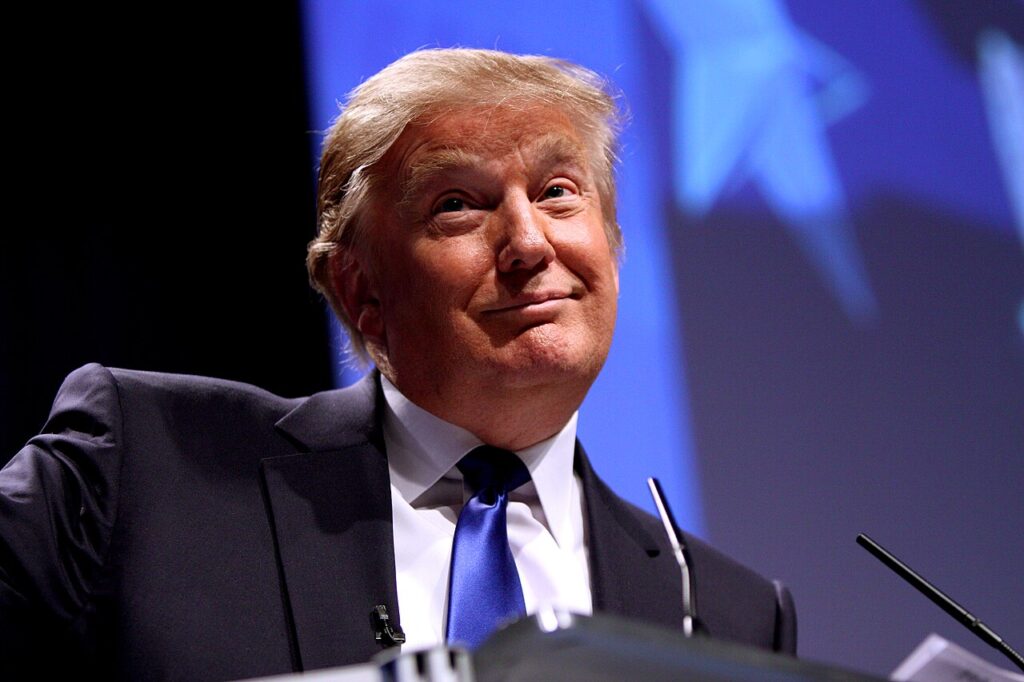
A short video circulating on Facebook, Instagram and Threads in late October 2026 appears to show US President Donald Trump at a podium, flanked by officials, delivering a blunt threat. In the clip, a voice presented as his says: “I am warning India to end its relations with Russia. Otherwise, I will deal with you the same way Pakistan did in the May conflict.” Urdu-language captions on many versions repeat the supposed warning, framing it as a fresh American ultimatum to New Delhi.
The clip has travelled fast. A Facebook post sharing it on 25 October 2026 drew 1,800 likes and 826 shares, with separate reposts adding thousands more, and it has since been reposted across Facebook, Instagram and Threads through 26–29 October — including one reel with more than 8,000 likes. It is not the clip’s first outing: the identical video circulated in January 2026 and was debunked then — what is spreading now is a resurgence, not a new statement.
The facts
First, the footage is from an entirely different event. The pictures come from a press conference at his Mar-a-Lago residence in Florida on 3 January 2026, at which he announced the US capture of Venezuelan leader Nicolás Maduro in an overnight operation in Caracas. The US Department of War’s report of that day describes the same event, and the officials behind Trump in the clip — Secretary of State Marco Rubio, Secretary of War Pete Hegseth and Joint Chiefs Chairman General Dan Caine — match that press conference’s line-up. A full transcript of that press conference is about Venezuela from start to finish, with no warning to India and no mention of India at all.
Second, the audio fails every forensic test applied to it. Soch Fact Check ran the clip’s speech through Hive’s AI-content detector, which flagged it as 93.2% AI-generated, and through Hiya’s deepfake voice detector, which gave the sampled voice authenticity scores of 12 and 21 out of 100 for different parts of the audio — “likely a deepfake.” The voice may sound like Trump, but it is a synthetic imitation laid over real pictures.
Third, no credible news outlet has reported any such warning — because there is none to report. That matters because Trump’s real record on India and Russian oil looks nothing like the clip. Washington has pressed New Delhi over Russian oil purchases with tariffs; in mid-October 2026 Trump claimed Prime Minister Narendra Modi had assured him India would stop buying Russian oil, and days later he waived key Russia-related sanctions and tariffs, easing India’s energy position. That is hardball trade diplomacy — not a threat to treat India the way Pakistan was treated in a war — and no official transcript, White House statement or reputable report contains the clip’s words.
Fourth, this exact forgery has been caught before. The Cyber Peace Foundation debunked the same clip on 14 January 2026, after it first appeared on X on 10 January 2026, finding real press-address visuals with fabricated, overlaid audio. Its October 2026 return follows a familiar pattern: an old fake, dressed in new captions, riding a new news cycle.
One point of precision matters. This fact-check is about the video: whether Donald Trump said these words. He did not. It does not settle the wider state of US-India or India-Russia relations, or the rights and wrongs of the four-day India-Pakistan confrontation of May 2025 that the fabricated audio invokes.
Verdict
FALSE. The video is a fabrication: real footage, fake words. The man at the podium is Donald Trump, speaking on 3 January 2026 about the capture of Nicolás Maduro. The voice warning India over Russia is not his — it is AI-generated audio, scoring 93.2% synthetic on one detector and near-zero on authenticity on another, pasted onto pictures from an event that had nothing to do with India.
Why it matters
A fabricated threat from the American president is not harmless noise. Put into the mouth of the world’s most powerful office, it can inflame opinion between nuclear-armed neighbours, distort public understanding of what Washington is actually doing — tariffs and waivers, not ultimatums — and drown out genuine diplomacy in invented confrontations. The formula is cheap and repeatable: a real podium appearance, a synthetic voice, captions in the audience’s language, and outrage does the distribution. The defence is simple: check whether the supposed statement appears anywhere besides the viral clip, and check where the footage actually came from. Here, both checks fail the clip completely.
Related: the deepfake video falsely attributed to Lt Gen Girish Kalia; the fabricated video attributed to India’s foreign ministry spokesperson.
Primary evidence: the US Department of War’s report of the 3 January 2026 press conference, here; Soch Fact Check’s debunk, here.