Informopedia Explains: somewhere in the AI boom’s supply chain sits a company that owns almost nothing you would recognise — no app, no chatbot, no search engine — and yet owes tens of billions of dollars. It is called a neocloud, and this week, after Elon Musk warned that more than 200 of them face “guppy-level death”, the word moved from industry jargon to headline. The idea behind it is simple. The finances behind it are not.
The landlord model
A neocloud is a cloud provider built around one product: rented GPU capacity for AI training and inference. “Neo” is Greek for new — these firms arrived decades after Amazon Web Services, Microsoft Azure and Google Cloud had divided up the cloud market, and they compete by refusing to be generalists. A hyperscaler sells hundreds of services: storage, databases, security tools, email. A neocloud sells raw computing power, by the hour or by multi-year contract, to whoever needs it: OpenAI, Anthropic, Meta, Microsoft, startups.
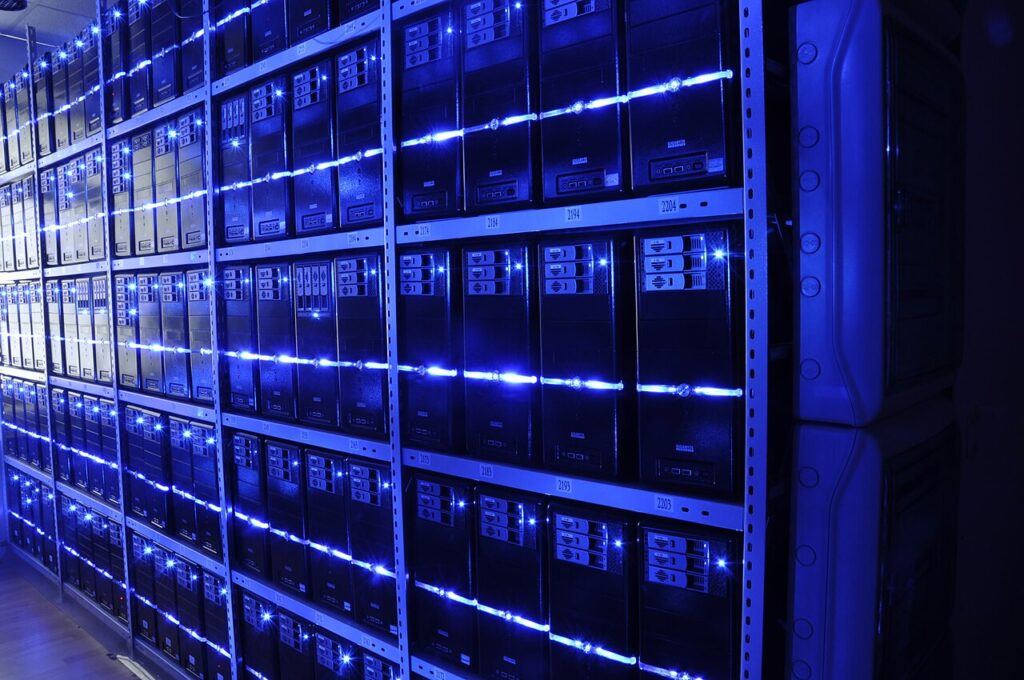
The model has three ingredients, and all three are scarce. First, chips: neoclouds buy Nvidia GPUs by the hundred thousand and wire them into clusters with specialised high-speed networking, because training a large AI model needs thousands of GPUs talking to each other at memory speed. Second, power and space: an AI cluster can draw hundreds of megawatts and needs liquid cooling, so neoclouds build their own data centres or lease “powered shells” — sometimes from former bitcoin miners, who already own the buildings and the electricity connections. Third, capital: the GPUs are bought upfront, mostly with debt, and the debt is secured against the chips themselves and against the signed customer contracts.
Why the debt is the story
Take CoreWeave, the largest listed neocloud. It reported total indebtedness of $35.6 billion at 30 June 2026, up from roughly $25 billion three months earlier, according to its filing with the US Securities and Exchange Commission. In its second quarter of 2026 it booked depreciation and amortisation of nearly $1.4 billion against revenue of about $2.6 billion — a reminder that GPUs lose value fast: a chip that is top of the line today is ordinary within three or four years, and the loans taken to buy it last longer than its prime.
That mismatch is the whole bet. A neocloud borrows for years to buy hardware that depreciates in years, and rents it under contracts that must repay the borrowing before the hardware ages out. The bet works when GPU rental prices hold, customers renew, and lenders stay generous. It wobbles when any one of those legs moves — and this autumn, all three have been twitching. Industry analysts at Synergy Research Group put neocloud revenue above $25 billion for 2025 and forecast the segment approaching $400 billion by 2031, but the same reports note that nine neoclouds now sit among the world’s top 40 cloud providers by infrastructure revenue: this is no longer a niche.
The concentration problem
The sharpest risk is who the customers are. A handful of hyperscalers and AI labs account for most contracted revenue, and losing one can move a share price in a day. Company filings cited by Reuters show Microsoft alone accounted for about 67% of CoreWeave’s 2025 revenue. In July 2026, a report that Meta might resell its own excess AI capacity rather than rent more knocked CoreWeave down 13.9% and Nebius — the Amsterdam-listed neocloud spun out of Yandex’s international operations — down 17% in a single session. When your biggest customer is also your biggest competitor, every contract renewal is a negotiation with someone who could, in principle, do it themselves.
There is a second split worth understanding. Not every firm called a neocloud carries the same risk. Operators like CoreWeave and Nebius own the GPUs and run the clouds — the most growth, and the most debt. Landlords, often former miners, own the power and the buildings and lease them for 10 to 20 years — less upside, longer contracts, less exposure to chip prices. Lumping them together misses the point: the question is not whether AI demand is real — the contracted backlogs say it is — but who carries the GPU risk, and at what price their next dollar of borrowing comes.
So will they die?
Musk’s “guppy-level” prediction is a prediction, and it serves his own story: SpaceX, with Starlink and launch revenue behind it, could borrow $40 billion precisely because it is not a pure neocloud. The more measured version of his argument is that the neocloud field will consolidate — the well-capitalised and well-contracted survive, the rest get bought or fail — which is what happens to most infrastructure booms, from railways to fibre broadband. The survivors will probably look less like startups and more like utilities: boring, leveraged, essential. The losers will leave behind data centres, debt, and a cautionary tale about borrowing short against hardware that ages fast. Either way, the next time you ask a chatbot a question, remember that the answer was probably computed on rented chips, in a building owned by a landlord you have never heard of, paid for with money borrowed against a contract you will never see. Related coverage: why AI’s godfathers can’t agree on how dangerous AI is and 400 scientists want powerful AI cut off from the internet.