The numbers that changed the night
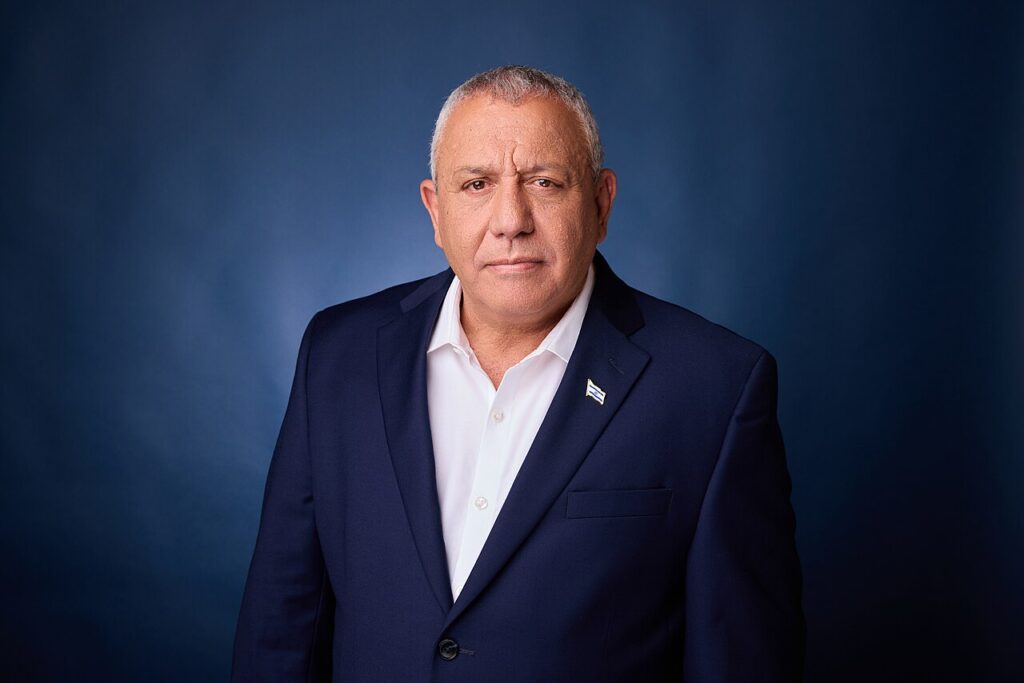
When Israel’s polling stations closed at 10 p.m. on Tuesday, the television exit polls told a story neither camp had quite dared to predict. Gadi Eisenkot, the 66-year-old former army chief of staff leading the centrist Yashar party, had edged ahead of Benjamin Netanyahu — but not by enough to govern.
All three major exit polls agreed on the shape of the result. Kan public television, Channel 12 and Channel 13 each put Eisenkot’s bloc of opposition parties at 52 to 53 seats in the 120-seat Knesset, against 50 for the bloc led by Netanyahu’s Likud. Both camps fell well short of the 61 seats needed for a majority. The Arab-led parties, meanwhile, surged to 17 or 18 seats — their strongest showing in years, and enough to hold the balance of power.
The paradox of the night was in the party totals. Netanyahu’s Likud defied weeks of polling to finish as the largest single party, with 24 or 25 seats, ahead of Eisenkot’s Yashar on 21 to 23. In Israel’s system, though, the largest party does not automatically govern; the largest bloc usually gets the first chance to try. That distinction is now the whole ball game.
Eisenkot claims the mandate; Netanyahu’s camp says not so fast
Eisenkot did not wait for the official count. In a statement issued as the exit polls landed, he declared victory and said the preliminary results should give him the first right to form a government to replace Netanyahu. “The initial exit poll results indicate a complete lack of confidence in Netanyahu and the October 7 government,” he said.
At his watch party in a Tel Aviv sports arena, supporters chanted “Bibi, go home!” — using Netanyahu’s nickname — and hailed the former general as the next prime minister. Yair Lapid, the former prime minister whose Together party sits inside Eisenkot’s bloc, went further, calling the outcome “a crushing defeat” for Netanyahu and adding: “The public has told them to get out.”
The Netanyahu camp pushed back within the hour. Foreign Minister Gideon Sa’ar, writing on X, called the opposition’s celebrations “premature” and noted that “one thing is reasonably clear: Likud is the biggest party in Israel.” Netanyahu himself had not responded publicly late on Tuesday night and was not expected at Likud headquarters in Jerusalem until around 1 a.m.
The kingmakers nobody planned for
The night’s other shock was turnout among Israel’s Arab citizens, who make up roughly a fifth of the population and have often voted at lower rates than Jewish Israelis. This time they turned out in historic numbers, and the two Arab-led lists — the Joint List, projected at 10 or 11 seats, and the United Arab List, known as Ra’am, at about 7 — are now positioned to decide who governs.
That creates an awkward arithmetic problem for Eisenkot. His bloc’s 53 seats plus the Arab parties’ 17 or 18 would reach 70 — a comfortable majority. But Eisenkot ruled out governing with the Arab parties during the campaign, setting conditions they did not meet, and Avigdor Liberman, whose Yisrael Beiteinu party holds 7 or 8 seats inside the opposition bloc, refused during the campaign to accept even minority support from them. Without the Arab parties, Eisenkot’s path to 61 runs through defectors or parties that spent the campaign opposing him.
It was a record night at the ballot box overall. Turnout ran far ahead of recent elections all day, with officials reporting 55.7 percent by late afternoon — and the final figure higher still. Israelis were voting for the first time since the Hamas-led attacks of October 7, 2023, and the war in Gaza that followed, and the campaign was dominated, above all, by security.
What happens now
Nothing is settled yet, and that is by design. Exit polls are projections, not results: the Central Elections Committee said the first batch of official results would come around 1 a.m., but warned the full count could stretch into Friday because of the large number of absentee ballots. Past Israeli exit polls have shifted by seats as the real votes came in.
Once the official picture firms up, President Isaac Herzog will consult the party leaders and task the candidate he judges most likely to win the Knesset’s confidence — Netanyahu, as leader of the largest party, or Eisenkot, as leader of the largest bloc. Whoever gets the nod will then have weeks, and possibly months, of horse-trading ahead: Israeli coalition talks routinely run long, and this one starts without an obvious majority anywhere.
Why this matters beyond Israel
The result will shape far more than Israel’s domestic politics. The next government will decide the future of the Gaza ceasefire and what, if anything, replaces Hamas rule there; it will manage a relationship with Washington that has swung between open embrace and open friction in recent months; and it will set the tone for a region still living with the consequences of October 7. A prime minister who owes his majority to parties that disagree with him on the war’s endgame will have less room to maneuver than one who commands his own bloc — and on Tuesday night, neither man had that.
For now, Israel has voted for change without quite delivering it. The count will say whether the deadlock holds — and the deadlock, more than any single party’s total, is the story of this election.




One Comment