More than 100 people were killed when a drone struck a crowded market in Nyala, the capital of Sudan’s South Darfur state, on Monday evening, according to a Sudanese rights group tracking violence in the country’s civil war. Another 113 people were injured, the group said.
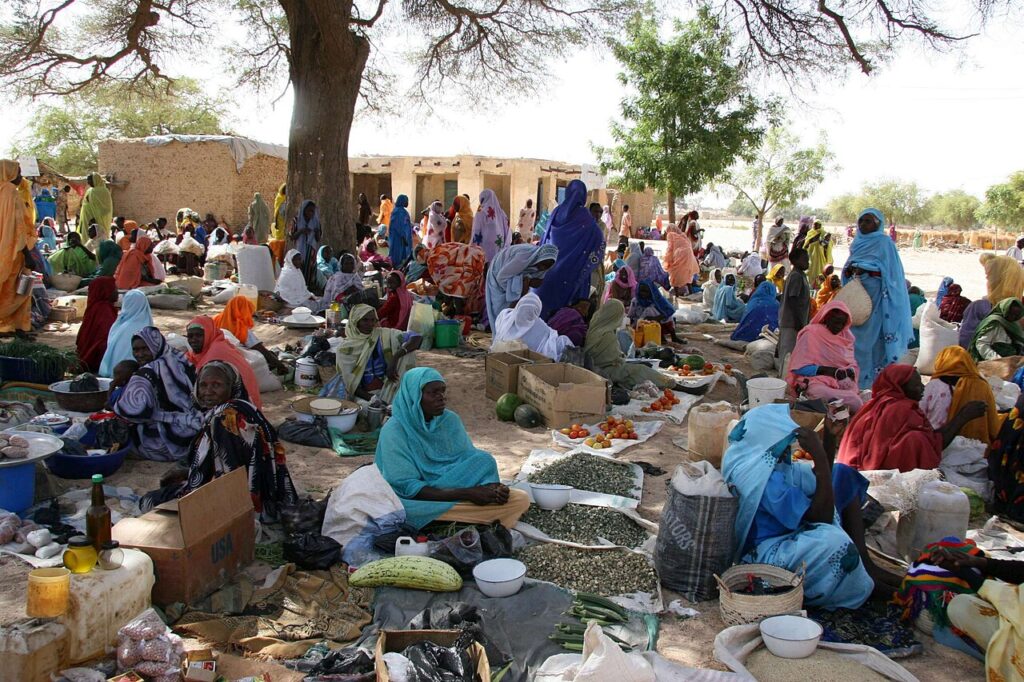
The strike hit Tanqong market — also spelled Tangooj — in the Dumaya neighbourhood, west of Nyala, while it was packed with traders, workers and shoppers, according to the accounts that have emerged since. Emergency Lawyers, the rights group, said many of those killed and injured were women and children, and called for an independent investigation.
“This massacre transformed a civilian marketplace into a scene of mass killing and injury,” the group said in its statement, describing an assault that “threatens the lives of residents and compounds their suffering amid the ongoing war.”
The casualty figures have not been independently verified, and different sources are reporting different numbers — a gap readers should keep in mind. The health minister of the RSF-aligned Tasis administration in South Darfur, Dr Alaa al-Din Nugud, put the toll at 102 civilians killed and 113 wounded. Doctors Without Borders (MSF), which supports Nyala Teaching Hospital, said the hospital received 36 bodies and treated more than 150 wounded people in its emergency room, many with shrapnel injuries and severe burns. Some of the wounded were carried to hospital on tuk-tuks and donkey carts.
The difference between those counts is not a contradiction so much as a measure of how hard it is to count the dead in a city at war: hospitals count the bodies that reach them, while rights groups and local officials count reports from across the affected area. Neither figure has been confirmed by an independent observer on the ground.
Who is being blamed — and what is disputed
Emergency Lawyers blamed Sudan’s military for the strike. The Tasis administration, the parallel government aligned with the paramilitary Rapid Support Forces (RSF), accused forces under army chief Abdel Fattah al-Burhan of deliberately targeting civilian markets. MSF also attributed the strikes to the Sudanese Armed Forces, according to the reporting. No response from the army to this specific allegation was carried in the reports reviewed for this article.
Nyala has been controlled by the RSF since the early stages of a war that began in April 2023, when the army and the RSF — once partners in Sudan’s transition — turned on each other. The city is now the seat of the RSF-aligned administration, which makes it both a military prize and a place where civilians have almost nowhere neutral left to go.
This was not the first market strike in Nyala this month. On October 16, a drone hit the city’s Al Mawashi livestock market, killing at least four people, according to MSF. And on Tuesday, a separate drone attack on the Al-Markhiyat transformer station in Omdurman, across the Nile from Khartoum, knocked out electricity across large parts of the capital for more than 12 hours, forcing hospitals and bakeries onto generators and cutting water supplies.
Why this matters beyond Sudan
The Nyala strike is part of a shift that the United Nations has flagged as the war’s most dangerous new phase: drone strikes, by both sides, have become the deadliest threat to civilians in Sudan, hitting hospitals, schools, markets, dams and displacement camps. The weapons are cheap, the targets are soft, and the people with the least protection — market traders, children running errands, families buying the week’s food — absorb the worst of it.
It also lands in the same week that 31 countries warned Sudan is sliding toward famine, with 19.5 million people facing acute food insecurity. A market is not just a place to shop in a famine: it is the last functioning link in a food chain. Destroy it, and the hunger that follows is not an accident of war but its consequence.
Sudan’s war has already created what the UN calls the world’s largest humanitarian crisis, with about 34 million people — nearly two out of every three Sudanese — needing assistance. Earlier this month, a BBC investigation found the RSF had targeted hospitals in el-Fasher, the capital of North Darfur. The pattern in both cities is the same: the places civilians depend on to survive are becoming targets.
What happens next depends on something Sudan has not had in this war: an investigation anyone trusts. Emergency Lawyers has demanded an independent probe. Without one, the Nyala toll will remain what it is now — a number reported by one side, disputed by the fog of war, and mourned by families who do not need a verified count to know what they lost.