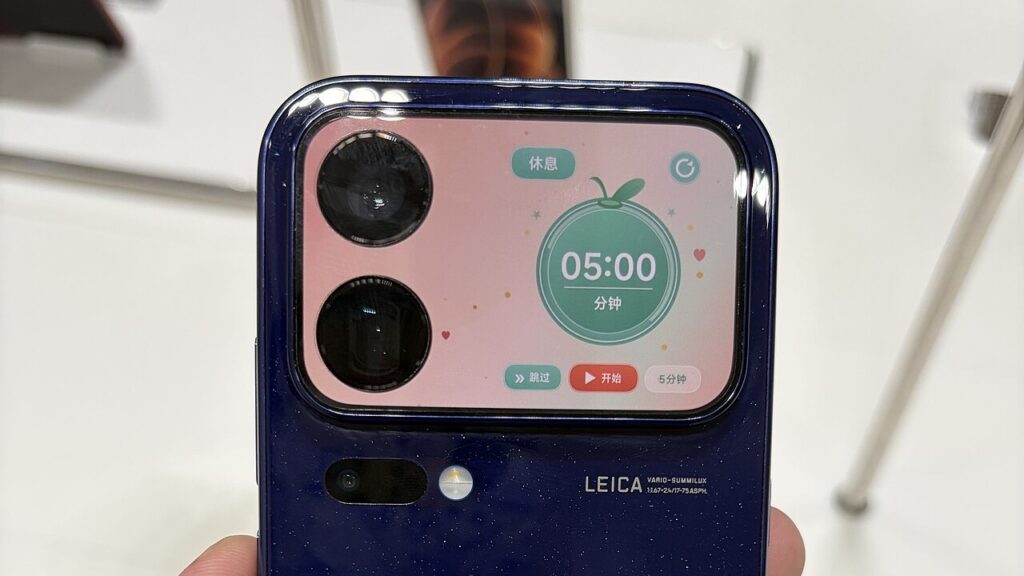
Xiaomi has taken its most ambitious phones outside China — and the global price tag is steep. The Xiaomi 18 Pro global price starts at €1,399, the company confirmed at its launch event in Paris on Tuesday, November 17, with the larger 18 Pro Max starting at €1,599. Both phones keep the headline hardware from their September debut in China — the rear secondary display, dual 200MP Leica cameras and Qualcomm’s newest 2-nanometre chips — but buyers outside China get smaller batteries and, in the smaller phone’s case, slower wired charging.
It is the first time Xiaomi has sold its Pro models outside China, and only two phones were announced: the 18 Pro and the 18 Pro Max. There is no standard Xiaomi 18 and no Ultra in this cycle.
The prices, confirmed at the event
The billbil-kun leak that circulated for weeks turned out to be exactly right on the starting prices. The Xiaomi 18 Pro costs €1,399 with 12GB of RAM and 256GB of storage, rising to €1,599 for 512GB. The 18 Pro Max starts at €1,599 for 12GB and 256GB, with the 512GB model at €1,799. In the UK, the Pro starts at £1,199 and the Pro Max at £1,399.
That is a large step up from China, where the same phones launched on September 23 from ¥5,999 for the Pro and ¥6,999 for the Pro Max. The global starting prices are roughly 70% higher than the Chinese ones, though European prices include sales tax, so the gap is not a straight currency conversion. It also makes the 18 Pro Max Xiaomi’s most expensive phone in Europe to date — more than the Xiaomi 17 Ultra cost at launch.
The battery is the real story
The global models share the hardware of their Chinese counterparts, with one exception: the battery. The global Xiaomi 18 Pro packs a 6,000mAh battery instead of the 7,000mAh cell in China, and the global Pro Max gets 7,050mAh instead of 8,500mAh — a cut of 1,450mAh, or about 17%, on the larger phone.
Charging takes a smaller hit. The Pro Max keeps the Chinese model’s 100W wired and 50W wireless charging. The smaller Pro keeps 50W wireless but drops to 90W wired, down from 100W in China.
Even after the cut, the global Pro Max still carries far more battery than its main rival: Samsung’s Galaxy S26 Ultra has a 5,000mAh cell and charges at 60W wired. Whether the smaller global battery still lasts a full heavy day is the first question independent reviews will have to answer — Xiaomi has not explained the reduction publicly.
What has not changed
Everything else from the Chinese launch survives. The 18 Pro runs on the Snapdragon 8 Elite Gen 6, and the Pro Max on the Snapdragon 8 Elite Extreme Gen 6, both built on a 2-nanometre process. Both phones have the signature rear secondary display — Xiaomi’s “Back for more” feature — which can show the time, notifications and a camera preview for selfies taken with the rear cameras.
The cameras are dual 200MP Leica units on both phones: a 200MP main sensor and a 200MP periscope with 3.2x optical zoom, alongside a 50MP ultrawide and a 50MP front camera. Both run HyperOS 4, based on Android 17, and both have a Privacy Mode on the main display that keeps sensitive information harder to read from an angle.
The phones come in Black, White, Velvet Red and Cosmic Blue. The Pro Max offers 12GB/256GB, 12GB/512GB and 16GB/1TB configurations; the Pro offers the two 12GB options. Buyers also get a free three-month trial of Google AI Pro and YouTube Premium, a four-month Spotify Premium trial and a short iQIYI VIP trial.
Availability
The phones are on sale in select global markets through Xiaomi’s online store, though Xiaomi has not announced sale dates for every market. No United States launch was mentioned — Xiaomi does not sell its phones officially in the US.
Why it matters beyond Europe
The 18 Pro series is Xiaomi’s clearest attempt yet to compete at the very top of the global flagship market, not just on price. The rear display is the most distinctive hardware idea any major phone maker has shipped this year, and the dual 200MP Leica system is a genuine statement of intent. But the launch also shows the compromise global buyers now face: the best Xiaomi hardware costs far more outside China, and this time it arrives with less battery than the version sold at home.
That trade-off lands in a crowded week for flagship launches — Google’s Gemini 4 Hydrogen and Anthropic’s Claude Fable 5.2 arrived within the past few days, and Alibaba’s Qwen4-Max followed on Monday. Xiaomi’s answer is hardware, not software: a phone you can recognise from across the room, at a price that asks buyers to take the brand as seriously as Samsung and Apple. Whether real-world battery tests justify the smaller global cells will decide how far that bet travels. Full specifications are on Xiaomi’s official product page.