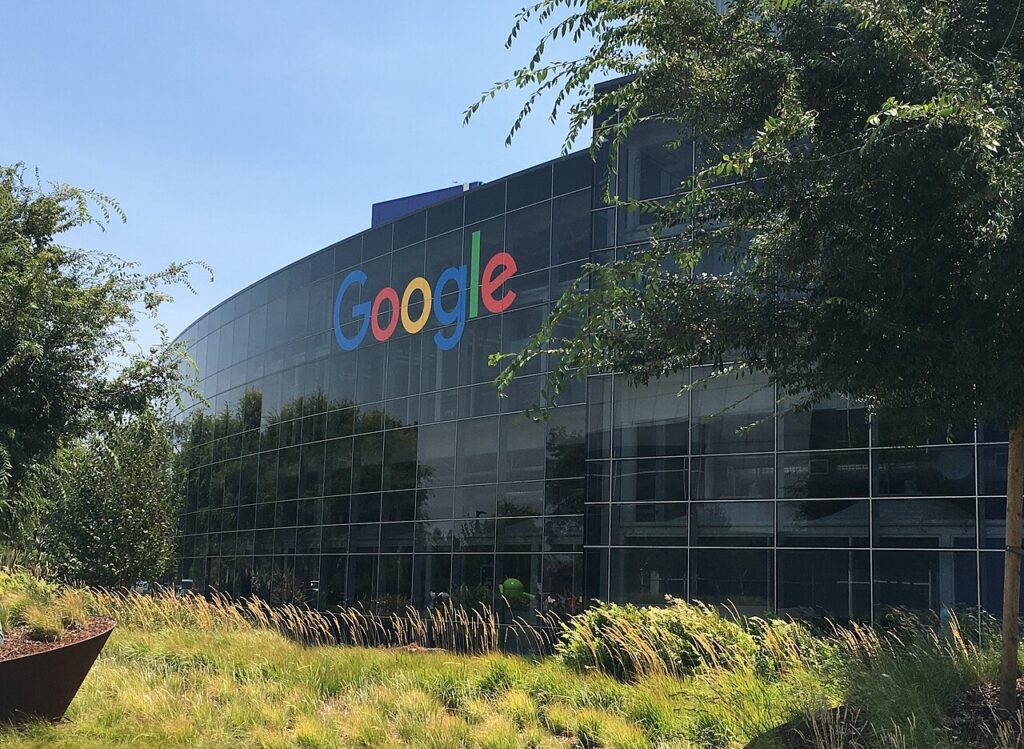
Google’s parent company just reported a quarter most companies would celebrate — revenue up 25%, cloud revenue doubled, operating profit up 30% — and watched its shares fall more than 10% in after-hours trading. The reason is the question hanging over all of big tech: how much is the race to build artificial intelligence actually costing, and when does it start paying?
Alphabet reported third-quarter 2026 results on Wednesday, October 28, after the US market closed. Revenue reached $127.6 billion, up from $102.3 billion a year earlier. But analysts had expected about $128.2 billion, so even a record-sized quarter landed just short of forecasts. The first regular trading session to react is Thursday, October 29 — which means the after-hours fall is a preview, not yet the market’s final verdict.
The profit puzzle: two earnings numbers
Two different profit figures circulated after the release, and both missed expectations — which is why the headlines look confusing. On the standard accounting measure, earnings per share came in at $2.12, well below the roughly $3.02 analysts expected. On Alphabet’s adjusted measure, which strips out some items, earnings were $2.67 per share — still short of the $3.02 target.
The gap between the two is mostly explained by investments, not by Google’s day-to-day business. Alphabet recorded an $8.7 billion loss on equity securities in the quarter, against a $10.7 billion gain a year earlier. That swing reduced net income by $6.7 billion and earnings per share by $0.55. Profit available to common shareholders fell 25% to $26.2 billion, even as operating income — the profit from actually running the business — rose 30% to $40.6 billion. In other words, the core business grew strongly; the investments sitting on top of it dragged the bottom line down.
Cloud doubled. Search slowed.
The brightest part of the report was Google Cloud, whose revenue more than doubled to $30.7 billion, beating expectations of about $29.6 billion. Cloud operating profit jumped to $11.1 billion, with its margin rising to 36.2%. On the earnings call, cloud chief Thomas Kurian — making his debut on such a call — said sales of Google’s own tensor processing units, the chips that compete with Nvidia’s graphics processors, had become a meaningful contributor.
Search told a different story. Revenue from search and related businesses rose only 12% to $63.4 billion, below the roughly $65 billion expected, and its growth has slowed through the year — from 19% in the first quarter and 17% in the second to 12% now. Advertising revenue overall was $82.0 billion, also below the roughly $83.5 billion forecast. Analysts pointed to a familiar pressure: people are increasingly getting answers from AI chatbots, and fewer clicks are flowing out to other websites, which makes it harder to turn growing search usage into growing search revenue.
The cash burn investors are watching
The number that most alarmed investors was cash flow. Alphabet burned through $9.1 billion in free cash flow in the quarter — spending more on buildings, chips and equipment than its operations generated. That follows a $5.9 billion cash burn in the previous quarter, the first time in its 22 years as a public company that it had gone negative. In the third quarter alone, it spent $51.4 billion on property and equipment against $42.3 billion of operating cash flow.
Chief financial officer Anat Ashkenazi told analysts that capital spending will increase significantly in 2027, and warned of near-term pressure on margins from using third-party cloud capacity while its own data centres catch up. Alphabet, Microsoft, Amazon and Meta are together projected to spend well over $700 billion in 2026 on data centres, chips and networking. Investors are caught between two fears: that the companies are overspending on AI, and that any company that spends too little will fall behind.
Google’s answer: a new AI model, on the same day
Hours before the results, Google tried to shape the story by announcing Gemini 4 Carbon, its newest AI model, with chief executive Sundar Pichai telling analysts the company was again leading at the frontier of AI. It was a deliberate piece of timing: a reminder that the spending is buying something, not just burning cash. For an explanation of Google’s previous AI launch and what these models actually do, see our explainer on Gemini 4 Argon.
AI is now a matter of national policy as well as corporate strategy, as covered in our report on the US-UK AI safety testing reversal. Alphabet’s investor relations page is here.
What happens next depends on Thursday’s regular session, and then on whether the cloud business keeps doubling fast enough to cover the build-out. Alphabet now runs at roughly a $500 billion annual revenue pace, Pichai told analysts — a scale that makes even a small miss feel enormous. The market’s message on Wednesday night was blunt: growth is no longer enough on its own. Investors want proof that the AI spending turns into profit, not just into bigger data centres.



2 Comments