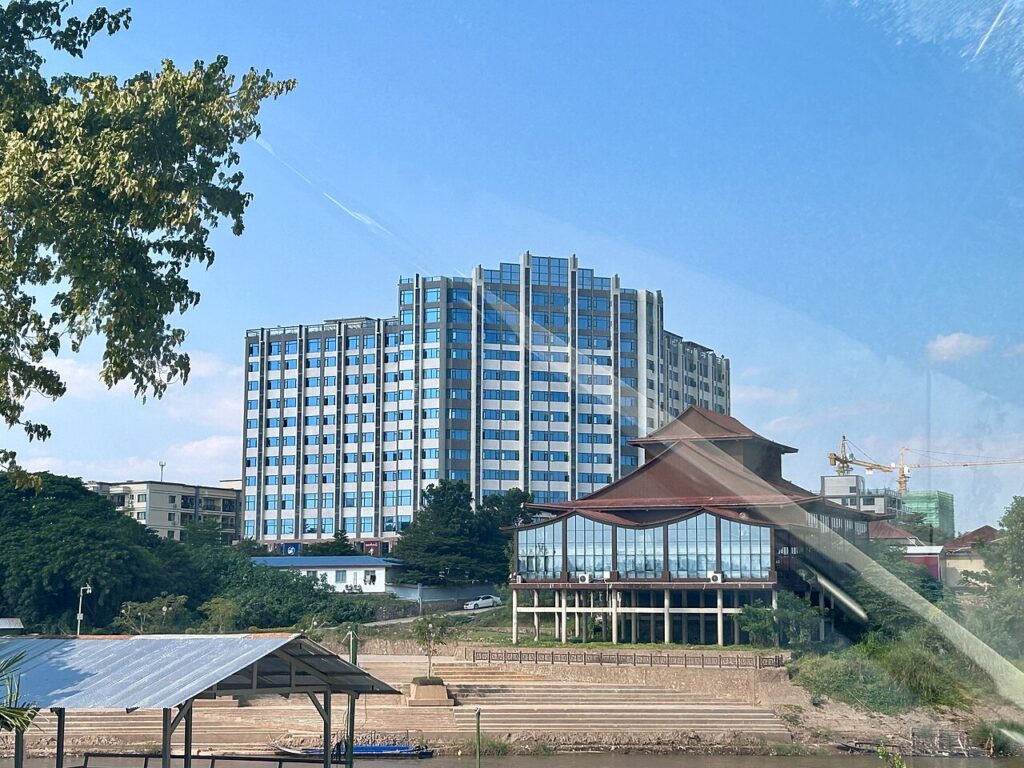
Informopedia Explains: the buildings look ordinary from the outside — apartment blocks, half-finished towers, a casino sign. Inside, according to investigators and survivors, hundreds of people sit at rows of phones and laptops, running romance scams, fake investment schemes and crypto frauds on victims around the world, day after day.
Thailand’s announcement this week — a move to seize more than $1 billion in assets allegedly laundered from scam syndicates — is a rare look at the other end of that machine: not the phone call, but where the money goes. To understand the seizure, you have to understand the machine.
The centres
Scam centres cluster in loosely governed border zones, most notoriously along Myanmar’s borders with Thailand and China, and in Cambodia. The locations are chosen for a reason: weak local enforcement, access to multiple countries’ banking and telecom systems, and compounds that are hard to enter and easy to guard.
Many of the workers did not arrive freely. Survivor accounts collected by journalists and researchers describe people lured by fake job adverts — customer service, translation, IT support — then held in compounds, their passports taken, and forced to meet fraud quotas under threat of punishment. The industry thus runs on two crimes at once: fraud against victims abroad, and trafficking of the people doing the defrauding.
The playbook
The best-known scheme is “pig butchering”: a scammer builds a relationship with a victim over weeks — a romance, a friendship, a helpful investment tip — fattens their trust, then introduces a fake trading platform and drains their savings. Other scripts sell fake crypto, fake luxury goods, fake police fines. The common thread is patience: the fraud is slow, personal and hard to spot, which is why it extracts far more per victim than a crude phishing email.
The money trail
That patience extends to the money. Thai investigators in this week’s case allege a familiar route: proceeds moved through overseas financial firms — Cambodian banks and Singapore-based investment funds, according to police and regulators — then converted into shares on the Thai stock exchange. Other cases have used cryptocurrency, shell companies and property. The point is always the same: by the time the money looks like an investment in a respectable company, its origin is buried.
That is why seizures matter more than arrests of low-level operators. A compound can reopen with new workers; a frozen share portfolio cannot be quietly spent. It is also why seizures are hard: the money crosses borders by design, and each jurisdiction sees only its own slice.
Why now, and what happens next
Pressure has been building for years — from governments whose citizens are the victims, from banks tired of laundering risk, and from regional neighbours embarrassed by the compounds on their borders. Thailand’s $1 billion move is the largest financial strike yet, and its promise to use confiscated assets to compensate victims will be watched closely: victim compensation across borders is slow, contested and often partial.
For readers, the practical lesson is unglamorous but real: no legitimate investment arrives through a new online friend, no trading platform that only exists inside a chat app is real, and urgency — “invest now, the window closes tonight” — is the tell. The machine depends on trust built slowly and spent quickly. Knowing the script is, for now, the best defence there is.