Informopedia Explains: there is a vote, somewhere in the files of the United Nations, that has been “about to happen” for longer than most of the people waiting for it have been alive. It was promised to the people of Western Sahara in 1991, as the price of a ceasefire. Thirty-five years later, no ballot has ever been printed, and this week the mission created to organise it lost its mandate altogether. To understand how that happened, you have to start in a desert, in 1975, with a march.
The march that changed the map
Western Sahara sits on Africa’s Atlantic coast, between Morocco, Mauritania and Algeria. Spain had ruled it as a colony since the late 19th century, mining its phosphates and fishing its waters, and by the 1970s the Sahrawi people — nomadic, Arabic-speaking, organised under the Polisario Front — were demanding independence. In November 1975, Morocco’s King Hassan II sent 350,000 unarmed civilians across the border in the Green March, a piece of political theatre designed to make Spain’s position untenable. Days later, Spain signed the Madrid Accords, handing administration of the territory to Morocco and Mauritania without consulting the Sahrawis at all.
What followed was a 16-year war. The Polisario Front proclaimed the Sahrawi Arab Democratic Republic in 1976 and fought Morocco with Algerian backing; Mauritania withdrew in 1979, and Morocco took its share too. Morocco built a sand wall — the berm, roughly 2,700 kilometres of earth, mines and fortifications — that still divides the territory today. By 1991, both sides were exhausted enough to accept a deal.
The deal: a vote, in exchange for quiet
The Settlement Plan, accepted by Morocco and the Polisario Front in 1988 and blessed by the Security Council in 1991, was disarmingly simple. A ceasefire would hold. A UN mission — MINURSO, the United Nations Mission for the Referendum in Western Sahara — would identify the voters, then run a referendum offering a choice between independence and integration with Morocco. The vote was supposed to happen within months.
It foundered on one question: who counts as a Sahrawi? The obvious starting point was Spain’s 1974 census, which counted around 74,000 people. But Morocco argued that tens of thousands of Sahrawis living in southern Morocco, outside the territory, had been missed or had fled the census. The Polisario Front argued that Morocco wanted to pad the rolls with settlers and Moroccan citizens with no real link to the territory. Identification teams spent years interviewing applicants, tribe by tribe, and every decision was appealed by one side or the other. By the late 1990s, the process had effectively frozen, with more than 100,000 people identified and no agreement on what to do with the list.
Two escape plans that went nowhere
The UN tried twice to break the deadlock. The first Baker Plan, in 2001, proposed autonomy for a few years followed by a referendum — the Polisario Front rejected it. The second, in 2003, proposed a four-to-five-year autonomy period and then a referendum open to everyone resident in the territory, including Moroccan settlers who had arrived since 1975. This time the Polisario Front accepted, and Morocco rejected it. Each side, in other words, accepted a referendum only when it believed it would win one.
In 2007, Morocco offered its own way out: autonomy under Moroccan sovereignty — a Sahrawi parliament, local government, control over local affairs, but the flag, the currency, defence and foreign policy staying in Rabat. For years the Security Council called this proposal “serious and credible” while still, on paper, supporting a referendum. In October 2025, resolution 2797 went further, calling for negotiations based on the autonomy plan. The United States recognised Moroccan sovereignty outright in December 2020, in exchange for Morocco normalising relations with Israel. The referendum’s supporters watched the ground move beneath it, one resolution at a time.
Why the mission’s expiry matters
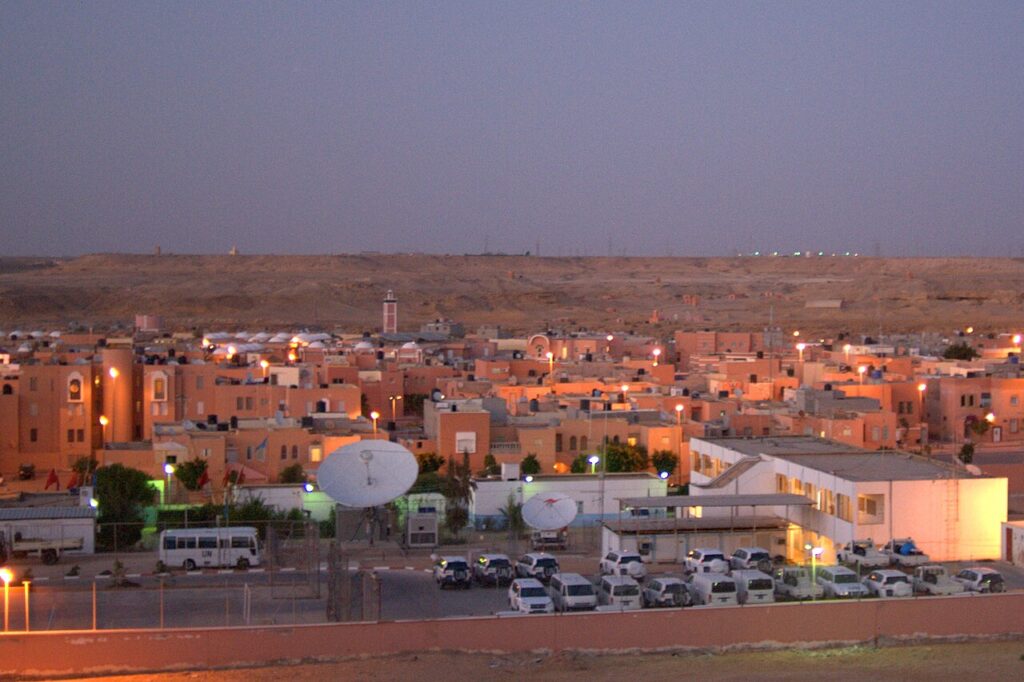
MINURSO’s job had quietly changed over the years. With no vote to organise, it became a ceasefire monitor: about 155 military observers watching the berm, investigating violations, keeping the two armies apart. When the ceasefire broke down in 2020, after a confrontation at the Guerguerat border crossing, the mission’s reporting was one of the few neutral accounts of what happened. MINURSO’s mandate expired this week after the Council failed to agree any extension.
That is what is at stake in this week’s vetoes. A mission without a mandate cannot formally monitor anything, and a ceasefire without monitors is a ceasefire on trust — between two sides that have spent 35 years demonstrating they do not trust each other on the central question. The Council may yet agree a technical extension or a renamed mission. But the deeper story is already written: the referendum that was meant to settle Western Sahara’s future has become the longest unkept promise in modern diplomacy, and the institution created to keep it has just been allowed to lapse.
More than 100,000 Sahrawis still live in refugee camps near Tindouf, in Algeria’s desert, where the Polisario Front runs what amounts to a government-in-waiting. Children born in those camps are now grandparents. They were promised a vote before they were born. The question their grandchildren will inherit is not whether the vote happens — it is whether anyone in New York still believes it should.
Sources: UN Security Council meeting coverage (press.un.org). Related: the Security Council’s secret ballots over its next secretary-general.