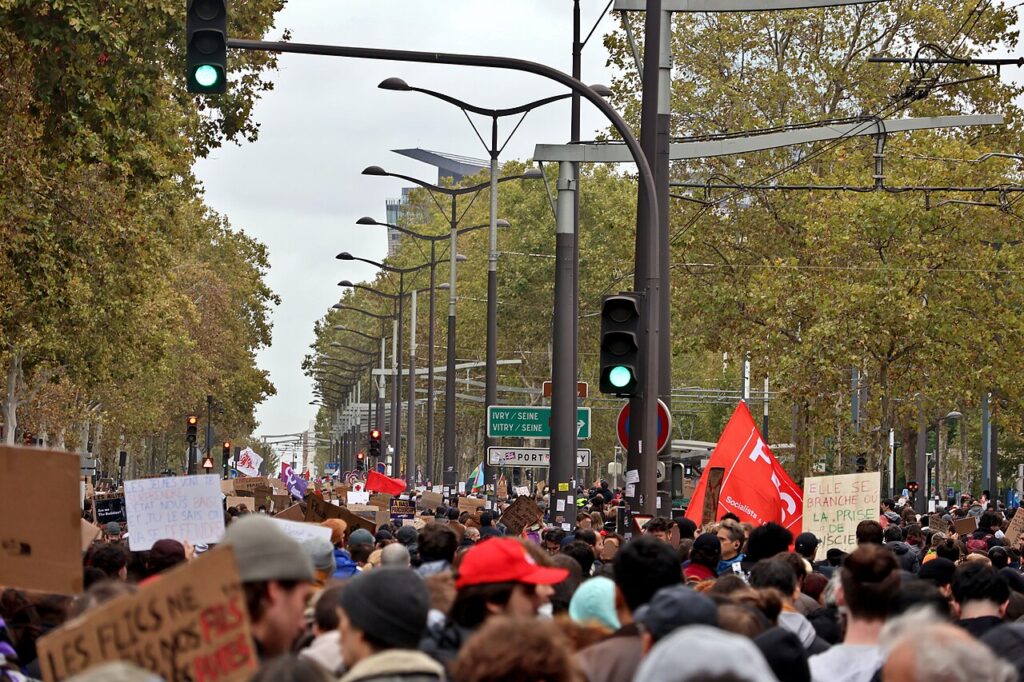
France braced for its worst night of unrest in weeks on Saturday — and by late afternoon, the feared Halloween explosion had not happened. About 15,000 people marched across the country in the third consecutive weekend of protests over living costs and schools, while 70,000 police and gendarmes watched over them, and the Interior Ministry described the day as largely calm.
By 2pm Paris time, police had detained 27 people, according to a French Interior Ministry source. That is a fraction of the 217 arrests recorded by the same point last Saturday, and officials reported no notable incidents during the daytime marches. Left-wing leader Jean-Luc Mélenchon, the France Unbowed candidate for the 2027 presidential election, joined the Paris demonstration.
The contrast with two weeks ago could hardly be sharper. On 17 October, more than 550,000 people took to the streets and rioters looted hundreds of shops, leaving city centres wrecked and the government shaken. Last Saturday, about 410,000 marched in demonstrations that were largely peaceful, though police still made more than 1,300 arrests. Saturday’s daytime turnout of roughly 15,000 — counted by early afternoon, before any final tally — suggests a movement that is shrinking, or at least taking a breath.
What began in late September as a student revolt over crumbling schools, teacher shortages and an admissions system pupils call unfair has broadened into a wider protest over the cost of living, drawing in trade unions, public-sector workers and the heirs of the Yellow Vest movement. President Emmanuel Macron’s minority government is in the middle of fraught talks over the 2027 budget, and the protests have become the street-level verdict on it.
Nothing about Saturday was left to chance. Interior Minister Laurent Nuñez had warned of a “very high risk” of disorder, particularly after dark on Halloween, and promised what he called an extremely firm response to any trouble. Paris police banned union and Yellow Vest marches from the city centre, pushing them onto a single route along the capital’s outer boulevards, from Porte de Bagnolet to Porte de Charenton. More than 40 metro and suburban stations in the Paris area were closed, and face-covering masks were banned — a direct answer to fears that Halloween costumes could hide rioters’ identities.
That is why officials are refusing to call the day a success just yet. The ministry source who gave the calm daytime assessment added that particular attention would be paid later into the Halloween evening. Nuñez has pointed to separate calls for gatherings from 8pm Paris time by radical far-left groups and radicalised Yellow Vests, and police have barred entry to Place de la République and Les Halles — both hit by rioting on 17 October — from 11pm to 6am on Saturday and Sunday nights. Unaccompanied minors face a separate 9pm curfew around the Champs-Élysées.
The pattern of the last two weekends gives both sides reason to hold their breath. On 24 October, largely peaceful marches gave way to tear gas and water cannon in Paris, Lyon and other cities once night fell. The question on Saturday night is whether the smaller daytime crowds and the huge security operation mean the movement has spent its force — or whether, as on previous weekends, the real test comes after dark.
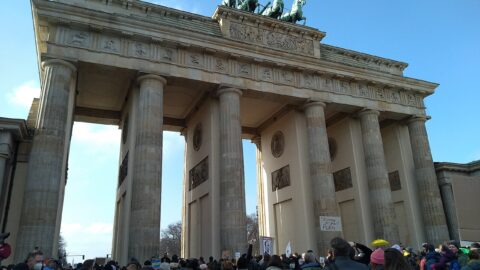
Across the Rhine, the French protests have already inspired a parallel movement: Germany’s Gen Z demonstrators also took to the streets on Saturday, in smaller numbers than organisers had predicted, and also stayed peaceful. For now, the French story of this Halloween is a daytime calm that nobody in power is yet willing to trust. The final turnout figures, and the verdict on the night, are still to come.
The last time the Yellow Vests and students mobilised together at this scale, Paris braced for 1,365 separate protests across the country — a reminder of how quickly a quiet afternoon in France can turn.
This article will be updated with the final turnout and arrest figures and the outcome of the Halloween-night gatherings when they are confirmed.