SOFIA — Bulgaria has its first elected woman president. Acting President Iliana Iotova won Sunday’s presidential runoff by a wide margin, according to parallel vote counts from polling agencies, defeating former caretaker prime minister Andrey Gyurov and closing a race that began with one of the lowest turnouts in the country’s history.
With 99.68% of polling-station reports counted as of early Monday, Iotova led with 57.7% of the vote — 1,091,206 ballots — against 39.4% for Gyurov, who took 745,303 votes. The polling agencies’ parallel counts told the same story: Myara put her at 58.2% to Gyurov’s 38.6%, Market Links at 57.4% to 39.6%, and Trend at 58.1%. Gyurov conceded on election night. The counts confirmed the exit polls published on election night, which had put her on course for the presidency.
The scale of the win surprised even Iotova’s own camp. A week earlier, in the first round on 25 October, she had finished on 34.76% against Gyurov’s 31.95% — a gap of less than three points, far narrower than the 20-point lead opinion polls had predicted for her. The runoff turned that close contest into a rout.
Turnout, though, remained strikingly low. Election officials estimated participation at between 27% and 29%, only slightly above the first round’s record-low 23%. In a country of about 6.4 million people, the result is that a historic first was decided by barely more than a quarter of the electorate. Apathy, and distrust of politics after years of unstable governments, has become the quiet third candidate in Bulgarian elections — and it keeps winning.
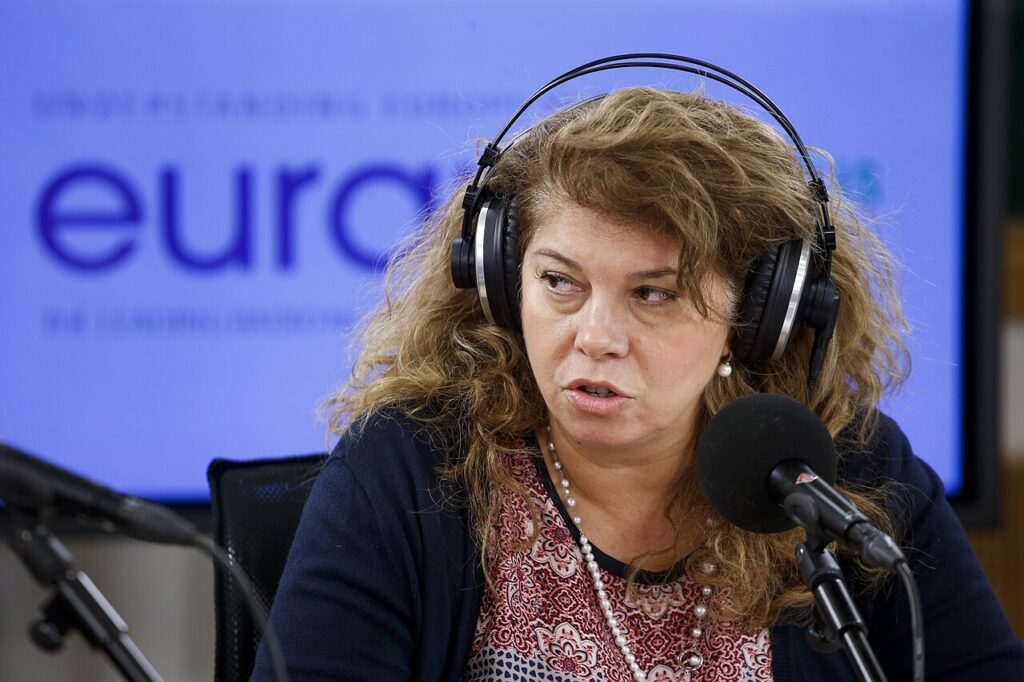
Iotova, 62, is no newcomer. A journalist and former television presenter turned politician, she served as vice president under Rumen Radev from 2017, then stepped up as acting president in January this year when Radev resigned to contest parliamentary elections. She ran with Kiril Valchev as her vice-presidential candidate, backed by the ruling Progressive Bulgaria party and the Bulgarian Socialist Party. If the official results confirm the counts, she will begin a full five-year term on 22 January 2027.
Her opponent offered a different direction. Gyurov, a banker and former caretaker prime minister, ran with Georgi Kandev and had the backing of the pro-Western opposition. Iotova, by contrast, has argued for dialogue with Moscow and against military aid to Ukraine — positions that set her apart from much of the European Union mainstream and that will be watched closely in Brussels and Kyiv.
European Commission President Ursula von der Leyen was quick to congratulate her, writing on X: “From security and defence to our competitiveness and energy independence, I look forward to continuing our joint work. For a strong Bulgaria in a strong Europe.”
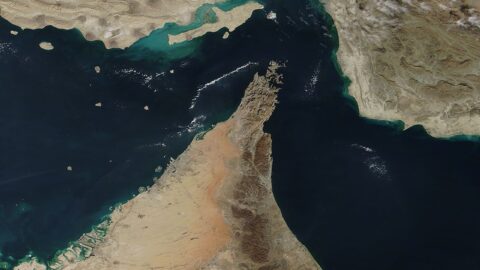
The vote took place against an uneasy backdrop: drone attacks on commercial vessels in the Black Sea had sharpened security fears in the weeks before polling day. Bulgaria’s presidency is largely ceremonial — the prime minister runs the government — but the president commands the armed forces, can veto legislation, and speaks for the country abroad. In a NATO and EU member state sitting on the Black Sea, that voice carries further than the job description suggests.
What happens next is procedural, but it matters. The Central Election Commission is expected to announce official results by 4 November. Then comes the harder question the numbers pose: a president elected with a commanding share of a small vote. Iotova’s first task will be to show that a mandate won by 58% of those who turned up can speak for the nearly three-quarters who did not. Her victory speech struck the expected notes — “incomes, peace and the challenges that lie ahead” — but the empty polling stations are the part of this election that will linger longest.