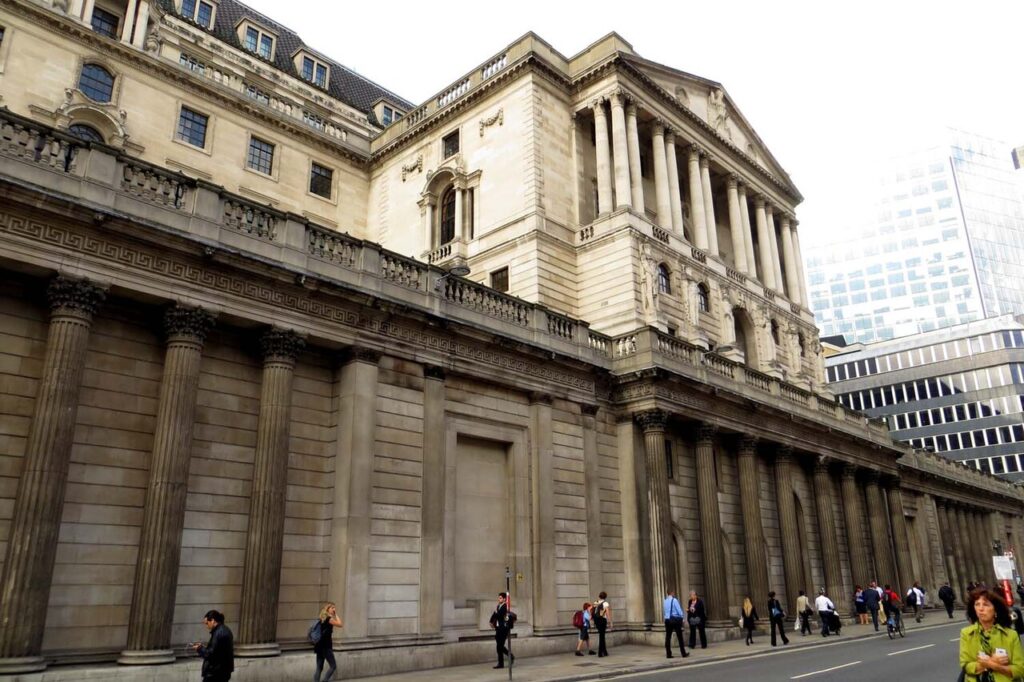
LONDON — The Bank of England looks set to do something it has not done in more than three years: raise interest rates. Economists polled by Reuters expect the Bank’s Monetary Policy Committee to lift Bank Rate from 3.75% to 4.0% on Thursday, bowing to inflation pressure driven by soaring energy costs.
The case for a hike has been building for weeks. Consumer prices rose 3.5% in the year to September, hotter than the Bank’s July forecast of 3.0%. In September the Bank warned inflation could climb above 4% early next year, and said the jump in energy prices since its July forecasts resembled its “adverse” scenario — the one in which inflation risks becoming entrenched. Governor Andrew Bailey has said the Bank cannot wait for conclusive proof that higher prices are feeding into wages and company pricing, or it will act too late.
That argument has divided the nine-member committee. In September it voted 6–3 to hold rates. The Reuters poll points to a 7–2 vote for a hike this time, with external members Alan Taylor and Swati Dhingra seen as the most likely to keep voting for no change. Even the hawks, though, may balk at what markets are pricing next: three or four more quarter-point increases in 2027, taking Bank Rate to between 4.75% and 5.0%. Thursday’s statement, forecasts and Bailey’s press conference will be read as much for what they say about that path as for the hike itself.
There is a sting in the history here. The last time energy costs surged, the Bank was criticised for underestimating how persistent inflation would prove. This time, the US Federal Reserve and the European Central Bank have already moved first — a reversal of the last episode, when the Bank was among the first major central banks to tighten. The drawn-out war in the Middle East, with no lasting end in sight, hangs over the whole decision: it keeps energy prices high and makes some second-round effects — higher prices feeding into wage demands, which feed back into prices — harder to avoid.
For households, the arithmetic is blunt. A higher Bank Rate usually means higher charges on many mortgages and loans, and a better return for savers — which is exactly the point. When borrowing costs more and saving pays more, people and companies spend less, businesses find it harder to raise prices, and inflation slows. The Bank’s own explainer on interest rates sets out the chain in plain terms: the Bank’s own explainer on interest rates notes that Bank Rate affects the level of all other interest rates in the UK economy.
The wider backdrop does not help. The Bank cut rates from 5.25% in August 2024 down to 3.75% by December 2025 as inflation eased — and now finds itself reversing course before the easing has fully fed through. It is the same squeeze facing central banks everywhere, and the IMF’s warning that the cushion is thinning applies here with particular force: growth is fragile, prices are sticky, and the room for error is small.
Thursday’s decision is, in the end, a bet about time. Raise now and the Bank risks squeezing an already weak economy. Wait, and it risks repeating the mistake it was criticised for last time — discovering too late that inflation had settled in. Bailey’s committee has chosen, by most accounts, to move. The question markets will ask on Thursday afternoon is whether one hike is a correction, or the start of a climb.