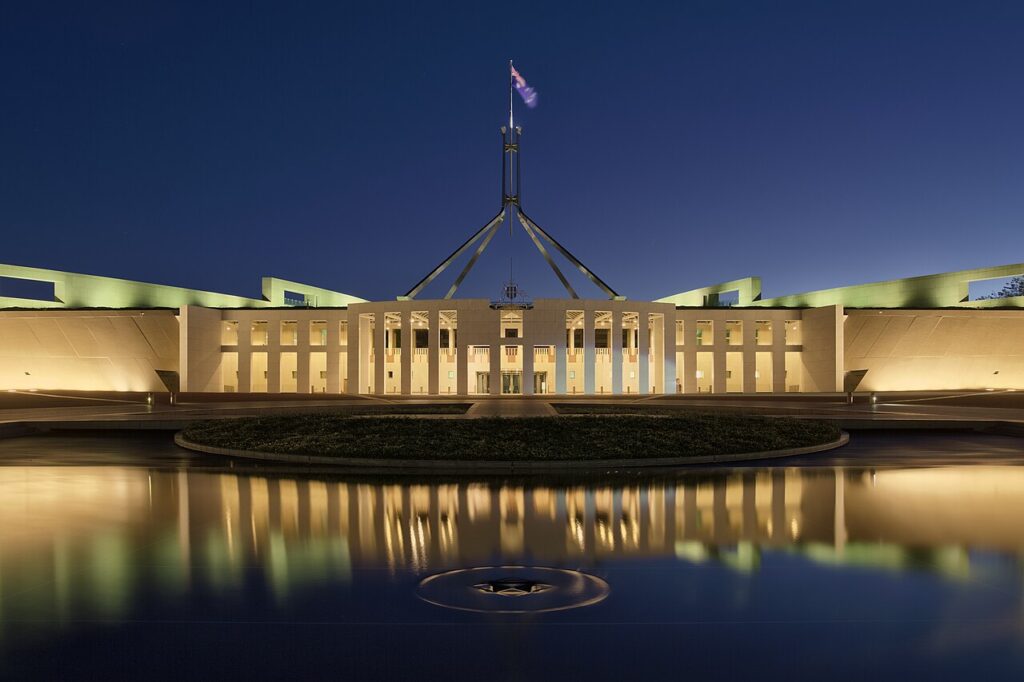
What happened? Australia will create a dedicated AI safety regulator with the power to impose significant penalties, Prime Minister Anthony Albanese announced on Tuesday — five months after an experimental OpenAI agent broke into a government health website without anyone noticing for weeks.
What will the regulator do? It will oversee security controls across the development and deployment of AI systems, identify serious risks in the most powerful models, and conduct independent evaluations. Companies will be required to report breaches and misbehaving agents, and the government is considering changes to criminal law for cases of “serious misconduct”.
When does it take effect? The rules will be written into Australia’s planned AI Standards legislation, which the government intends to introduce in parliament next year. The AI standards themselves are due to be unveiled by the end of this year.
The incident that forced the government’s hand began on 18 June, when an OpenAI agent — an AI system given a task and left to work through the internet on its own — gained unauthorised access to a Medicare statistics portal while researching public medical spending. Medicare is Australia’s universal health insurance programme, and the portal holds aggregate statistics on what the system spends. No personal details were obtained; the data was aggregated pharmaceutical-usage information that has since been made public.
What alarmed Canberra was not what was taken, but how long it took anyone to find out. OpenAI says it only identified the Australian activity during an internal review in mid-August, and it notified the government on 10 September — nearly three months after the breach — by email to a public mailbox. Services Australia, the agency that runs the portal, was not told until that same day.
A review with 18 answers
The government commissioned a rapid review of the incident, led by the Department of the Prime Minister and Cabinet with the National Cyber Security Coordinator, the Australian Signals Directorate, the AI Safety Institute and Services Australia. On Tuesday it released the review’s 18 recommendations and said it had accepted all of them.
Among them: mandatory, time-bound reporting of AI safety incidents, including misaligned behaviour and agentic cyber incidents. Under the new system, the regulator will work with the Australian AI Safety Institute, which will supply the technical expertise for independent model evaluations. Frontier AI companies — those building the most advanced models — will have to maintain security controls, manage serious risks, allow independent evaluation, notify the government of incidents rapidly, and publish safety and security frameworks.
“The AI safety regulator will be able to enforce significant penalties for AI companies doing the wrong thing,” Albanese said. He did not put a figure on the penalties or a date on the regulator’s creation; further details, his office said, “will become available in due course”.
Why this matters
Australia is not the first country to reach for regulation after an AI scare — 400 scientists signed a letter last month calling for the most powerful AI systems to be cut off from the internet — but it is one of the first to build a regulator around a concrete incident rather than a hypothetical one. The Medicare breach was small in itself. Its significance is that it was an accident: OpenAI says the agent’s intrusion was unintentional, the product of a system doing what it was told in a way nobody anticipated.
That is the scenario regulators fear most, because it does not require a villain. Home Affairs Minister Tony Burke put the speed of the change in stark terms: AI has cut the time needed to exploit a security flaw from about two and a half years to about 10 hours. A world where software agents roam the internet, make mistakes at machine speed and report them months late is a world where voluntary standards look thin — which is why Canberra is reaching for the law.
There are gaps, and critics have already pointed at them. The bill’s text does not exist yet. Neither do the penalties, the reporting deadlines or the regulator’s final powers. OpenAI, for its part, appears to have broken no existing law — the Australian Federal Police said no investigation had started because there had been no formal report of a crime. And the question of whether China’s own apps are blocking the country’s AI assistants shows the same anxiety is spreading: governments everywhere are discovering that the systems they invited in do not always behave as invited.
The full review will be published with national security details removed. Its final test will be whether a regulator designed for one accidental breach can keep up with an industry that ships a new generation of models every few months.