Democrats Win Back the House and Flip South Carolina’s Senate Seat — but Senate Control Is Still Undecided
Democrats have won back control of the United States House of Representatives, CNN and Decision Desk HQ projected late on Tuesday night, in the clearest verdict yet of the 2026 midterm elections — and in the night’s biggest shock, they also flipped a Senate seat in deeply Republican South Carolina.
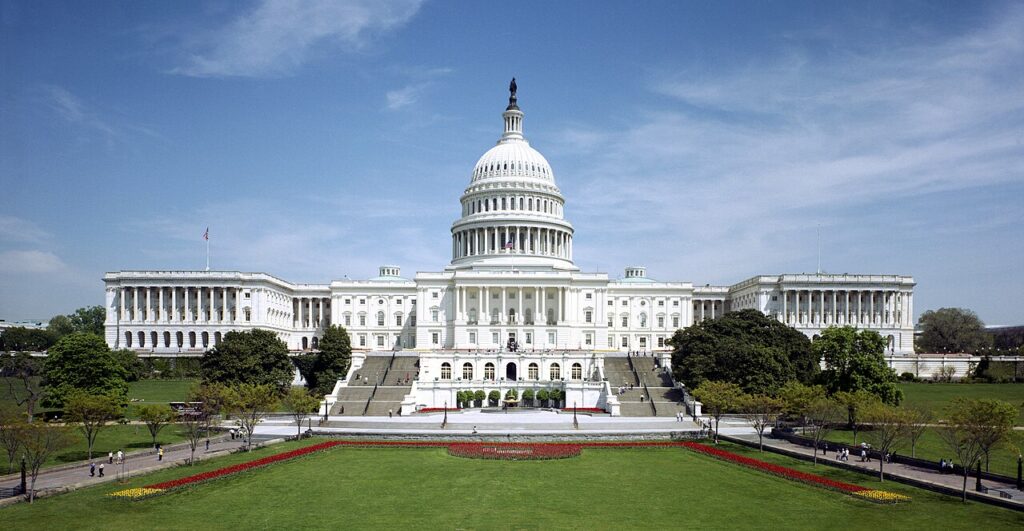
The House call came at 10:08 p.m. Eastern time, as returns from the East and Midwest piled up into a lead the projections said Republicans could not close. It ends two years of Republican control of the lower chamber and hands Democrats the power to set its agenda, run its investigations and block President Donald Trump’s legislation for the final two years of his term.
Minutes earlier, at around 10 p.m. Eastern, Decision Desk HQ and NBC News called South Carolina’s Senate race for Democrat Annie Andrews, a 45-year-old paediatrician, over Republican Senator Darline Graham. It was arguably the upset of the night: no Democrat had won a Senate race in South Carolina since 1998, and Trump carried the state by about 18 percentage points just two years ago.
Andrews led Graham 51 percent to about 47 percent when NBC called the race, with roughly three-quarters of precincts reporting. Local returns later put her ahead by nearly 80,000 votes, with Graham yet to concede.
The South Carolina seat only came open because of tragedy. Its previous holder, longtime Republican Senator Lindsey Graham, died suddenly in July. Governor Henry McMaster appointed his sister Darline Graham, 62, to fill it, and Trump backed her to win a full six-year term. She won a special Republican primary runoff, but polls showed the race tied in the final days as Republicans failed to unite behind the president’s handpicked nominee.
Andrews, a mother of three who previously ran for the House in 2022, campaigned on health care and the cost of living. She also becomes the first woman ever elected to the Senate from South Carolina.
For readers outside the United States, the stakes are straightforward. Americans elect all 435 members of the House every two years, and 218 seats make a majority. The party that holds the House controls which bills reach a vote and which officials face public hearings. The Senate, where 35 of 100 seats were on the ballot this year, confirms judges and senior officials and must approve treaties and major appointments.
The Senate is still undecided. Democrats began the night needing a net gain of four seats to overturn the Republicans’ 53-47 majority. With North Carolina — where former Governor Roy Cooper won earlier in the evening — and now South Carolina, they have two of the four. That leaves them needing two more from a set of tight battlegrounds including Kansas, Texas, Ohio and Michigan, where counting was still under way as western states closed their polls.
The House result itself was not a surprise to forecasters, who had long favoured Democrats to retake the chamber. What made the night remarkable was the breadth of it. Democrats flipped a bellwether House seat in central Kentucky that Republicans had held since 2012 and that Trump won by 15 points in 2024. In New Jersey, Democrat Rebecca Bennett, a former Navy helicopter pilot, defeated Republican Representative Tom Kean Jr. in a district that includes Trump’s Bedminster golf club. In Florida, Democrat Pia Dandiya held a redrawn district Republicans had tried to gerrymander in their favour.
House Minority Leader Hakeem Jeffries, a New York Democrat who coasted to re-election in his Brooklyn district, is now in line to become speaker — which would make him the first Black speaker in American history. “I’m convinced that every single part of the House Democratic caucus will understand the mission, which is deliver for the American people,” Jeffries told USA Today.
Why this matters beyond Washington: a Democratic House changes what the world’s most powerful government can do abroad. Trump allies had openly worried that Democrats would spend the next two years holding hearings on the actions of the president’s cabinet. Democrats have promised instead to focus on affordability, reversing Medicaid cuts and ending the war in Iran — the war that, by driving up gas and diesel prices, helped fuel the cost-of-living anger that ran through this election. For allies, adversaries and markets alike, the next two years of American foreign policy will now be negotiated with a Congress the White House does not control.
What happens next is a waiting game. The House margin is still unknown, and the Senate could stay uncalled for days: Alaska and Maine use ranked-choice voting, and Georgia holds a runoff on December 1 if no candidate clears 50 percent. Democrats are, in USA Today’s phrase, “closing in” on the Senate — but closing in is not winning it, and this article will be updated as the remaining races are called.
Earlier tonight, Informopedia reported Roy Cooper’s Senate win in North Carolina and Keisha Lance Bottoms’ historic victory in Georgia’s governor race. Our voting-day guide explains what the midterms decide and when results are known.
This is a developing story based on projections by CNN, Decision Desk HQ and NBC News, and results reported by Reuters and the Associated Press. It will be updated as more races are called.




One Comment