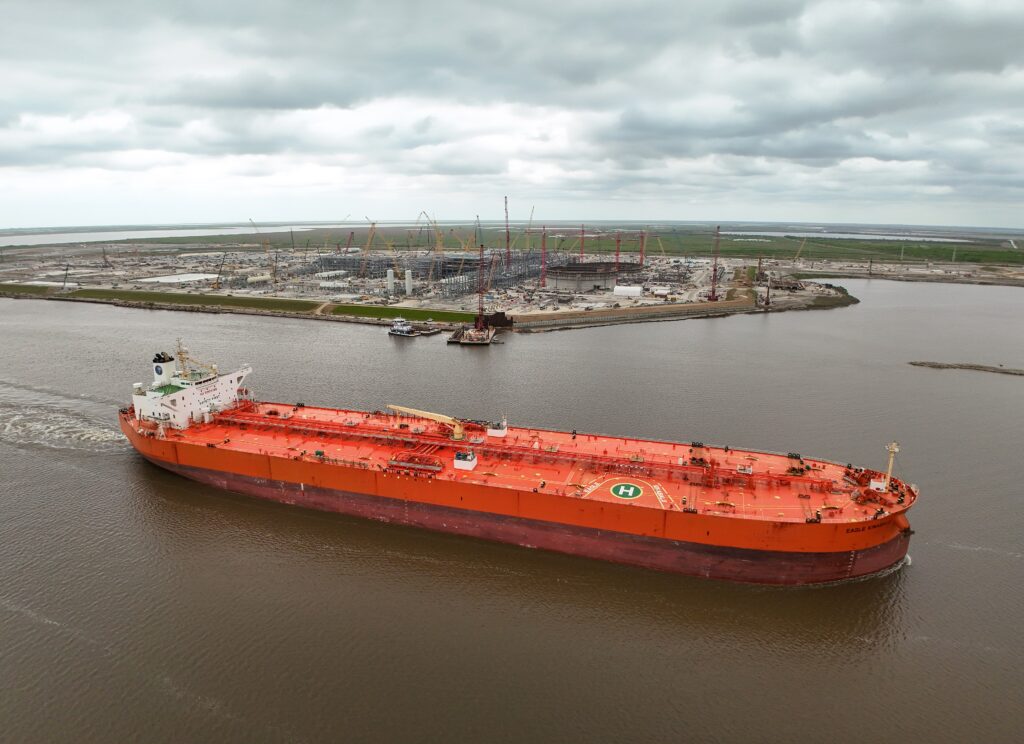
A drone slammed into a Panama-flagged crude oil tanker anchored off the United Arab Emirates on October 9, in the latest attack on commercial shipping in Gulf waters. All 22 crew members aboard — every one of them Indian — survived unhurt.
The vessel, the MT GEM NO. 2, was sitting at Sharjah Anchorage in the Arabian Gulf near Dubai when the drone struck. Union Minister of Ports, Shipping and Waterways Sarbananda Sonowal confirmed the incident and the crew’s safety in a post on X late Friday night.
“I am relieved to share that all 22 of our Indian seafarers onboard are reported to be completely safe,” Sonowal wrote, adding that the government was “continuously monitoring the situation” and in contact with the ship’s management company to keep the crew secure.
Sonowal did not say who carried out the attack, and no group has claimed responsibility. The extent of damage to the tanker itself has not been disclosed.
The strike is the second attack on a tanker with an Indian crew in less than a week. On October 7, a tanker was hit by a projectile in the Strait of Hormuz, leaving 11 of its 12 Indian crew members injured. Days earlier, two ships were struck by drones in Bulgaria’s Black Sea waters, one of them sinking. Commercial vessels across the region are now operating under a threat that shows no sign of fading.
India has responded to the pattern with diplomacy. At the 81st UN General Assembly, New Delhi and Liberia launched the Group of Friends on Safety and Security of Shipping and Seafarers, a coalition aimed at putting crew safety at the center of global maritime policy. The group held its inaugural meeting in New York with 25 countries participating, co-chaired by External Affairs Minister S. Jaishankar and Liberian Foreign Minister Sara Beysolow Nyanti.
The two countries issued a joint statement condemning attacks on vessels as indefensible, offering condolences to the families of seafarers killed, and calling for an immediate end to actions disrupting maritime trade. Ministry of External Affairs spokesperson Randhir Jaiswal said the aim was to bring “the issue of safety of seafarers and the issue of safety of commercial shipping at the centre of global discourse and discussion.”
India has an outsized stake in the outcome. It supplies a significant share of the world’s merchant mariners, while Liberia operates the largest shipping registry by tonnage — which is why the two countries are leading the initiative together.
Why this matters
A drone hitting a tanker at anchor is a different kind of warning from a strike on a moving ship. Anchorage is supposed to be the safe part of a voyage — waters off a major port, in a country not at war. If vessels are no longer secure even there, the risk calculus for every tanker transiting the Gulf changes, and with it the insurance premiums and freight rates that eventually land on fuel prices.
The unanswered question is who is behind the attacks and whether they will escalate. Until that is clear, the 22 Indian sailors of the MT GEM NO. 2 can count themselves fortunate — and the next crew transiting these waters cannot count on being so lucky.