STOCKHOLM — Twenty-five years after the Nobel committee passed him over, Henri Kagan finally got the call.
The Royal Swedish Academy of Sciences announced on Wednesday that the 2026 Nobel Prize in Chemistry goes to Kagan, the 95-year-old French pioneer of asymmetric catalysis, and to Kenso Soai, the 76-year-old Japanese chemist at Tokyo University of Science, “for the discovery of non-linear effects and autocatalysis in asymmetric organic synthesis.” The two will share 12 million Swedish crowns — roughly $1.2 million.
For Kagan, the prize closes a long-open loop. Back in 2001, the chemistry Nobel went to three chemists for work on catalytic asymmetric synthesis — the very field Kagan had helped create. Nature reported at the time that many chemists believed Kagan deserved a share too. The rules allow a maximum of three laureates; he was the one left out. A quarter-century later, Stockholm came back for him.
The mystery of the mirror molecule
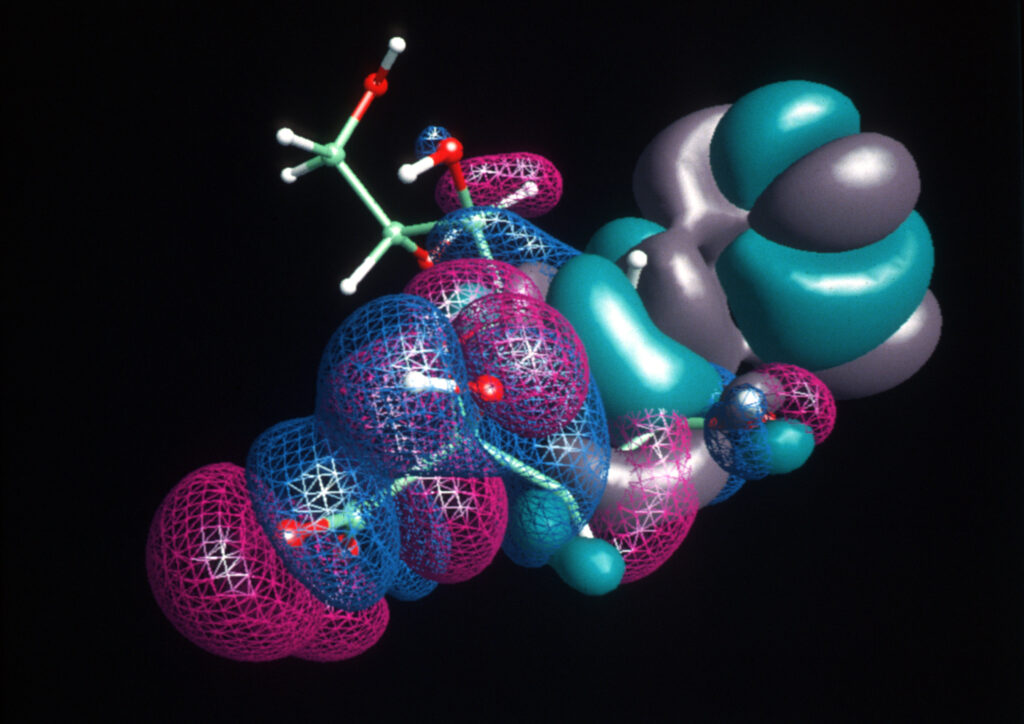
Some molecules come in two versions that are mirror images of each other, like your left and right hands. Chemists call them enantiomers. They look identical in every ordinary measurement — same atoms, same bonds, same melting point. But living bodies treat them very differently.
Your body is picky about handedness. Every amino acid in your proteins is left-handed; the sugars in your DNA lean right. And the wrong twin can be dangerous. The drug thalidomide, prescribed to pregnant women in the late 1950s, was sold as a mixture of two mirror-image forms. One calmed morning sickness; the other caused severe birth defects in thousands of children. Getting only the right one — and never the wrong one — has been one of chemistry’s hardest problems for a century.
Kagan spent his career attacking that problem from an unexpected direction. In 1986, he reported the first examples of what he called non-linear effects in asymmetric catalysis — situations where a slightly impure catalyst produced a far purer product than anyone had thought possible. Before his work, chemists assumed the relationship would be strictly proportional: a catalyst that was 50 percent “right-handed” would yield a product that was 50 percent right-handed. Kagan showed that was wrong, and his mathematical models describing the phenomenon turned non-linear effects into a field of their own — one that chemists now discuss even in the context of how life itself became one-handed.
His earlier landmark, the development of C2-symmetric ligands such as DIOP for asymmetric catalysis, had already reshaped how the pharmaceutical industry makes chiral molecules. The Nobel committee’s announcement noted that his discovery has been revolutionary for chemists who develop reactions for manufacturing pharmaceuticals, flavours, scents and new materials.
The reaction that copies itself
If Kagan found the leverage, Kenso Soai found the magic trick.
Soai — who earned his doctorate at the University of Tokyo in 1979 and has spent his career at Tokyo University of Science — designed the first chemical reaction in which only one of the two possible mirror images is formed. Nobody had ever achieved that except life itself.
The Soai reaction works through asymmetric autocatalysis: the chiral product of the reaction acts as the catalyst for its own production. Put simply, the molecule makes more of itself — and only its own handedness. Each cycle amplifies the tiny initial imbalance until essentially one mirror image dominates. The Nobel committee called it one of the most spectacular chemical experiments ever conducted.
That self-copying trick is also why biologists care. One of the deepest unsolved questions in science is how the molecules of life ended up all using the same hand. Soai’s reaction is a laboratory demonstration of how a tiny random imbalance could snowball into complete one-handedness — a plausible sketch of how it happened on the early Earth.
“Making chemistry choose its mirror image”
“This year’s prize is about making chemistry choose its mirror image,” said Ellen Moons, permanent secretary of the Academy’s board, at the announcement.
It is the third Nobel of the week: Karl Deisseroth, Peter Hegemann and Georg Nagel took the medicine prize on Monday for optogenetics, and Francis Halzen won the physics prize on Tuesday for the IceCube neutrino observatory. The literature prize follows on Thursday, the peace prize on Friday.
Why this matters
There is a reason the prize citation reads like a riddle. Non-linear effects and autocatalysis are the kind of fundamental chemistry that never makes headlines — until it quietly rewrites industries. Every modern drug factory that produces a single-enantiomer medicine — from blood-pressure pills to antidepressants — is working in the shadow of Kagan’s catalysts. The thalidomide catastrophe made it law in many countries that new drugs must be tested as single mirror images; making them economically is Kagan and Soai’s legacy.
But the deeper significance is philosophical. Chemistry spent a century producing mirror twins in equal numbers, as if nature had no preference. Kagan and Soai showed that preference can emerge from nothing — a small nudge, amplified, until one hand wins. It is as close as a test tube has come to answering how a universe without handedness gave rise to life with exactly one.