The withdrawal nobody announced in advance — but everybody saw coming
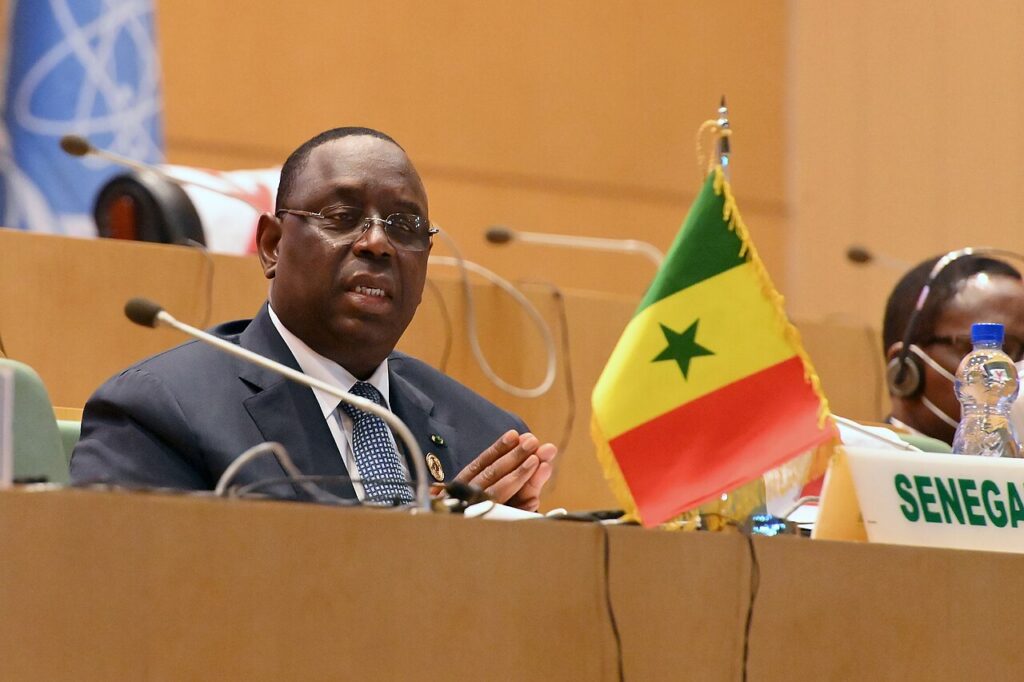
Macky Sall is out. The former president of Senegal announced on Saturday that he is withdrawing from the race to become the next secretary-general of the United Nations, ending his bid to succeed António Guterres, whose second five-year term expires on December 31.
“I made this decision with a profound sense of responsibility, hoping to contribute to the emergence of a consensus candidacy within the Security Council,” Sall said in a statement dated October 17 from Marrakech.
The timing says everything. Sall walked away one day after a sixth secret straw poll by the UN Security Council — the body that must recommend a candidate to the General Assembly — failed to produce a clear winner. As the sixth ballot showed, every one of the seven candidates had collected at least one “discourage” vote from the five permanent members, the functional equivalent of a veto.
Reading the ballots
He noted that since the process began, results of test votes had indicated a preference for a candidate from Latin America and the Caribbean, “and possibly a woman.” “I am withdrawing my candidacy, but remain fully committed to the ideals that inspired it: peace, security, economic and social development, international cooperation, and dialogue among nations,” he said.
He has the numbers to back it. Costa Rica’s Rebeca Grynspan has led five of the six rounds, collecting nine “encourage” votes in the latest poll — the most of anyone — though she also picked up five “discourage” votes, two of them from veto-wielding members. Guyana’s former foreign minister Carolyn Rodrigues-Birkett and Argentina’s Rafael Grossi, who heads the UN’s nuclear watchdog, the International Atomic Energy Agency, sit just behind her. But nobody clears the bar: nine of fifteen votes, and not a single “discourage” from the United States, Britain, France, Russia or China.
The impasse has an irony tucked inside it. The straw-poll system itself was introduced in 1981 by Uganda’s Olara Otunnu, when he was his country’s ambassador to the UN. Otunnu is one of the candidates still in the race. US media reports suggest Washington opposes all seven remaining contenders, which would explain why the ballots keep circling without landing.
Who is left — and who might still enter
With Sall gone, six names remain on the ballot: Grynspan, Rodrigues-Birkett, Grossi, Ecuador’s Ivonne A-Baki and Maria Fernanda Espinosa, and Otunnu. But the door is wide open. Diplomats have already floated three outsiders: Nickolay Mladenov, the high representative for Gaza under the US-backed “Board of Peace”; Lana Nusseibeh, the United Arab Emirates’ minister of state for foreign affairs; and Feridun Hadi Sinirlioglu of Turkey, the secretary-general of the Organization for Security and Co-operation in Europe.
Sall, who led Senegal from 2012 to 2024 and chaired the African Union in 2022-23, was sponsored by Burundi and backed by Senegal. In his statement he thanked Ndayishimiye, Faye, the Council members who voted for him, his campaign team, and the Senegalese people — and left with a parting shot at the institution he hoped to lead: “I remain convinced that the United Nations must undertake a profound transformation of its working methods and operations.”
Why this matters beyond the ballot room
The secretary-general is the closest thing the world has to a planetary chief diplomat — the person who sets the tone when wars erupt and who is supposed to speak for countries with no other voice. The winner inherits a stack of crises: wars still burning in Ukraine and Gaza, an escalating Saudi-Houthi conflict, and an institution whose political relevance is openly questioned as the United States pulls back funding and participation.
Sall’s exit sharpens the stakes in one specific way. No woman has ever held the job in the United Nations’ 80-year history. His pointed reference to “possibly a woman” from Latin America and the Caribbean is the closest thing to a kingmaker’s blessing that Grynspan — or one of the other women in the field — has received from inside the race. The next straw poll will show whether the Council was listening.