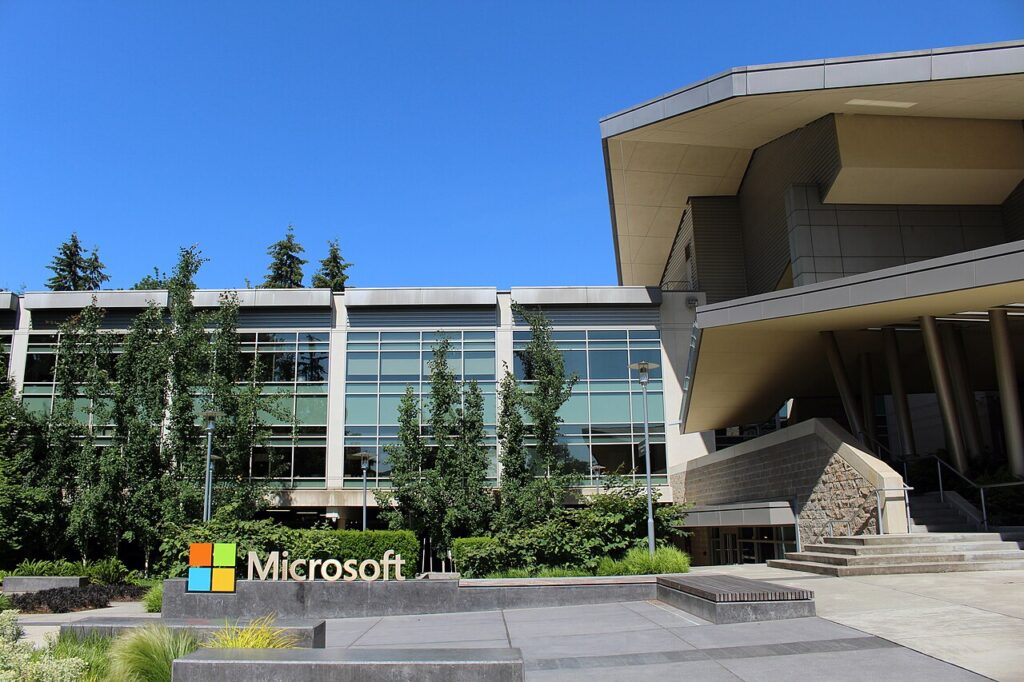
Microsoft has launched seven of its own AI models at once — and the headline act is already inside the tool developers use every day. Microsoft MAI Code 2 is now generally available in GitHub Copilot, Microsoft announced at its Ignite conference in San Francisco on Tuesday, November 17. The company says the coding model delivers 98% of OpenAI’s GPT-6.1 Sol performance at 40% of the price, and 96% of Anthropic’s Claude Opus 5.5 at just 5% of the cost. It is the centrepiece of a family of seven models covering coding, cybersecurity, image editing, live speech, transcription and automated decision-making.
What launched
The family, built by Microsoft AI under Mustafa Suleyman, is pitched on price as much as on capability: customers want agents running around the clock, which needs models cheap enough to leave running. The lineup:
- MAI Code 2 — everyday enterprise coding, now in GitHub Copilot.
- MAI Code 2 Flash — a lighter coding model for quick edits and routine fixes, also in Copilot and in limited preview in Microsoft Foundry.
- MAI Cyber 2 Flash — a security model that Microsoft says matches GPT-6 Astra’s quality on the CyberGymE2E benchmark at less than 2% of the cost per task.
- MAI Image 2.7 — Microsoft says it ranks first on Artificial Analysis’s image-editing leaderboard, ahead of GPT Image 2.6 Sunburst, at a fifth of the price.
- MAI Realtime 1 — Microsoft’s first live speech-to-speech model, from $0.01 per audio minute.
- Dragon Copilot Transcribe — built on MAI Transcribe 2, already transcribing 10 million patient encounters a month.
- Decision 1.1 — a model that routes each task to a bigger or smaller model, which Microsoft says is 50 times faster and 79 times cheaper than GPT-6.1 Sol.
Microsoft also announced Maia 200, its second-generation AI accelerator, now in production running its largest models at 1.7 times more tokens per watt, and MAI Licensed Weights, which lets companies customise a frontier MAI model with their own data and run it in their own Azure environment.
The price claims need a second look
The headline numbers come with an important qualification: the coding models are costed at a 50% promotional price, and Microsoft’s posts print no list price for either one. The 5%-of-Claude figure, in other words, is the promotional price against the rival’s list price — and the promotion runs to May 17, 2027, after which the comparison changes. Microsoft itself warns that performance and cost comparisons vary by workload, model configuration, reasoning effort and pricing assumptions.
The benchmarks are also Microsoft’s own choices: Code 2’s 98% figure is an average across four coding tests selected to reflect the everyday tasks Microsoft sees in GitHub Copilot, and no independent evaluation of Code 2 has been published yet. The firmer facts are the prices Microsoft did print: Image 2.7 Flash at about $10 per 1,000 images, Realtime 1 from $0.01 per audio minute, and Cyber 2 Flash’s output tokens priced 86% lower than its predecessor.
What is actually available today
Code 2 and Code 2 Flash are generally available in GitHub Copilot now — in the model picker and through Copilot Fusion — on Copilot Pro, Pro+, Max, Business and Enterprise plans, with Code 2 Flash also on Copilot Free and Student. Image 2.7 and 2.7 Flash are in Microsoft Foundry, and Realtime 1 can be tried in MAI Labs. Cyber 2 Flash is more restricted: it replaces the existing MAI engine for eligible MDASH enterprise customers from mid-December, and is aimed at verified defenders rather than general users.
Microsoft is explicit about what the coding models are not for. Both are “explicitly not yet tuned for harder problems, like fundamental science research and very long-horizon agentic work” — the frontier research and marathon agent runs remain the territory of the bigger general models.
Why it matters
The launch lands on the same day OpenAI released GPT-6.2 Astra — and the two announcements point in the same direction. A week after Claude Fable 5.2 took the top independent ranking and Gemini 4 Hydrogen arrived from Google, the frontier race is becoming a price race. Microsoft, which spent years distributing other companies’ models, is now selling its own — cheaper, specialised, and embedded in the tools its customers already pay for. If developers accept 96% of the performance at 5% of the cost, the pricing pressure will reach every lab’s API price list.
What to watch
Three things will decide whether MAI matters beyond Ignite week: independent benchmarks, the list prices when the promotion ends in May 2027, and whether developers actually switch — Copilot already offers the frontier models, so Code 2 must win on daily-use quality, not on a benchmark slide.