Starting Monday, a BYD Is a Security Threat at America’s Largest Air Base in the Pacific
The gate guards at Kadena Air Base have a new instruction: if it is a BYD, it does not come in.
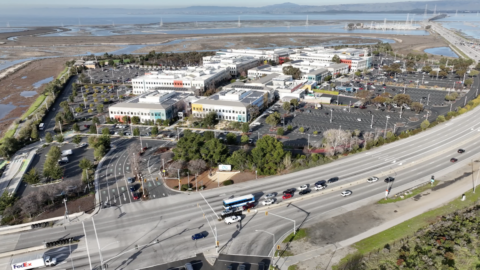
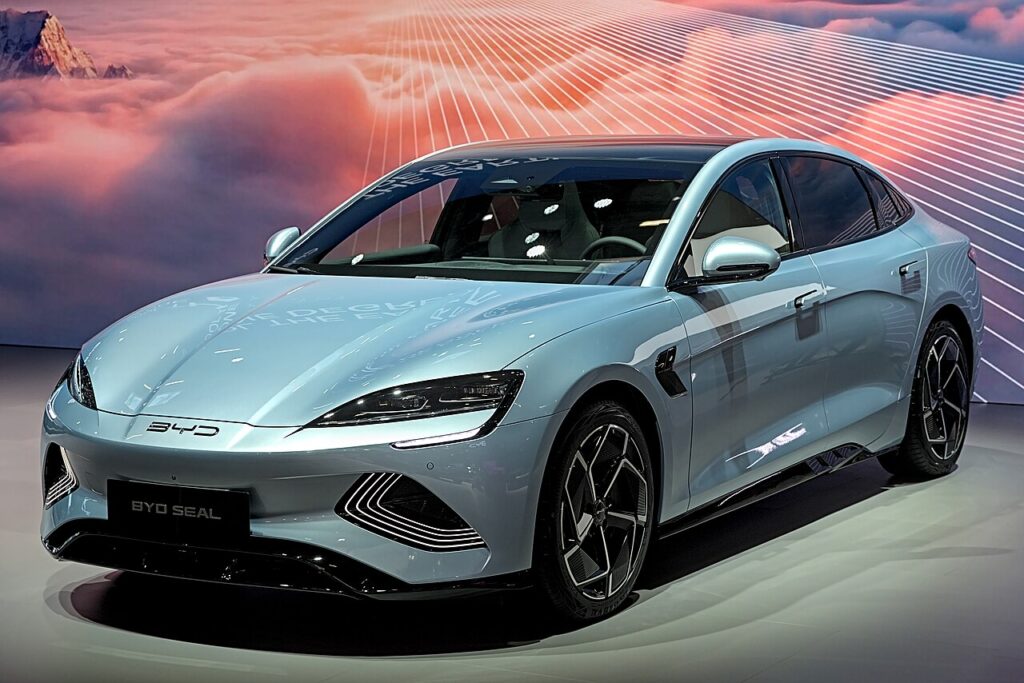
United States Forces Japan announced on Friday that all vehicles made by the Chinese electric-car maker BYD will be barred from Kadena Air Base in Okinawa — the largest US Air Force installation outside the United States — starting Monday, October 26. The ban is absolute: privately owned cars, contractor vehicles, taxis, delivery trucks and commercial vehicles, with no exceptions permitted under any circumstances, according to a US Forces Japan official quoted by South Korea’s Yonhap news agency.
“The ban covers all BYD vehicles regardless of type or purpose,” the official said. “No exceptions will be permitted under any circumstances.” Security personnel from the 18th Security Forces Squadron will block the cars at every gate and turn them away.
The concern is not the battery. It is the eyes. Modern BYD vehicles, like most new electric cars, are fitted with cameras, radar, microphones and precise GPS systems that map their surroundings to drive the car — and, in some models, transmit that data to the cloud. American officials believe the cameras and sensors mounted on BYD vehicles could collect and leak sensitive security information from the base, including details of the 18th Wing’s fighter jets, transport aircraft, radar systems and munitions.
What sits inside Kadena explains the nervousness. The base is the hub of American air power in the Pacific, home to the 18th Wing of the US Fifth Air Force, and it hosts the Typhon mid-range missile system — the launchers for Tomahawk cruise missiles with a range of roughly 1,600 kilometers, far enough to reach Beijing from western Japan. US officials have not claimed that BYD vehicles actually did collect intelligence there; the move is explicitly preemptive, closing a hole before anyone can exploit it.
It is also part of a much wider campaign against BYD. In June, Washington added the company — alongside e-commerce giant Alibaba, internet firm Baidu and fellow automaker NIO — to its list of companies it believes are aiding China’s military. The designation, under Section 1260H of the National Defense Authorization Act, is the Pentagon’s formal way of saying it treats a Chinese firm as part of the military-civil fusion system. Alibaba has since sued the US government over its inclusion, and China’s foreign ministry has called the list discriminatory and unreasonable.
BYD, which is headquartered in Shenzhen and is the world’s biggest electric-vehicle maker by sales, did not immediately respond to a request for comment, and US military officials in Japan could not immediately be reached for confirmation of the Yonhap report.
The ban could spread — and Seoul is already counting cars
The most telling detail in the reporting is not about Japan at all. Observers say the restriction could be extended to US Forces Korea bases, and South Korea has reason to be nervous: data disclosed last week by lawmaker Kang Dae-sik of the opposition People Power Party shows at least 190 Chinese-made connected vehicles are registered to enter South Korean military facilities — including naval bases in Busan and Jinhae, and air bases at Cheongju and Yecheon that house F-35 stealth fighters and KF-21 jets.
Washington has spent the last two years treating Chinese technology as a potential surveillance network first and a product second. Beijing’s own draft package of 40-technology export controls, announced this month, showed the mirror image: China tightening the flow of AI, solar and biotech know-how out of the country even as Washington restricts what comes in. And the Federal Bureau of Investigation’s recent seizure of hacking tools tied to China’s Flax Typhoon operation showed the same suspicion applied to software: that Chinese-connected systems inside American networks are a risk by default.
Cars are simply the newest front in that fight. A connected electric vehicle can record more, more precisely, than any smartphone — continuous video, exact location, cabin audio, network metadata — and it parks itself, legally, on the most sensitive ground a country has. Every military on earth with Chinese-made connected cars near its bases is now doing the same arithmetic Japan just did.
Why this matters beyond the Pacific
For readers far from Okinawa, this story is not really about a base gate. It is about what the car parked in your driveway has become: a rolling sensor platform whose data may flow to servers in another country, governed by another country’s laws. Washington’s answer — keep it off the base — is the bluntest possible version of a question every government now faces: how do you regulate a machine that sees everything around it when you cannot see what it sends home?
BYD’s problem is that it sells everywhere. The company is expanding aggressively across Europe, Southeast Asia and Latin America, markets where buyers chose it for the price and the range, not the geopolitics. A US military ban carries a reputational weight no advertisement can undo; “banned from an American air base as a spying risk” is the kind of headline that follows a brand into every showroom on earth. Expect allied governments — in Seoul first, then Canberra, London and Brussels — to quietly ask their own militaries the same question. The Kadena gate is where it starts; it is unlikely to be where it ends.