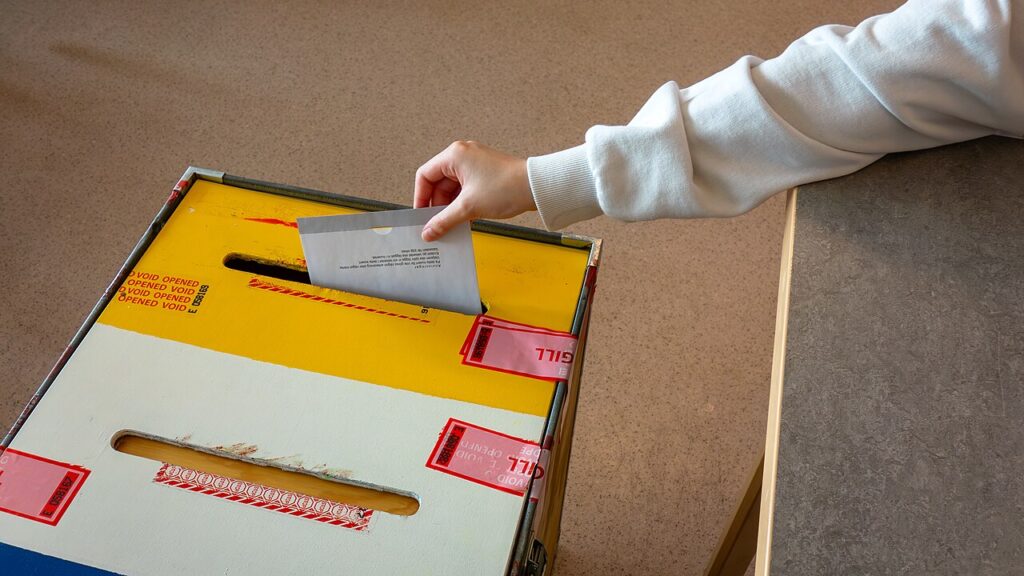
Informopedia Explains: Brazil is voting for the second time in three weeks today, and millions of Brazilians are being asked to choose between two men they already rejected, in a sense, once before. Nobody won the first round outright, so the country votes again — a system used by dozens of countries, loved by democrats for its legitimacy and cursed by campaigners for its cost. It is called the two-round system, or runoff voting, and it shapes politics everywhere from Paris to São Paulo. Here is how it works, why countries choose it, and where it breaks down.
The basic idea: a winner with a real majority
In a normal first-past-the-post election — the kind used for Britain’s parliament or most American races — whoever gets the most votes wins, even if that is only 30% in a crowded field. The runoff system refuses that bargain. In the first round, voters pick their genuine favourite from the full field. If someone wins an outright majority — more than 50% of valid votes — they are elected immediately and there is no second round. If nobody does, the top two candidates go forward to a second round, usually a week or two later, and whoever wins that round becomes the winner, guaranteed a majority because only two names are on the ballot.
There is a saying among political scientists that captures the appeal: in the first round you vote with your heart, and in the second you vote with your head. You can back a small party or an outsider in round one without “wasting” your vote, because you still get a say between the two front-runners in round two. The system is used most often for presidencies — a single, powerful office where legitimacy matters more than for one seat among hundreds. A study of two-round presidential elections counted 73 countries using the system, including France, Brazil, Chile, Colombia, Portugal, Poland and Russia.
The variants — and the French exception
Not every runoff works the same way. The most common form is the majority runoff described above: top two advance, winner takes all. France’s legislative elections use a quirkier variant: any candidate who wins the votes of more than 12.5% of registered voters in the first round can stand in the second, so up to five or six candidates can contest round two, and the winner needs only a plurality, not a majority. Some countries set the first-round threshold below 50% — Argentina, for example, has elected presidents with 45%, or 40% with a 10-point lead — trading pure majoritarianism for a lower risk of a divisive second round.
Why countries like it
The core argument is legitimacy. A president who governs with the explicit backing of more than half the voters who turned out is harder to dismiss as a minority ruler, and more likely to be accepted by losers — no small thing in young or polarised democracies. The system also forces coalition-building: to win round two, a candidate must reach beyond their base and bargain with eliminated candidates’ supporters, which tends to pull politics toward the centre, at least for one election.
Brazil illustrates both points. Its 2022 runoff and today’s 2026 rematch both followed first rounds in which the eventual front-runner fell short of a majority, and both runoffs forced the finalists to court voters who had backed someone else — including the roughly one in five Brazilians who did not vote at all in the first round this year.
Where it goes wrong
Runoffs have real costs. Running a national election twice is expensive and exhausting, and turnout often drops in round two — which can mean the “majority” winner is chosen by a smaller, less representative electorate than the first-round field. Tactical voting also creeps in: voters and parties game the first round to engineer a favourable second-round opponent.
The classic cautionary tale is France in 2002. The far-right candidate Jean-Marie Le Pen squeezed into the runoff ahead of the mainstream left, and voters across the spectrum united behind Jacques Chirac, handing him a landslide of over 82%. The system produced a majority winner, but one chosen more by rejection of the alternative than by enthusiasm — a reminder that a runoff guarantees a majority, not a mandate. Runoffs can also produce comebacks: the first-round runner-up sometimes wins round two by assembling a broader coalition, which is democratically fair but can feel like a reversal to the first round’s winner.
What to watch tonight
Brazil counts votes electronically, so partial results should appear within hours of polls closing at 5 p.m. Brasília time. Watch two numbers beyond the headline winner: turnout, to see whether the second round mobilised the abstainers or lost them; and the margin. A narrow win in a runoff is still a majority win — the system guarantees that — but governing a country split 50–50, with the loser’s supporters feeling the second round was forced on them, is the hardest job in democratic politics. That is the paradox of the runoff: it settles who won, cleanly, while leaving the deeper division exactly where it was.
Internal links: how Flávio Bolsonaro stunned Lula in Brazil’s first round; the first debate of Brazil’s runoff; Brazil’s voting-day runoff story. Outbound: ACE Electoral Knowledge Network on the Two-Round System.