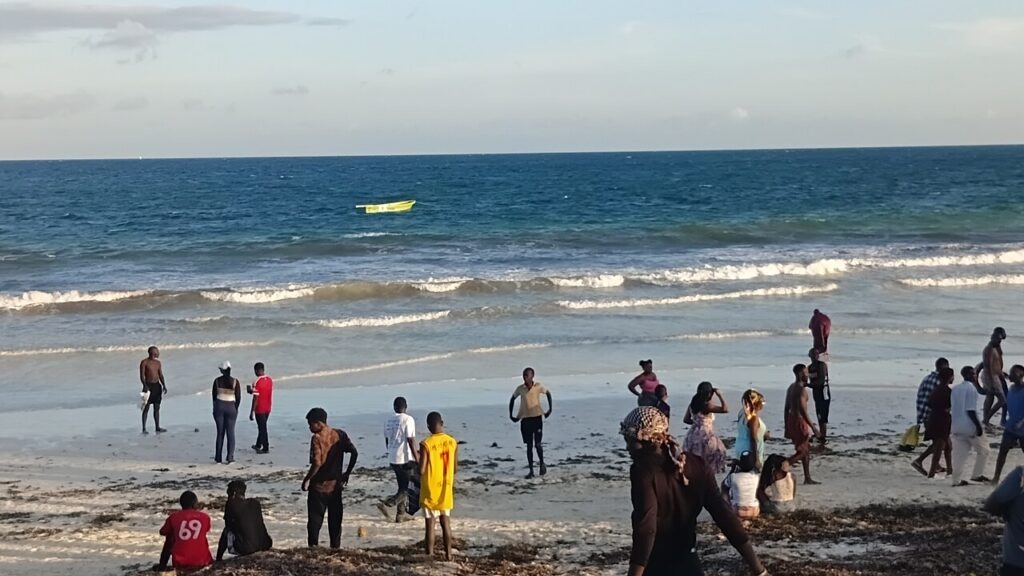
A Kenyan court has delivered one of the largest mass-murder verdicts of modern times. On Monday, October 19, Lady Justice Diana Kavedza at the Mombasa High Court convicted self-styled preacher Paul Nthenge Mackenzie and 28 of his followers of murdering 191 people — 190 of them children, and one adult — at his doomsday settlement in Shakahola Forest on Kenya’s coast.
The ruling caps more than three years of anguish since the discovery of mass graves in Kilifi County made international headlines in the spring of 2023. The deaths themselves, the court found, stretched from January 2021 to September 2023.
Over months of trial, prosecutors showed the court an organised system: followers of Mackenzie’s Good News International Church were moved onto his 800-acre (325-hectare) ranch, cut off from the outside world, and told that an apocalypse was near — and that fasting to death was the surest way to “meet Jesus.”
The fasting was enforced in sequence, with children told to stop eating first, then teenagers, then women, then men. Orders travelled down through village elders, were repeated at regular meetings, and were backed by guards who stopped people from escaping. Mackenzie also discouraged followers from seeking medical treatment or vaccinations.
Starvation accounted for most of the deaths. But pathologists also found asphyxia, manual compression of the neck, and at least one traumatic head injury — evidence of violence against those who did not die by fasting.
“I reject the defence by the accused persons that the victims, who were all below the age of 16, voluntarily fasted to death,” Justice Kavedza said, delivering the verdict. The court found the defendants guilty of murder under Section 203 of Kenya’s Penal Code.
The prosecution’s case rested on testimony from 123 witnesses — survivors and former followers among them — alongside DNA analysis, medical reports, and evidence from the mass graves: a single grave of 12, another site holding 63.
Mackenzie’s lawyer, Lawrence Obonyo, told the court the case was “largely founded on circumstantial evidence, hearsay accounts and inconclusive forensic findings,” arguing that “every person who fasted made a free, voluntary and informed decision, with access to food and the freedom to leave.”
The court did not accept that. It found that the Good News International Church operated as a cult, powered by isolation, psychological manipulation, and absolute obedience to the preacher’s teachings.
How we got here
- 2003: Mackenzie founds the Good News International Church, with branches in Nairobi and along the coast. He is arrested in 2017 on “radicalisation” charges and acquitted, then arrested again in 2019 after two children die at Shakahola — and released on bail. By his own account the church closed in 2019; followers move into Shakahola Forest.
- March 2023: Two children die from starvation in Kilifi County, drawing the attention of authorities.
- April 2023: Mackenzie is arrested after a rights group alerts police. Officers raid the compound, rescue severely malnourished followers, and begin exhuming bodies from hundreds of shallow graves. The toll climbs so fast that local morgues run out of space and excavations are paused.
- 2024: The Kenya National Commission on Human Rights puts the overall death toll at 429. Many of the recovered victims remain unidentified.
- October 19, 2026: The Mombasa High Court convicts Mackenzie and 28 co-accused on all 191 murder counts.
- November 6, 2026: Sentencing. Mackenzie also faces separate proceedings on manslaughter, terrorism, radicalisation, and child-cruelty charges — including, prosecutors say, 52 more bodies found at a nearby village.
The 191 convictions cover only a specific set of deaths. The wider Shakahola death toll — investigators have recovered more than 400 bodies — remains the subject of continuing investigations.
Why this verdict matters far beyond Kenya
Few courtrooms in recent history have faced a case this large. A 191-count murder conviction against 29 defendants, with 190 child victims, puts Shakahola in a grim category of its own — the deadliest criminal conviction arising from a religious cult since Uganda’s Kanungu church fire in 2000.
And it hands every country the same uncomfortable question. Kenya had warning signs for years: the 2017 arrest, the 2019 child deaths, the bail, the forest compound — and the deaths continued until 2023. The verdict has reignited demands inside Kenya for tougher regulation of religious organisations, a debate with echoes everywhere charismatic leaders operate beyond the reach of the law.
Justice Kavedza’s finding cuts through the central defence of every coercive group: that people chose to die. Children as young as the victims in Shakahola — all under 16 — never had a choice, the court ruled. That principle, stated plainly in a Mombasa courtroom, will travel further than the verdict itself.