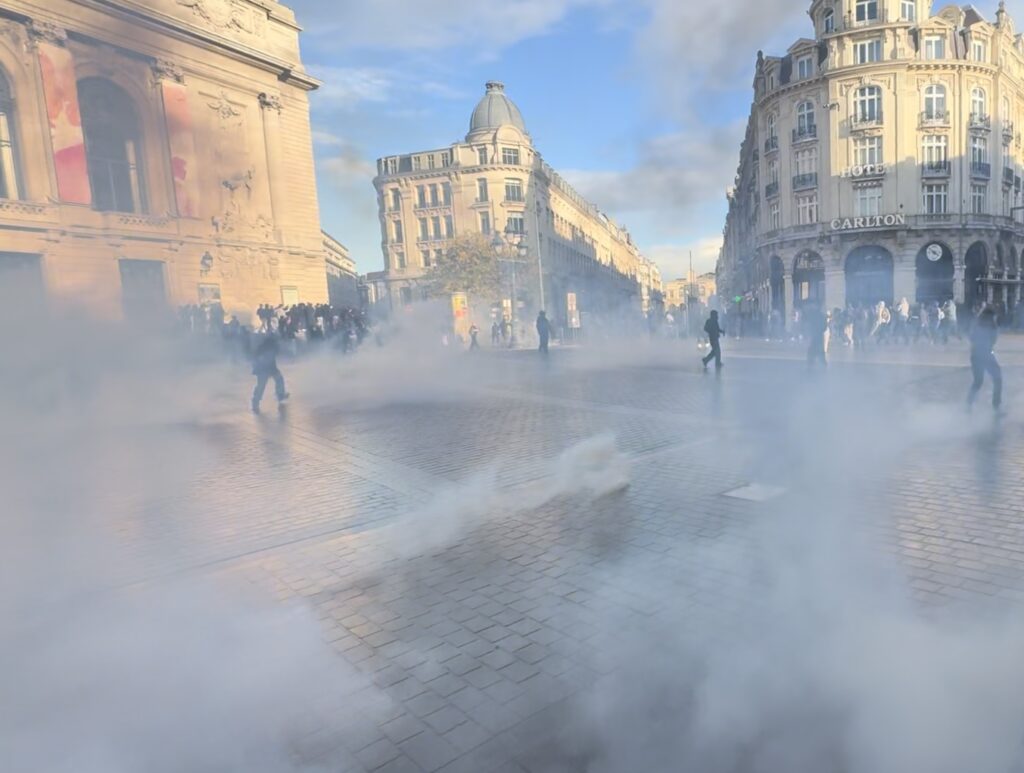
France has imposed overnight curfews in parts of Paris and several other cities after a weekend of riots and looting that left more than 2,500 people arrested and about 1,000 police officers injured.
In Paris, the curfew runs from 11 pm to 6 am around Place de la République, where protesters gathered over the weekend, and the Les Halles shopping district. Authorities have also banned unauthorised gatherings in parts of the city centre. In the north, Lille has a curfew from 6 pm to 4 am covering Monday and Tuesday nights, while four other northern towns imposed curfews from 8 pm to 6 am to protect shops and businesses. Partial curfews or gathering restrictions were announced in Marseille, Bordeaux, Nice and Lyon.
The measures followed a crisis meeting on Monday, after which Prime Minister Sébastien Lecornu authorised local mayors to impose curfews wherever needed. “I’m absolutely determined to restore public order,” he said, and did not rule out a formal state of emergency if the unrest continues.
Interior Minister Laurent Nuñez admitted police had “lost control” in some cities. He offered his resignation on Sunday, but President Emmanuel Macron refused to accept it, saying the country needed continuity in law enforcement. The presidency also demanded transparency over what Macron described as failures in intelligence and anticipation.
The scale of the disorder is large. Justice Minister Gérald Darmanin confirmed 2,513 arrests nationwide since the weekend began, with 67 people already in custody and expedited criminal trials under way. Investigators are studying social-media footage — including facial recognition — to track down looters. About 60,000 police and other security personnel have been deployed, and preliminary estimates say at least 3,000 businesses were damaged. The AFP news agency reported that one demonstrator lost a hand when a police crowd-control grenade exploded.
The protests began last month with students demanding better conditions in high schools, then swelled into a nationwide cost-of-living movement backed by trade unions. On Saturday, an estimated 500,000 people marched across France in what many called a revived Yellow Vest movement. Many rallies were peaceful, but masked groups attacked police, set fire to town halls and other public buildings, looted shops and torched cars. On Monday, demonstrators blocked the entrance to the Louvre museum in Paris.
The unrest is spilling beyond France’s borders. Similar cost-of-living protests turned violent over the weekend in Milan and Belgium, while demonstrations continued in Spain and Portugal. The European Union condemned the attacks but said the right to peaceful protest must be upheld. France’s business lobby Medef said the state had “failed,” and Finance Minister Roland Lescure promised support for damaged shopkeepers.
Why this matters beyond France: it is the EU’s second-largest economy, and six months from now the country elects a new president to replace Emmanuel Macron. The unrest is already reshaping that race, with hardline law-and-order messaging gaining ground. The debate over curfews and emergency powers echoes France’s 2005 riots — and the same squeeze of rents, wages and public services is fuelling protests across the continent.
An update on Tuesday brought the first sign of calm: Lecornu said the targeted curfews had kept the peace overnight, with no major incidents nationwide, and that more curfews would be decided Tuesday evening by local prefects in coordination with mayors. The Paris Saint-Germain versus Barcelona Champions League match was confirmed to go ahead as planned.