A rare face-to-face meeting in Tampa
Israeli and Lebanese military delegations sat down together on Tuesday at the headquarters of the United States Central Command in Tampa, Florida, for a new round of talks aimed at defusing one of the Middle East’s most volatile borders. Two Israeli military sources confirmed the meeting to The Jerusalem Post, while diplomatic sources in Beirut confirmed to the Anadolu news agency that the talks began on Tuesday under American mediation.
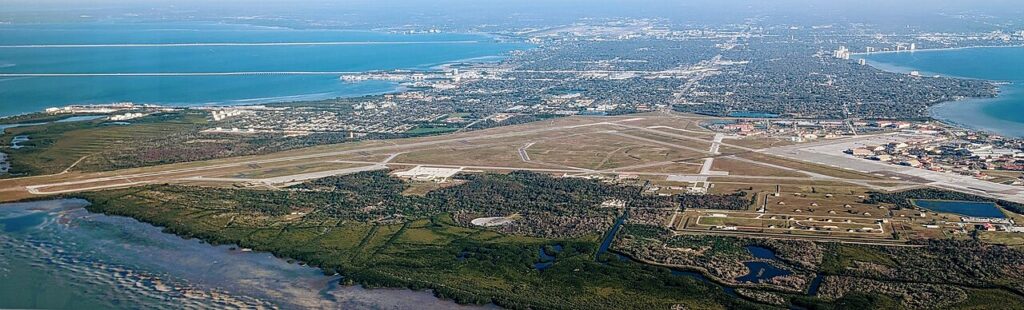
The venue itself tells a story. The delegations met at MacDill Air Force Base, home of CENTCOM — the US military command that oversees American operations across the Middle East. According to Lebanese broadcaster LBCI, the American delegation is led by US General Joseph Clearfield. The Lebanese delegation is military; the Israeli one, military too. No diplomats’ smiles for the cameras, no communiqués about peace — this is soldiers talking about security.
Lebanese outlet Beirut Wire, which first reported the new round, stressed that these are not peace negotiations. The agenda is security, not normalization. The talks are expected to run into Wednesday.
What the June framework was supposed to do
The talks are meant to review a framework agreement signed in June under American sponsorship. It was supposed to be the off-ramp: the Iran-backed Hezbollah movement — the Shia political and armed group that dominates southern Lebanon — would be disarmed, and in exchange, Israeli forces would withdraw from Lebanese territory in phases, with Lebanese troops deploying to the south under UN Security Council Resolution 1701, the 2006 resolution that ended the last full-scale Israel-Hezbollah war.
Four months on, both sides say the other is not holding up its end.
Lebanese President Joseph Aoun announced on Saturday that his country would send a military delegation to Tampa “to present Lebanon’s demands for an end to Israeli escalation,” in a statement the Lebanese presidency published on X. Aoun accused Israel of breaching the deal:
“Israel continues its attacks on southern villages and towns, bulldozing operations, destruction of homes, and preventing farmers from accessing their lands, and has not adhered to the provisions of the framework agreement reached under American sponsorship.”
He added that “the continuation of the occupation and tension in the south prevents the Lebanese Army from deploying to the international southern border, in implementation of Resolution 1701.”
Israel, for its part, says the Lebanese army has not done enough to disarm Hezbollah. Prime Minister Benjamin Netanyahu said in an Israeli media interview on Sunday that he “does not trust the Lebanese government to disarm Hezbollah,” adding that his ultimate goal “is to eliminate Hezbollah.”
Why the talks stalled — and why they resumed now
The June framework produced one concrete step: the first stage of the Israeli army’s withdrawal was completed in August in Zawtar Gharbieh, in the Nabatieh area of southern Lebanon. Then the process froze. Israel kept striking targets in the south and demolishing buildings; the talks stalled. Hezbollah, notably, has not resumed military operations since the ceasefire, according to Lebanese press reports.
Israel launched its latest military offensive in southern Lebanon in early March, and airstrikes have continued through the autumn despite the framework. This is the third round of the military-technical format: earlier sessions were held in Washington early this year and in Rome on August 4-5.
According to LBCI’s sources, the Lebanese delegation plans to use the Tampa session to raise what it calls Israeli violations of the “pilot areas” — the zones in southern Lebanon from which the Israeli army is scheduled to withdraw. Beirut says Israeli forces attacked inside a pilot area and then re-entered it, and that a Lebanese citizen was killed. Anadolu’s diplomatic sources said the Tuesday meetings focus specifically on those pilot areas and on reviewing implementation of the agreement, “amid continued Israeli attacks on areas of southern Lebanon.”
The timing is tight. Israel holds a parliamentary election on October 27 — its first since the October 7, 2023 attacks — and the Lebanon file sits inside a much larger regional war now in its eighth month, with the United States, Israel and Iran in open confrontation across the region.
Why this matters beyond Lebanon
For readers far from the border, the stakes are straightforward. Southern Lebanon is the one place where a second front could turn the current regional war into something uncontainable. A working disarmament-and-withdrawal deal keeps the Lebanese army — not Hezbollah, not the Israeli army — in charge of the south, which is exactly what Resolution 1701 envisioned nearly twenty years ago. A collapsed one leaves two armed forces facing each other across a line where strikes are already a weekly event.
There is also a peacekeeping clock running. Lebanon wants the mandate of UNIFIL, the UN force that has patrolled the south since 1978, extended — or, failing that, any arrangement that keeps an international presence in place so Lebanese and Israeli troops do not end up in direct contact with no buffer at all.
The Tampa meeting will not end the standoff; both delegations arrived with incompatible readings of who broke the deal first. But the fact that Israeli and Lebanese officers are in the same room at an American military headquarters, talking about pilot areas and withdrawal schedules rather than trading fire, is the first sign in months that the framework might still be alive.