The FBI has arrested and charged a 17-year-old boy from McKinney, Texas, who federal investigators say was planning to assassinate U.S. Representative Keith Self — and to carry out a separate terrorist attack in North Texas on behalf of ISIS. The teenager was taken into custody on October 5 after acquiring a firearm, according to federal law enforcement sources cited by Dallas ABC affiliate WFAA, which first reported the case on Wednesday. He remains in federal custody, and his name has not been released because he is a minor.
Investigators say the suspect planned to target Self at an event on Saturday, October 17 — twelve days after his arrest — and that federal agents had already been watching him. Sources told WFAA that the teenager had been radicalized recently and was under active surveillance when he obtained the gun. What federal charges the juvenile faces has not been disclosed, and authorities have not publicly described a motive.
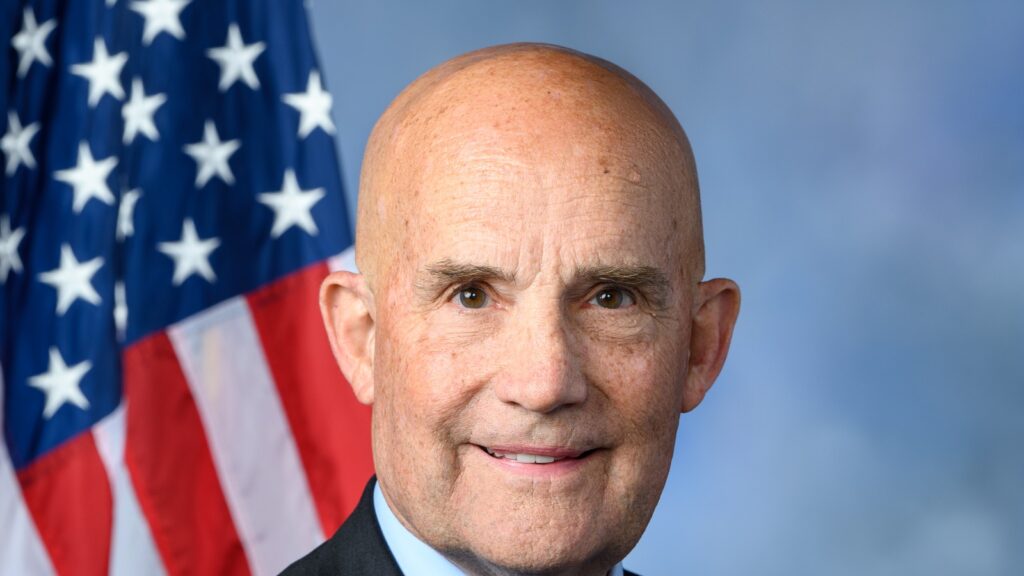
Self is a Republican congressman from North Texas who is running for his third term in the U.S. House of Representatives, where he sits with the hard-line House Freedom Caucus. A retired Army officer who served 25 years in uniform, he has made opposition to Islamic extremism a defining part of his politics. Last December he co-founded the “Sharia-Free America Caucus” with fellow Texas Republican Chip Roy, a group whose stated mission is to oppose the influence of Sharia law — the Islamic legal code — in the United States; last month he introduced a non-binding resolution in Congress denouncing Sharia law outright. As of February the caucus counted 38 members from 18 states.
In a statement to WFAA, Self was direct about what he sees as the price of his politics. “Protecting our Constitutional Republic from radical Islam is getting messy,” he said. “I served in the military for 25 years with the mindset that defending freedom was worth the sacrifice. Our elected leaders should govern with that same mindset.”
Asked whether his positions on radical Islam might be the reason he was targeted, the congressman stopped short of claiming certainty: “If it’s ISIS related, you kind of have to believe that. I can’t prove that. I don’t know that for sure. But you have to follow the old saying — if it walks like a duck and quacks like a duck, it’s probably a duck.”
His office declined to discuss his personal security arrangements, though Self said he has confidence in his security team. Members of Congress receive a security stipend they can use for personal protection, a benefit expanded after threats against lawmakers surged in recent years.
The case lands close to home in more than one sense. McKinney, the city where the teenager lives and the congressman is based, approved plans in August for a new mosque by the McKinney Islamic Association — a decision the city said complied fully with local law but which drew protests from some residents. Self’s Democratic challenger, Evan Hunt, denounced the alleged assassination plot.
The alleged plot is the latest in a run of foiled domestic attacks to surface in the United States this fall. Earlier this month, members of Congress demanded an FBI hate-crime investigation after a mass-shooting plot against a Hindu temple in Illinois was foiled, and federal agents are also probing letters containing an unknown substance mailed to U.S. election offices weeks before the November 3 midterms.
Why does a foiled plot in Texas matter beyond the United States? Because political violence aimed at elected officials has become a defining feature of American public life — and attacks, or attempted attacks, on lawmakers carry consequences that travel. In a country where members of Congress now receive dedicated security stipends and threat levels are at historic highs, every plot the FBI disrupts hardens the security posture around American politics and deepens the partisan frame around who is being radicalized and why. Self’s own framing — that defending the republic from radical Islam is “getting messy” — shows how quickly a criminal case becomes political ammunition: the foiled plot will be cited, by him and by his allies, as proof that his hard-line campaign against political Islam is justified. The risk, familiar from other countries fighting extremism, is the feedback loop itself: rhetoric that divides communities produces the very resentments that extremists of every stripe exploit. The facts of this case — who radicalized the teenager, what he planned, and what law enforcement knew — will determine whether this was a genuine ISIS-directed plot or an allegation still built on anonymous sourcing. Either way, it is now part of an American election season already shadowed by threats.