Two Israeli soldiers were killed and three others wounded on Friday when Palestinian gunmen opened fire at a temporary checkpoint near the West Bank city of Hebron, in an attack the Israeli military says was meant to be far larger. The military identified the dead as Staff Sgt. Ron Yonatan Roytman, 23, from Ashkelon, and Sgt. Yuval Shai Svilem, 20, from Hod Hasharon.
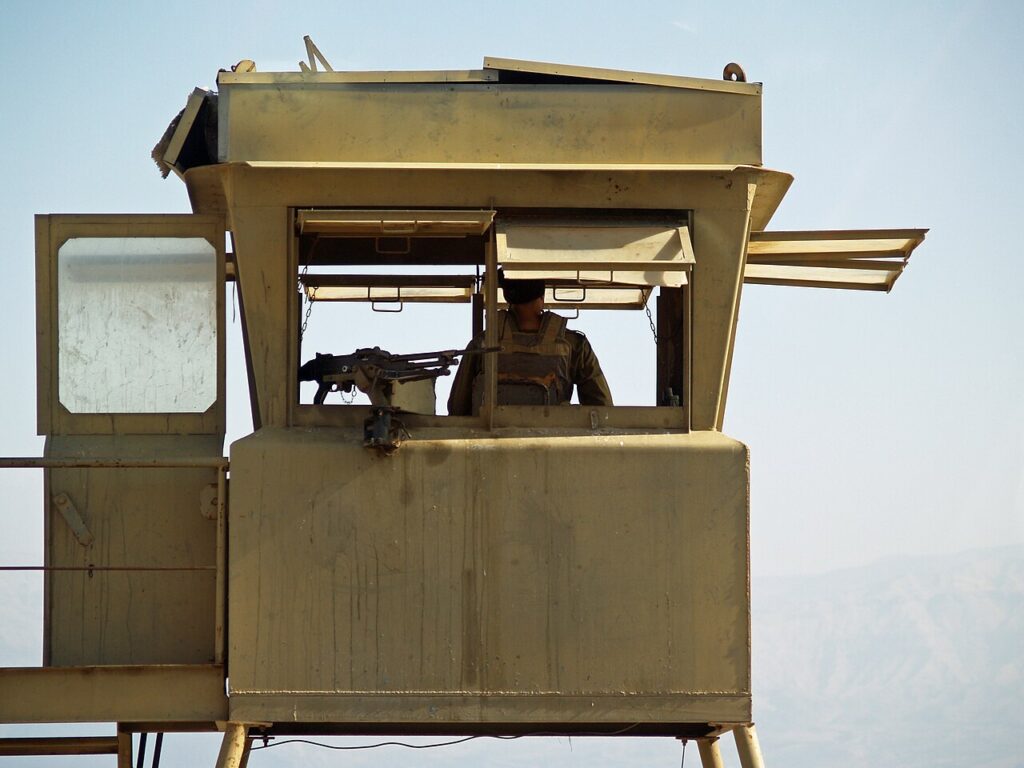
The two attackers — identified by the military as 27-year-old Hebron residents Mohammad Jaaba and Firas Jaaba — drove up to the checkpoint at Yehuda Junction, at the exit to Hebron on Route 35, at about 7:30 a.m., armed with an M16 rifle and a handgun. A gunfight lasting more than 20 minutes followed before soldiers killed both men. The military said the attackers’ car held a large quantity of ammunition, and a preliminary investigation concluded the pair had planned to reach the highway and attack Israeli civilians on Route 35, but opened fire at the checkpoint when they realized they could not get past it.
Roytman and Svilem served in the 775th “Ari” Battalion of the Home Front Command’s Search and Rescue Brigade, a unit normally assigned to domestic emergencies rather than front-line combat. Roytman was a squad commander. His brother David told Ynet the family had been devastated by the news: “He fought to become a combat soldier… He was always number one.” Three other soldiers were wounded, with light to moderate injuries, and were evacuated to hospitals in Jerusalem.
Hamas — the Islamist militant group that governs Gaza and is designated a terrorist organization by Israel, the United States and the European Union — called the shooting “heroic” but did not claim responsibility. Israeli media described the gunmen as Hamas-affiliated, while the military said it was still unclear whether they acted alone or with a wider network.
Hours later, Prime Minister Benjamin Netanyahu visited the scene with Defense Minister Israel Katz. In a video released by his office, Netanyahu said: “First of all, we will act to destroy this place, to change it completely. But we are going to do something that has not been done until now: We will implement the successful and aggressive model we used in the refugee camps, which are essentially terrorist strongholds.” The military’s Central Command chief, Maj. Gen. Avi Bluth, said the army was “launching a significant counterterrorism operation, alongside imposing a cordon on the areas of Hebron and Halhul.”
The announcement marks a sharp escalation. Earlier on Friday, Netanyahu had already ordered the closure of Hebron and preparations for a broader West Bank lockdown after the initial attack, as Informopedia reported this morning.
The West Bank is Palestinian territory that Israel has occupied since 1967, divided between limited Palestinian self-rule in its cities and full Israeli military control in large areas. Hebron is its most volatile city: a few hundred Israeli settlers live in its center under heavy military guard among roughly 200,000 Palestinians, and the checkpoint network around it is a constant friction point. Violence has also been rising on the other side of the divide — masked settlers attacked Palestinians and European diplomats during the olive harvest earlier this month.
Friday’s killings land four days before Israel’s general election on Tuesday, in which Netanyahu faces a neck-and-neck race against a united opposition. For voters, the attack sharpens the campaign’s central question — whether the government’s hard line on security is actually keeping people safe. For Palestinians in Hebron, the promised destruction of a neighborhood and a “refugee-camp model” operation revive the methods Israel used in the Gaza war: heavy cordons, mass raids and demolitions. And for the wider region, it is a warning: with the Gaza war still burning and ceasefire talks stalled, a major new West Bank operation risks opening another front that neither side’s war planners wanted.