The shooting at Farsh al-Hawa
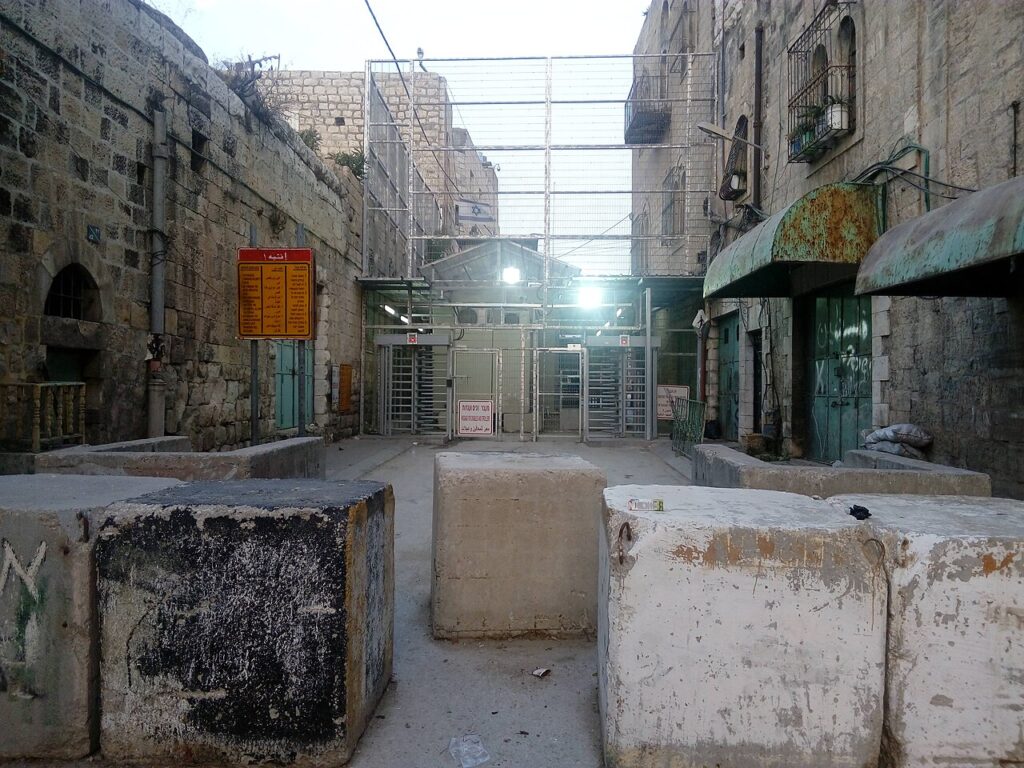
The shooting broke out on Friday morning at the Farsh al-Hawa checkpoint — also called Yehuda Junction — on Route 35 near Hebron, the largest city in the southern West Bank. According to Israeli media, two Palestinian gunmen arrived by car, got out, and opened fire on soldiers with an M16 assault rifle and a handgun. An Agence France-Presse journalist who happened to be at the scene described the two men, dressed in civilian clothes, exchanging fire with Israeli troops. The car’s number plates were Israeli, according to the newspaper Haaretz.
The two soldiers who killed the gunmen belonged to the Home Front Command’s Ari Battalion — a reserve unit on its first operational deployment, according to Israeli media. The deputy battalion commander and a company commander rushed to the scene. Two Palestinians were later arrested in the area.
The firefight lasted more than 20 minutes, witnesses told Al Jazeera’s Hebron correspondent. For much of that time the wounded could not be evacuated: a medic at the scene was heard on video calling to soldiers to take cover by the ambulance, saying the extraction of the wounded was impossible while the shooting continued.
Five people were wounded, Israel’s ambulance service said, two of them in critical condition. Some Palestinian outlets put the number at six. One of the badly hurt, a man in his twenties, was described as being in “very serious condition” with gunshot wounds. Israeli security officials believe the pair had intended to carry out a larger attack on civilians but ran into the checkpoint by chance, Channel 14 reported. Police have opened an investigation and described the background as “nationalistic.”
“Prevented a major terrorist attack”
Prime Minister Benjamin Netanyahu wrote on X that he had completed a situation assessment with the defence minister, the army chief, the heads of the Shin Bet security service and the National Security Council, and the commander of Central Command. Commending the soldiers who, in his words, “prevented a major terrorist attack,” he announced immediate measures:
“I have instructed the IDF and the security forces to immediately impose a closure on the city of Hebron and to prepare for a full lockdown across all of Judea and Samaria starting today.”
Judea and Samaria is the term Israel uses for the occupied West Bank, home to roughly three million Palestinians. A full closure means sealing the checkpoints and crossings that connect Palestinian towns and cities — and, during elections, the movement of Palestinians into Israel.
Netanyahu also ordered his Likud party to cancel all political events on Friday. Defence Minister Israel Katz joined the prime minister in instructing the army chief to enforce the cordon on Hebron and to prepare the wider closure at least until after the election on October 27.
Four days before the election
The timing could hardly be more charged. Israel votes on Tuesday in a snap election that polls show is a neck-and-neck contest between Netanyahu and the former army chief Gadi Eisenkot, who has teamed up with former prime ministers Yair Lapid and Naftali Bennett. The military has been on heightened alert for weeks, and the army has reinforced its forces in the West Bank with an additional regular brigade ahead of the vote.
Within hours of the attack, National Security Minister Itamar Ben-Gvir — the far-right minister who oversees the police — issued a statement calling for Israel to take full control of the West Bank: “We have to act before it’s too late. The Palestinian Authority must be dismantled and demilitarised, and its terror infrastructure wiped out completely.”
The attack also lands in the middle of one of the West Bank’s most volatile olive-harvest seasons in memory. Israeli settlers and soldiers have been engaged in what Palestinian officials and rights groups describe as violent pogroms against harvesters; this week Israeli forces raided a Palestinian village during the harvest, and last week masked settlers attacked a diplomatic convoy carrying European diplomats — an incident the prime minister’s office tried to cast doubt on even as the military itself condemned it.
Why this matters
A full West Bank lockdown days before an Israeli election is one of the heaviest collective measures in the security toolbox, and it signals how deeply the campaign’s logic has fused with the conflict’s. A closure restricts the daily movement of millions of Palestinians — to jobs, schools, hospitals and harvest fields — while changing almost nothing about the attack it claims to answer, since the gunmen are already dead.
For Netanyahu, the closure order is also campaign theatre: the strongman response four days before a vote he may be losing. But it raises the stakes for whatever comes next — a tight election, a restive West Bank, and an Israeli public being asked to choose, under fire, between two very different definitions of security.